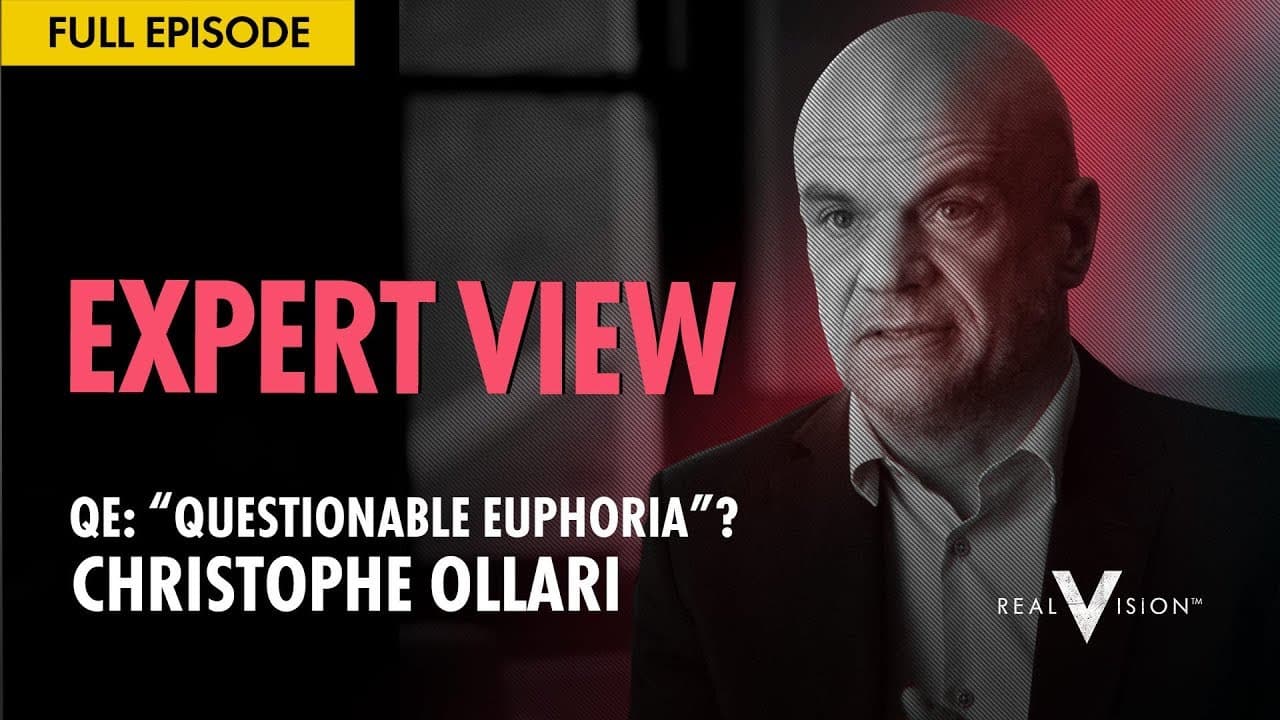
QE: "Questionable Euphoria"? (w/ Christophe Ollari) | Expert View | Real Vision™
TL;DR
2018 was marked by volatility triggered by trade tensions, Fed tightening, emerging market pressure. 2019 saw a turnaround with dovish central banks, reflation measures, and questions on the efficacy of current monetary policies.
Transcript
Which was on Christmas Eve. My name is Christophe Ollari. I have designed, about something like three years ago, a global macro research MMT asset class and multi currency. I did that after 20 years trading in banks and the hedge fund community. What triggered the volatility in Q4 2018? When I came last June, and we already sensed that the prevaili... Read More
Key Insights
- 🚨 Volatility in 2018 was triggered by trade tensions, Fed tightening, and pressures on emerging markets.
- 🏦 Central banks adopted dovish policies in 2019 in response to economic challenges and reflation measures were implemented in China.
- 👶 New economic theories like MMT and debates on political influence on monetary policy are reshaping the global economic landscape.
- ☠️ The dollar's strength is supported by rate differentials and safe-haven demand.
- ☠️ Interest rates are expected to be stabilized by central banks to avoid spillovers to other asset classes.
- 🥺 Political instability may lead to fiscal expansions and new monetary policies.
- 😥 The global economy is at a point where innovative solutions are needed to address current economic challenges.
Install to Summarize YouTube Videos and Get Transcripts
Explore YouTube Video Summarizer or Get YouTube Transcript Extractor
Questions & Answers
Q: What were the main factors that triggered volatility in Q4 2018?
Volatility in Q4 2018 was triggered by trade tensions between the US and China, Fed tightening policies, and pressure on emerging markets due to a strong dollar and trade war implications.
Q: How did central banks and governments respond to the economic challenges in 2019?
In 2019, central banks adopted dovish policies, reflation measures were implemented in China, and there were debates on the efficacy of current monetary policies, leading to a possible shift towards new economic theories like MMT.
Q: What role did political instability play in shaping central bank policies?
Political instability can influence central bank policies as seen in potential fiscal expansions and debates on debt monetization. This may lead to a paradigm shift in monetary policy towards more innovative solutions.
Q: What were the key insights regarding the outlook for the dollar and interest rates?
The outlook for the dollar remains strong due to diverging growth momentum and rate differentials. Interest rates are expected to be stabilized by central banks as they act as convexity managers to avoid spillovers to other asset classes.
Summary & Key Takeaways
-
In 2018, volatility was triggered by trade tensions between the US and China, Fed tightening, and pressure on emerging markets.
-
The turnaround in 2019 was driven by dovish central banks, reflation measures in China, and questions on the efficacy of current monetary policies.
-
The shift towards new economic theories like MMT and debates on political influence on monetary policy are shaping the global economic landscape.
Read in Other Languages (beta)
Share This Summary 📚
Summarize YouTube Videos and Get Video Transcripts with 1-Click
Try YouTube Summary with ChatGPT & Claude or YouTube Transcript Generator
Explore More Summaries from Real Vision 📚

Summarize YouTube Videos and Get Video Transcripts with 1-Click
Try YouTube Summary with ChatGPT & Claude or YouTube Transcript Generator