Navdurga - The Meaning of Different Days of Navratri
TL;DR
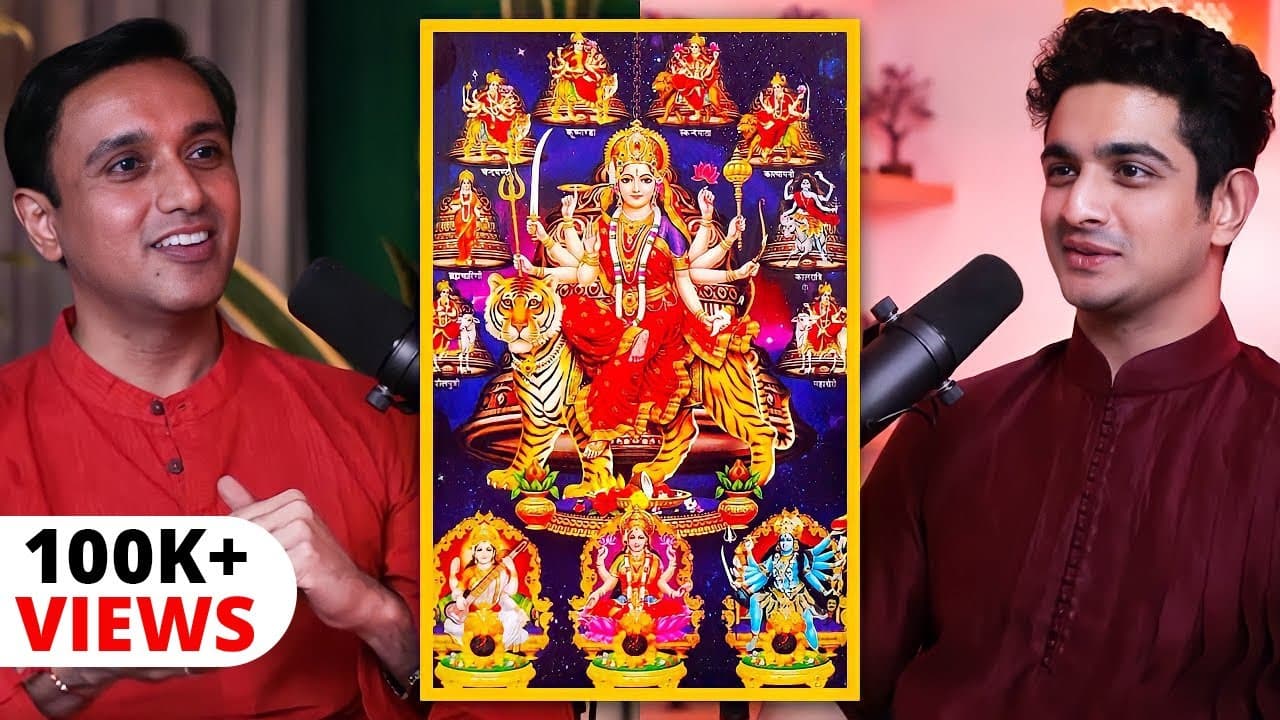
This content explores the different forms of the Goddess Durga and their representation of women's life stages.
Transcript
happiness through Curiosity on the ranveer show Welcome to TRS clips urga actually represent the evolution of a woman you know through the different stages of life and that's how it is related to the world around us you know it's not just some obscure goddess sitting in some different world you can see it happening around you right so you you start... Read More
Key Insights
- 💁♀️ Each form of Goddess Durga represents distinct life stages and the evolution of women's roles.
- 🕵️♀️ Cultural narratives around female deities highlight both strengths and vulnerabilities experienced by women through generations.
- 🤳 The transition from young maidens to powerful figures signifies the journey of self-discovery and empowerment.
- ⚖️ Goddess Durga embodies the concept of balancing personal ambitions and societal responsibilities elegantly.
- 🧔♀️ The cycle from innocence to empowerment narrates an inspiring perspective for contemporary women.
- 🥶 Depictions of female deities encourage breaking free from traditional traumas associated with femininity.
- 🧔♀️ The exploration reassures women that they can pursue their dreams while fulfilling familial roles without being confined to one identity.
Install to Summarize YouTube Videos and Get Transcripts
Explore YouTube Video Summarizer or Get YouTube Transcript Extractor
Questions & Answers
Q: What does the first form of Goddess Durga, Shailputri, represent?
Shailputri symbolizes the innocence and beginnings of womanhood as the daughter of the mountain, embodying purity and connection to nature. This form marks the starting point of life's journey, emphasizing that every woman has roots in her identity that is often linked to familial ties and heritage.
Q: How does the second form, Brahmacharini, reflect teenage aspirations?
Brahmacharini represents a young woman's intense dedication to her ambitions, signified by her penance to attain her desires. This form illustrates the teenage phase, where self-identity begins to form, emphasizing the drive to pursue one's dreams and the aspirations that emerge during adolescence.
Q: What significance do the weapons held by Ma Chandraganta convey?
Ma Chandraganta’s depiction with weapons symbolizes strength and the power of a married woman who has successfully integrated her responsibilities. Holding weapons signifies not only protection but also mastery over her life circumstances as she balances personal aspirations and her role in marriage.
Q: In what way does Skanda Mata depict the nurturing aspect of motherhood?
Skanda Mata showcases the transformation into motherhood, focusing on nurturing and responsibility towards her child, Karthikeya. This form highlights the prioritization of a child's wellbeing over personal desires, a common experience for mothers, symbolizing love, care, and the sacrifices made in motherhood.
Q: How is the fearsome aspect of Kali relevant to women's empowerment?
Kali's fierce representation illustrates the empowerment of women as formidable forces against evil. By depicting Kali conquering demons, the narrative portrays women as self-reliant and capable of overcoming adversities. This form stresses women's strength and the importance of asserting control over their destinies.
Q: What does Maha Gauri's transformation signify about recognition in society?
Maha Gauri's transition signifies the culmination of a woman's numerous identities and responsibilities leading to recognition and respect in society. Her form illustrates that after facing life’s struggles, it’s possible for a woman to achieve a state of peace and self-recognition, embodying wisdom and fulfillment.
Q: How does Siddhi Datri reflect the ultimate goal of self-actualization?
Siddhi Datri embodies the ideal of self-actualization, representing a state where one's abilities and ambitions are harmonized. This form illustrates that after navigating various life roles, the ultimate aspiration is to reach a balanced life where personal accomplishments coexist with spiritual and social fulfillment.
Q: What overarching message does the exploration of the nine forms of Durga convey to women today?
The exploration conveys a profound message about the multifaceted roles of women in society, encouraging them to pursue their passions despite societal pressures. It underscores that life stages are not limiting but serve as a framework for growth towards self-actualization, inspiring women to embrace their full potential.
Summary & Key Takeaways
-
The content delves into the nine forms of Goddess Durga celebrated during Navaratri, illustrating each stage of a woman's life from childhood to self-actualization.
-
It highlights how these forms reflect the different roles women embody throughout their lives, such as daughter, wife, and mother, consistent with societal expectations.
-
Emphasis is placed on the importance of self-actualization, showcasing that women can pursue personal ambitions beyond traditional roles.
Read in Other Languages (beta)
Share This Summary 📚
Summarize YouTube Videos and Get Video Transcripts with 1-Click
Try YouTube Summary with ChatGPT & Claude or YouTube Transcript Generator
Explore More Summaries from TRS Clips 📚



Summarize YouTube Videos and Get Video Transcripts with 1-Click
Try YouTube Summary with ChatGPT & Claude or YouTube Transcript Generator