How to rewire your brain after trauma | Bessel van der Kolk | Explain It Like I’m Smart
TL;DR
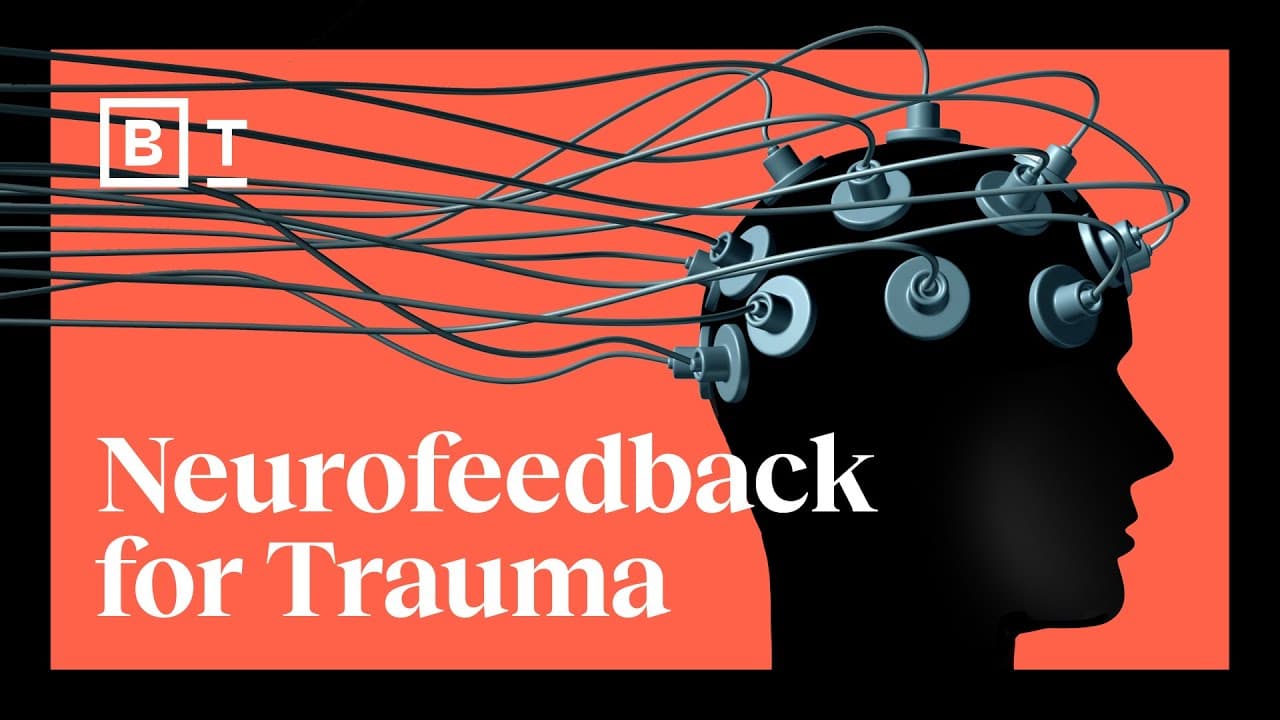
Trauma rewires brains for danger, affecting attention and engagement. Neural feedback can rewire brains to expect new experiences.
Transcript
- I want to explain something to you as if you were smart? - Yes.
- I like that. - I have a very close friend in Australia who's in charge of measuring what happens to Australian soldiers before and after going to Afghanistan or Iraq. What they see is that with every deployment, the frontal lobe becomes slower. And that means that when your frontal... Read More
Key Insights
- 🐢 Trauma slows the frontal lobe, impacting attention and engagement.
- 🧠 Quantitative EEGs reveal abnormal brain maps in traumatized individuals.
- 🧠 Neural feedback can reshape brain wiring to expect new experiences.
- 🖤 Lack of federal funding hinders research on neural feedback for trauma.
- 🧠 Rewiring traumatized brains can improve relationships and daily functions.
- 🥺 Trauma-driven brain patterns can lead to difficulties with temper and relationships.
- ❓ Effective treatment methods for trauma may involve neural feedback.
Install to Summarize YouTube Videos and Get Transcripts
Explore YouTube Video Summarizer or Get YouTube Transcript Extractor
Questions & Answers
Q: How does trauma impact brain function?
Trauma slows the frontal lobe, affecting attention and engagement. The brain becomes wired for danger, hindering daily activities like relationships and eating.
Q: What do quantitative EEGs reveal about traumatized brains?
Quantitative EEGs show abnormal brain maps in traumatized individuals. High-intensity waves indicate constant vigilance, expecting danger even when it's not present.
Q: How can neural feedback help rewire traumatized brains?
Neural feedback can shape brains by rewarding calm brain waves. This process can reconfigure brain wiring to be open to new experiences, moving away from expecting danger.
Q: Why is federal funding essential for neural feedback research?
Neural feedback research requires federal funding to further develop effective methods for rewiring traumatized brains. This support is crucial for advancing treatments for individuals with trauma-related issues.
Summary & Key Takeaways
-
Trauma changes brain wiring, slowing frontal lobes and hindering attention.
-
Quantitative EEGs show abnormal brain maps in traumatized individuals.
-
Neural feedback can rewire brains to be open to new experiences and repair circuits.
Read in Other Languages (beta)
Share This Summary 📚
Summarize YouTube Videos and Get Video Transcripts with 1-Click
Try YouTube Summary with ChatGPT & Claude or YouTube Transcript Generator
Explore More Summaries from Big Think 📚




Summarize YouTube Videos and Get Video Transcripts with 1-Click
Try YouTube Summary with ChatGPT & Claude or YouTube Transcript Generator