What Causes Inflation and Why Is There Debate About It?
TL;DR
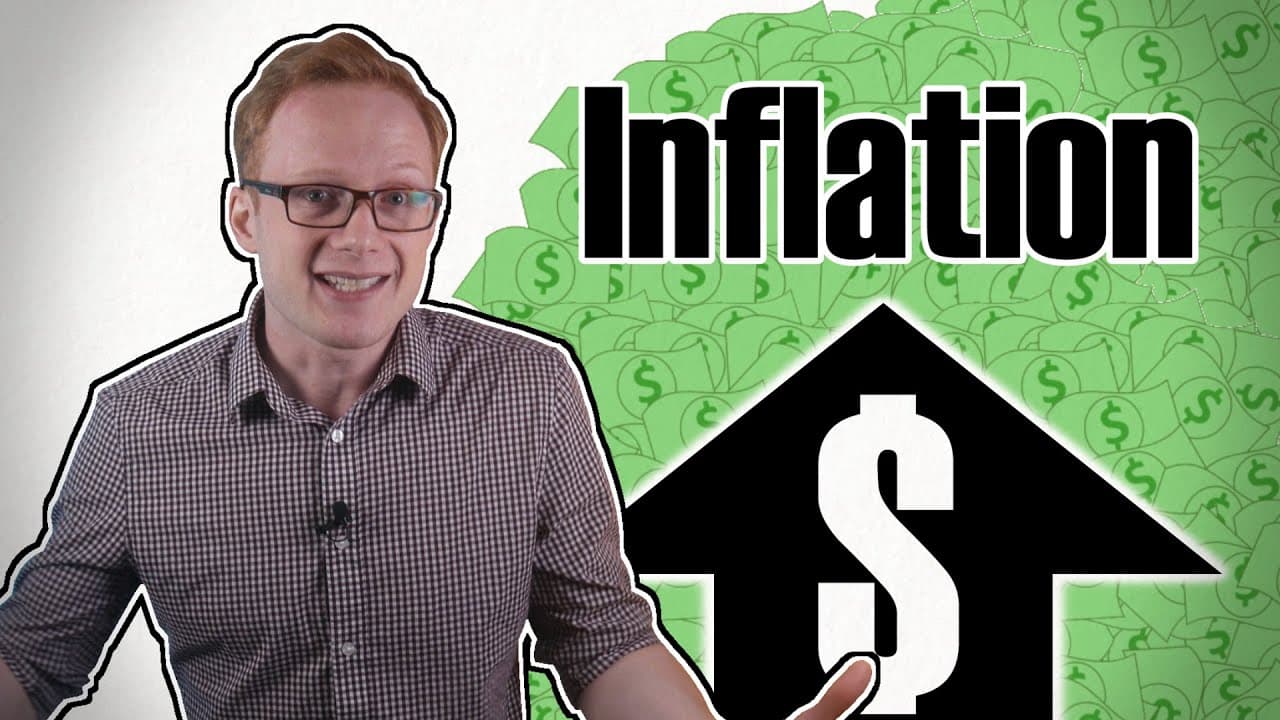
Inflation arises primarily from two causes: cost-push factors, such as supply chain disruptions or labor shortages, and demand-pull factors, driven by excessive consumer demand. The complexity of inflation leads to widespread disagreement on how to measure and manage it, with various economic schools proposing different approaches to government intervention and monetary policy.
Transcript
this video is sponsored by noaa an app i use to listen articles from the world's leading financial publications visit the link to the news over audio website in the description below to get unlimited access for a week plus 37 off the annual membership fee inflation as defined by the oxford dictionary is a general increase in prices and fall in the ... Read More
Key Insights
- 🫢 Inflation is a complex topic with multiple causes, including supply-side shocks and demand-side factors.
- 🤑 Different schools of thought in economics have varying perspectives on government intervention and money supply management to control inflation.
- ❎ Inflation has both positive and negative impacts, with benefits for economic activity but also risks of distortion and increased costs.
- 📈 Measurement and tracking of inflation are debated, with criticisms of commonly used metrics and disagreement on what should be included.
- 😀 Consensus on inflation may be difficult to achieve due to the complexities of economics and different circumstances faced by countries.
- 🏛️ Building prudent saving strategies and investing are important to protect against the erosion of wealth due to inflation.
Install to Summarize YouTube Videos and Get Transcripts
Explore YouTube Video Summarizer or Get YouTube Transcript Extractor
Questions & Answers
Q: What is inflation and why is it a contentious topic?
Inflation is a general increase in prices and a decrease in the value of money. It is a contentious topic because its causes, impacts, and solutions are widely debated among economists.
Q: What are the two main causes of inflation?
The two main causes of inflation are cost push (caused by supply-side factors like shortages or labor increase) and demand pull (caused by increased consumer demand).
Q: Why do governments target a positive inflation rate?
Governments target a positive inflation rate because they believe it supports economic activity and is a sign of a strong economy. It helps businesses and individuals plan for price increases and stimulates spending.
Q: What are different schools of thought on dealing with inflation?
Keynesian economists advocate for government intervention to stabilize economies and control inflation. Monetarists believe that inflation is primarily caused by the central bank's influence on money supply and advocate for stable policy. There are also other perspectives that argue against intervention or for deflation.
Summary & Key Takeaways
-
Inflation is a general increase in prices and a decrease in the purchasing value of money.
-
There are two broad causes of inflation: cost push (supply-side) and demand pull (demand-side).
-
Governments and central banks have different approaches to dealing with inflation, with debates about intervention, money supply, and measurement.
Read in Other Languages (beta)
Share This Summary 📚
Summarize YouTube Videos and Get Video Transcripts with 1-Click
Try YouTube Summary with ChatGPT & Claude or YouTube Transcript Generator
Explore More Summaries from The Plain Bagel 📚



Summarize YouTube Videos and Get Video Transcripts with 1-Click
Try YouTube Summary with ChatGPT & Claude or YouTube Transcript Generator