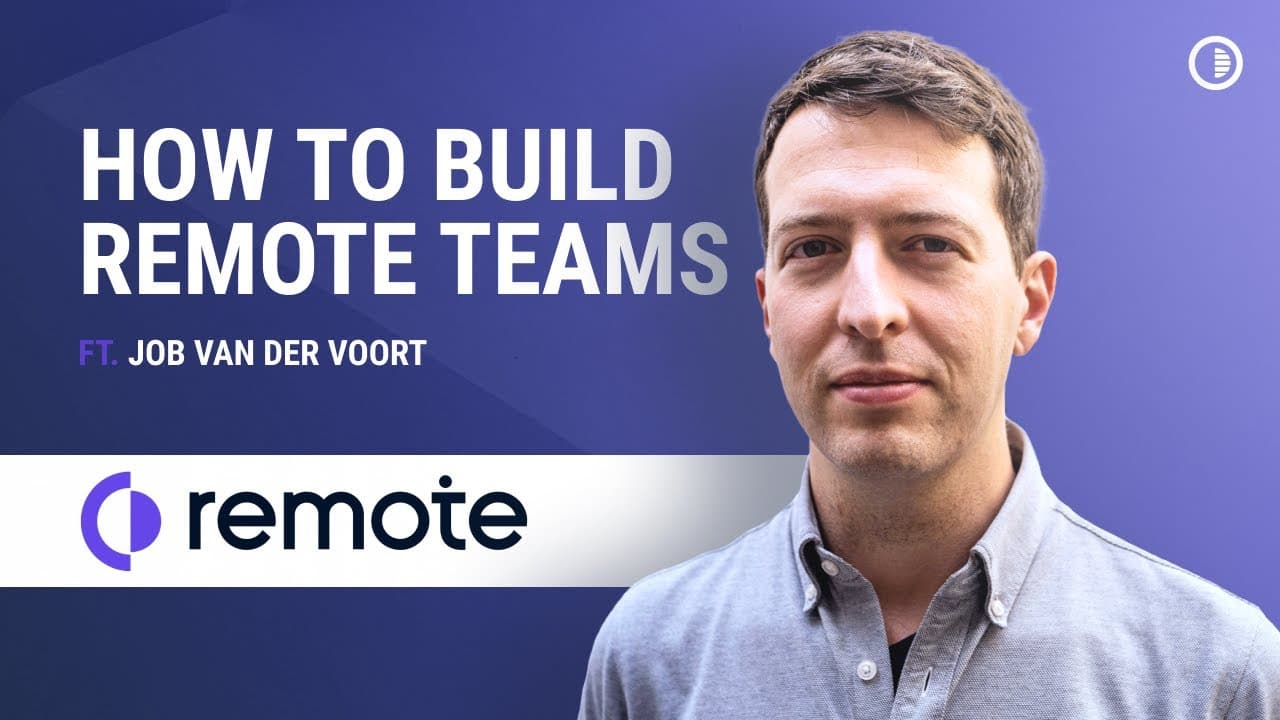
Build Remote Teams | Job van der Voort, CEO of Remote.com
TL;DR
Remote work expert shares insights on building a remote culture, emphasizing the importance of working remotely 100% of the time and implementing effective communication and collaboration practices.
Transcript
independent of how you're going to run your organization if you have one person in the company working remotely everybody in organization must work remotely today we have yob here who's going to talk to us about exactly what sasha was mentioning uh remote culture and how to build remote normal culture in your company so yup take it away maybe to st... Read More
Key Insights
- 💦 Remote work offers significant advantages, such as increased flexibility, improved productivity, and access to a global talent pool.
- 💦 The success of remote organizations depends on adopting a remote-first mindset and working remotely 100% of the time.
- 😫 Building a strong company culture in a remote setting requires setting values early on, documenting them in a company handbook, and fostering connections through various activities.
- 💦 Balancing work and personal life is crucial in remote work, and clear boundaries must be established to maintain a healthy work-life balance.
- 👻 Pay structures in remote organizations often consider the local cost of living, allowing for fair compensation regardless of location.
- ❓ Compliance and legal considerations may vary across different countries, and it is essential to stay updated with local regulations and seek legal advice when necessary.
Install to Summarize YouTube Videos and Get Transcripts
Explore YouTube Video Summarizer or Get YouTube Transcript Extractor
Questions & Answers
Q: What is the recommended approach for running a remote organization?
The speaker suggests adopting a remote-first approach, where all employees work remotely 100% of the time. This ensures equal opportunities and avoids creating a split organization between the office and remote workers.
Q: How can remote organizations promote bonding and social connections among team members?
The speaker recommends organizing bonding calls, playing games together (e.g., online gaming sessions), and utilizing virtual reality (VR) hangouts. These activities provide opportunities for team members to connect outside of work and foster social connections.
Q: How can remote organizations establish and communicate company values effectively?
The speaker advises creating a company handbook that includes core values, vision, and strategy. This handbook should be accessible to all employees, who should also contribute to it. By documenting important information and making it easily accessible, remote organizations can establish a foundation for a strong company culture.
Q: How should remote organizations deal with time zone differences?
The speaker suggests hiring initially within the same or overlapping time zones before expanding to different time zones as the team grows. It is important to be mindful of time zone differences and prioritize asynchronous work to avoid excluding team members and ensure effective collaboration.
Summary & Key Takeaways
-
The speaker, a co-founder of remote.com, discusses the benefits of remote work and the challenges of building and scaling remote organizations.
-
He emphasizes the need for remote organizations to function as if they are remote-first, regardless of the specific remote model they choose (remote first, all remote, hybrid).
-
The speaker highlights the importance of setting values early on, creating a company handbook, and fostering connections and bonding opportunities in a remote environment.
Read in Other Languages (beta)
Share This Summary 📚
Summarize YouTube Videos and Get Video Transcripts with 1-Click
Try YouTube Summary with ChatGPT & Claude or YouTube Transcript Generator
Explore More Summaries from On Deck Sessions 📚





Summarize YouTube Videos and Get Video Transcripts with 1-Click
Try YouTube Summary with ChatGPT & Claude or YouTube Transcript Generator