Products
Features
YouTube Video Summarizer
Summarize YouTube videos
Web & PDF Highlighter
Highlight web pages & PDFs
Chat with PDF
Ask any PDF questions with AI
Ask AI Clone
Chat with your highlights & memories
Audio Transcriber
Transcribe audio files to text
Glasp Reader
Read and highlight articles
Kindle Highlight Export
Export your Kindle highlights
Idea Hatch
Hatch ideas from your highlights
Integrations
Obsidian Plugin
Notion Integration
Pocket Integration
Instapaper Integration
Medium Integration
Readwise Integration
Snipd Integration
Hypothesis Integration
Apps & Extensions
Chrome Extension
Safari Extension
Edge Add-ons
Firefox Add-ons
iOS App
Android App
Discover
Discover
Ideas
Discover new ideas and insights
Articles
Curated articles and insights
Books
Book recommendations by great minds
Posts
Essays and notes from readers
Quotes
Inspiring quotes collection
Videos
Curated videos and summaries
Explore Glasp
Glasp Newsletter
Weekly insights and updates
Glasp Talk
Interview series with great minds
Glasp Blog
Latest news and articles
Glasp Use Cases
Learn how others use Glasp
Build & Support
Glasp API
Access Glasp's API for developers
MCP Connector
Connect Glasp to Claude & ChatGPT
Community
Glasp Reddit Community
Students
Student discount and benefits
FAQs
Frequently Asked Questions
AboutPricing
DashboardLog inSign up

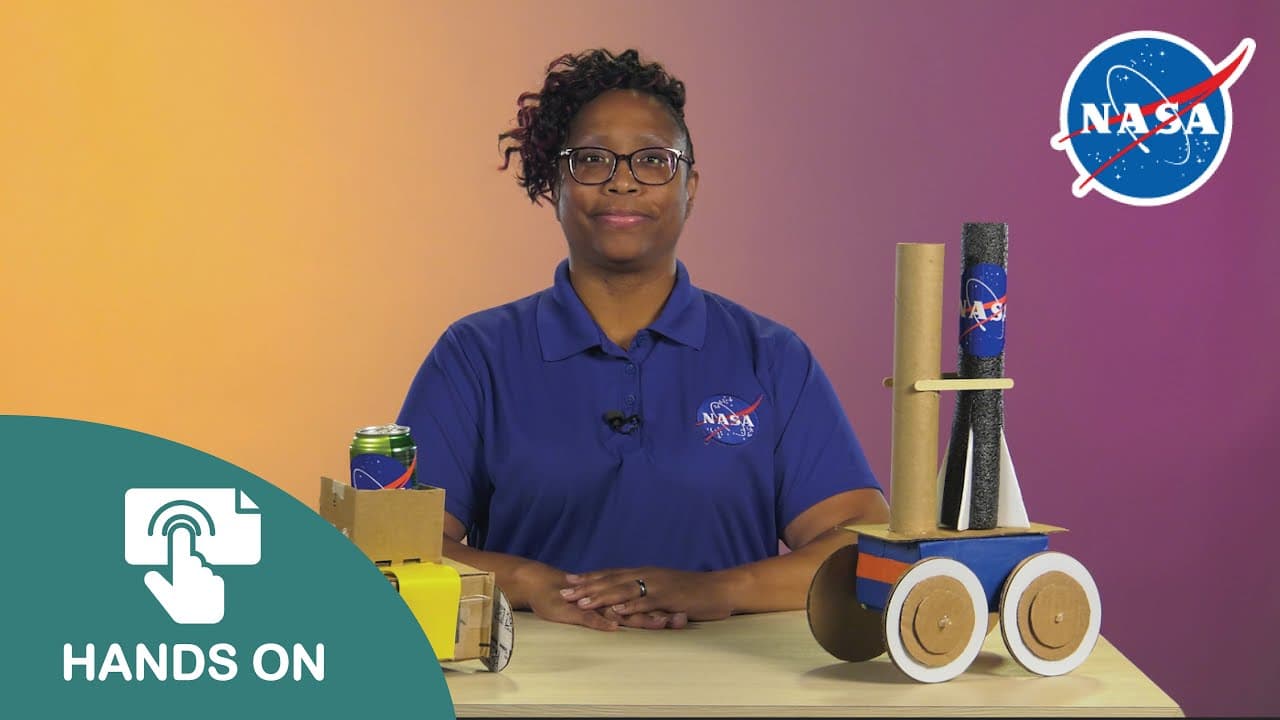
Move It: Tips on How to Build a Rubber Band Powered Crawler
20.1K views
•
January 18, 2023
by
NASA STEM
YouTube video player
Move It: Tips on How to Build a Rubber Band Powered Crawler

TL;DR

Help students build rubber band crawlers for NASA's Move It challenge with tips for success.

Transcript

Hi. I'm Tysha. And I'm Lindsay. So your students want to tackle NASA's Move It challenge and build a rubber band powered crawler. This is a tough one. So we want to give you some tips to help you guide them if their crawlers don't work as expected. Crawlers are big machines that carry tons of weight from one point to another. At NASA's Kennedy Spac... Read More

Key Insights

  • 🤕 NASA's Move It challenge involves students creating rubber band powered crawlers.
  • 🧑‍🦼 Tips for success include using sturdy materials, proper axle positioning, experimenting with wheel sizes, and securing wheels with adhesive.
  • 🏆 Testing the crawler with increasing payloads helps in refining the design through the engineering process.
  • 🧑‍🎓 NASA's crawler transporter inspired the Move It challenge for students.
  • 💷 The crawler transporter at NASA's Kennedy Space Center can carry 18 million pounds.
  • 🚀 Designing a crawler that can carry payloads is critical for future launch operations at NASA.
  • ❓ Creativity and problem-solving skills are essential for success in the Move It challenge.

Install to Summarize YouTube Videos and Get Transcripts

Explore YouTube Video Summarizer or Get YouTube Transcript Extractor

Questions & Answers

Q: What is the objective of NASA's Move It challenge?

The challenge tasks students with designing and building a rubber band powered crawler to carry a payload at least one meter.

Q: What materials can students use for axles in their crawlers?

Students can utilize pencils, dowel rods, or skewers for axles, but skewers are flimsier and should be kept short to reduce friction.

Q: How can students reduce friction in their crawler design?

One way to reduce friction is by running axles through a straw to provide a smoother movement for the crawler.

Q: Why is it important to test the crawler with increasing payload weights?

Testing the crawler with heavier payloads allows students to identify weaknesses in their design and make necessary improvements to enhance its carrying capacity.

Summary & Key Takeaways

  • NASA's Move It challenge involves building rubber band powered crawlers to carry payloads.

  • Tips include using sturdy materials, proper axle positioning, experimenting with wheel sizes, and securing wheels with adhesive.

  • Test the crawler with increasing payloads to improve design through the engineering process.


Read in Other Languages (beta)

English

Share This Summary 📚

Summarize YouTube Videos and Get Video Transcripts with 1-Click

Download browser extensions on:

Try YouTube Summary with ChatGPT & Claude or YouTube Transcript Generator

Explore More Summaries from NASA STEM 📚
NASA STEM Stars: NASA Internships thumbnail
NASA STEM Stars: NASA Internships
NASA STEM
Data Jigsaw Student Activity: Exploring Sea Level Rise with Others thumbnail
Data Jigsaw Student Activity: Exploring Sea Level Rise with Others
NASA STEM
NASA Downlink: JPL/Caltech and Van Buren Elementary thumbnail
NASA Downlink: JPL/Caltech and Van Buren Elementary
NASA STEM
NASA STEM Stars: The Future of Flight With Advanced Air Mobility thumbnail
NASA STEM Stars: The Future of Flight With Advanced Air Mobility
NASA STEM
Compressor Development for Exoskeletal Turbine-Based Combined Cycle (TBCC) Engine thumbnail
Compressor Development for Exoskeletal Turbine-Based Combined Cycle (TBCC) Engine
NASA STEM
STEMonstrations: Properties of Water thumbnail
STEMonstrations: Properties of Water
NASA STEM

Summarize YouTube Videos and Get Video Transcripts with 1-Click

Download browser extensions on:

Try YouTube Summary with ChatGPT & Claude or YouTube Transcript Generator

Apps & Extensions

  • Chrome Extension
  • Safari Extension
  • Edge Add-ons
  • Firefox Add-ons
  • iOS App
  • Android App

Key Features

  • YouTube Video Summarizer
  • Web & PDF Summarizer
  • Web & PDF Highlighter
  • Chat with PDF
  • Ask AI Clone
  • Audio Transcriber
  • Glasp Reader
  • Kindle Highlight Export
  • Idea Hatch

Integrations

  • Obsidian Plugin
  • Notion Integration
  • Pocket Integration
  • Instapaper Integration
  • Medium Integration
  • Readwise Integration
  • Snipd Integration
  • Hypothesis Integration

More Features

  • APIs
  • MCP Connector
  • Blog & Post
  • Embed Links
  • Image Highlight
  • Personality Test
  • Quote Shots

Company

  • About us
  • Blog
  • Community
  • FAQs
  • Job Board
  • Newsletter
  • Pricing
Terms

•

Privacy

•

Guidelines

© 2026 Glasp Inc. All rights reserved.