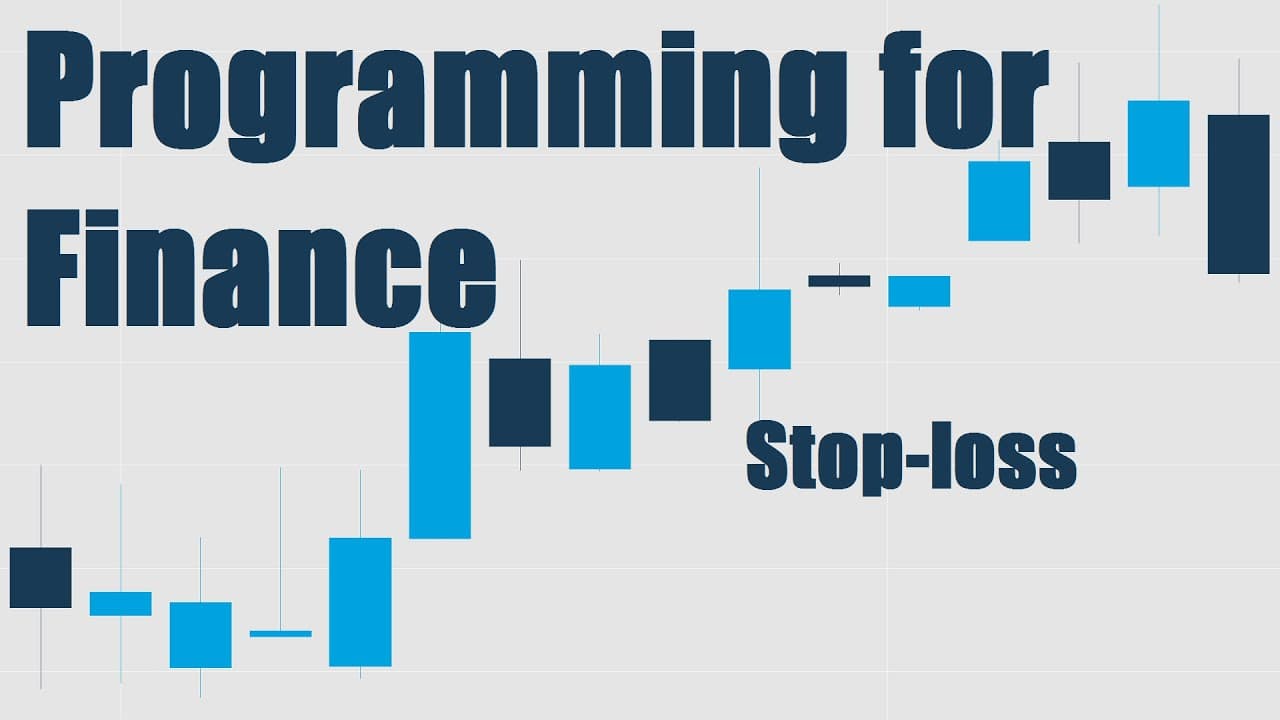
[See Description] Stop-Loss in strategy - Python for Finance with Quantopian and Zipline 7
TL;DR
Learn to add a stop loss to your Python finance program to cut losses and improve Sharpe ratio.
Transcript
what is going on everybody welcome to these seventh Python for Finance using quanto peon and zipline tutorial in this tutorial we're gonna be talking about a couple of things but first it's going to be these adding a stoploss to our program so like I was saying before stop-loss is a way for us to cut our losses it's generally used because it's an i... Read More
Key Insights
- 🌸 Stop loss orders are essential for cutting losses and managing risk in trading.
- ✋ Dynamically calculating stop prices based on stock prices ensures realistic risk management.
- 🥳 Metrics like Sharpe ratio, drawdown, and beta help evaluate trading strategies and risk exposure.
- 🌸 Leveraging can amplify returns in trading but also increases the risk of losses.
- ⚖️ Understanding and balancing risk is crucial for successful trading strategies.
- 😘 Shorting stocks can help maintain a low beta and improve performance in specific trading contexts.
- 🤩 Monitoring key metrics like total returns, alpha, and beta is essential for evaluating trading success.
Install to Summarize YouTube Videos and Get Transcripts
Explore YouTube Video Summarizer or Get YouTube Transcript Extractor
Questions & Answers
Q: What is a stop loss and why is it important in trading?
A stop loss is a pre-set price at which an investor will sell a security to prevent further losses. It helps manage risk by limiting the downside potential of a trade.
Q: How can stop prices be dynamically calculated for different stocks?
Stop prices can be dynamically calculated based on the current stock price and a percentage decrease. This ensures that the stop price adjusts with market fluctuations.
Q: What are the key metrics like Sharpe ratio, drawdown, and beta used for in trading?
The Sharpe ratio measures risk-adjusted returns, drawdown indicates peak-to-trough loss, and beta shows market sensitivity. Understanding these metrics is crucial for evaluating trading strategies.
Q: Why is leveraging important in trading and how does it affect returns?
Leveraging involves borrowing money to increase trading position sizes. It can amplify returns, but also magnify losses, making it essential to carefully manage leverage to balance risk and reward.
Summary & Key Takeaways
-
Adding a stop loss helps cut losses by selling if the price falls, essential for risk management.
-
Using stop orders dynamically ensures realistic stop prices based on stock prices.
-
Understanding metrics like Sharpe ratio, drawdown, and beta is crucial for evaluating trading strategies.
Read in Other Languages (beta)
Share This Summary 📚
Summarize YouTube Videos and Get Video Transcripts with 1-Click
Try YouTube Summary with ChatGPT & Claude or YouTube Transcript Generator
Explore More Summaries from sentdex 📚



Summarize YouTube Videos and Get Video Transcripts with 1-Click
Try YouTube Summary with ChatGPT & Claude or YouTube Transcript Generator