Why Are Zoos and Botanical Gardens Vital for Conservation?
TL;DR
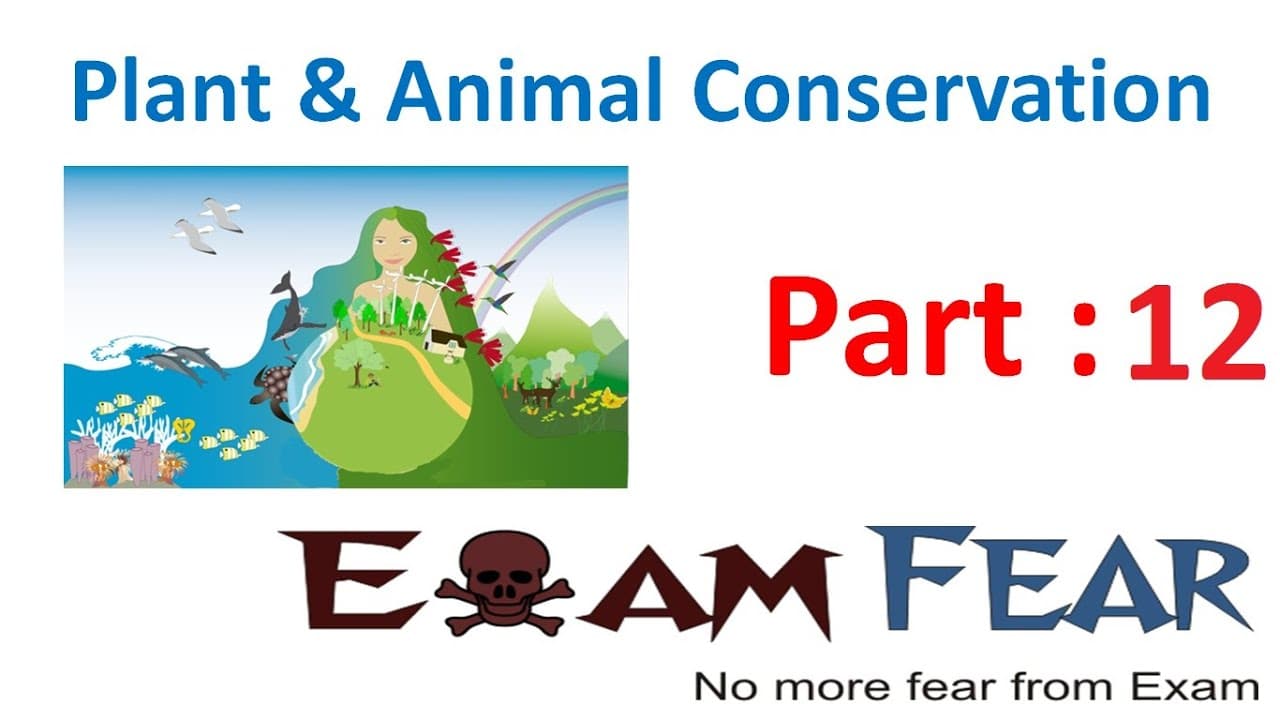
Zoos and botanical gardens are essential for ex situ conservation, providing artificial habitats that protect and educate on various plant and animal species. While botanical gardens showcase diverse plants for educational purposes, zoos ensure animals are cared for in a controlled environment, albeit in captivity. Both play a crucial role in raising awareness about conservation and the impacts of deforestation on biodiversity.
Transcript
hello friends this video on conservation of plants and animals part 12 is brought to you by exam for your calm no more fear from exam so now let us quickly look at some of the ex situ conservation approaches where they are followed so one such example is the Botanical Garden as I mentioned before also this garden has collection of different plants ... Read More
Key Insights
- 🏡 Ex situ conservation includes botanical gardens, which house diverse plant species as educational references.
- 😨 Zoos serve as protected environments for animals, offering proper care and suitable living conditions.
- 🥘 Deforestation negatively impacts wild animals and the environment, leading to habitat loss, food scarcity, increased carbon dioxide levels, disrupted food chains, lower crop productivity, and adverse effects on villages and cities.
- 🌱 Biosphere reserves are larger conservation areas that protect not only animals but also plants and human settlements.
- 🛟 The survival of endangered and extinct species relies on conservation efforts and preserving natural habitats.
- 🌐 The effects of deforestation contribute to global warming and environmental pollution.
- 🖐️ Ex situ conservation methods play a significant role in protecting and educating about plant and animal species.
Install to Summarize YouTube Videos and Get Transcripts
Explore YouTube Video Summarizer or Get YouTube Transcript Extractor
Questions & Answers
Q: What is the purpose of botanical gardens in ex situ conservation?
Botanical gardens serve as collections of various plant species from different areas, providing references for educational purposes and allowing for the plants' survival in a controlled environment.
Q: How are animals kept in zoos protected and cared for?
Animals in zoos are held in protected environments where they receive proper care, including timely feeding and suitable living conditions. Although they are kept in captivity and within cages, their well-being is ensured.
Q: What is the difference between a wildlife sanctuary and a biosphere reserve?
A wildlife sanctuary primarily protects animals in their natural habitat without human interference, while a biosphere reserve protects not only animals but also plants and human settlements. Biosphere reserves are larger and encompass multiple wildlife sanctuaries.
Q: What are the effects of deforestation on wild animals and the environment?
Deforestation leads to the loss of animal habitats and a lack of food sources for them. It also results in increased carbon dioxide levels, contributing to global warming and disrupting the food chain. Soil erosion affects crop productivity, and both villages and cities suffer from the adverse consequences.
Summary & Key Takeaways
-
The video discusses ex situ conservation approaches such as botanical gardens and zoos, which create artificial habitats for plants and animals.
-
Botanical gardens house different plant species from various locations, serving as educational references.
-
Zoos provide protected environments for animals, although they are kept in captivity for their safety and care.
Read in Other Languages (beta)
Share This Summary 📚
Summarize YouTube Videos and Get Video Transcripts with 1-Click
Try YouTube Summary with ChatGPT & Claude or YouTube Transcript Generator
Explore More Summaries from LearnoHub - Class 11, 12 📚


Summarize YouTube Videos and Get Video Transcripts with 1-Click
Try YouTube Summary with ChatGPT & Claude or YouTube Transcript Generator