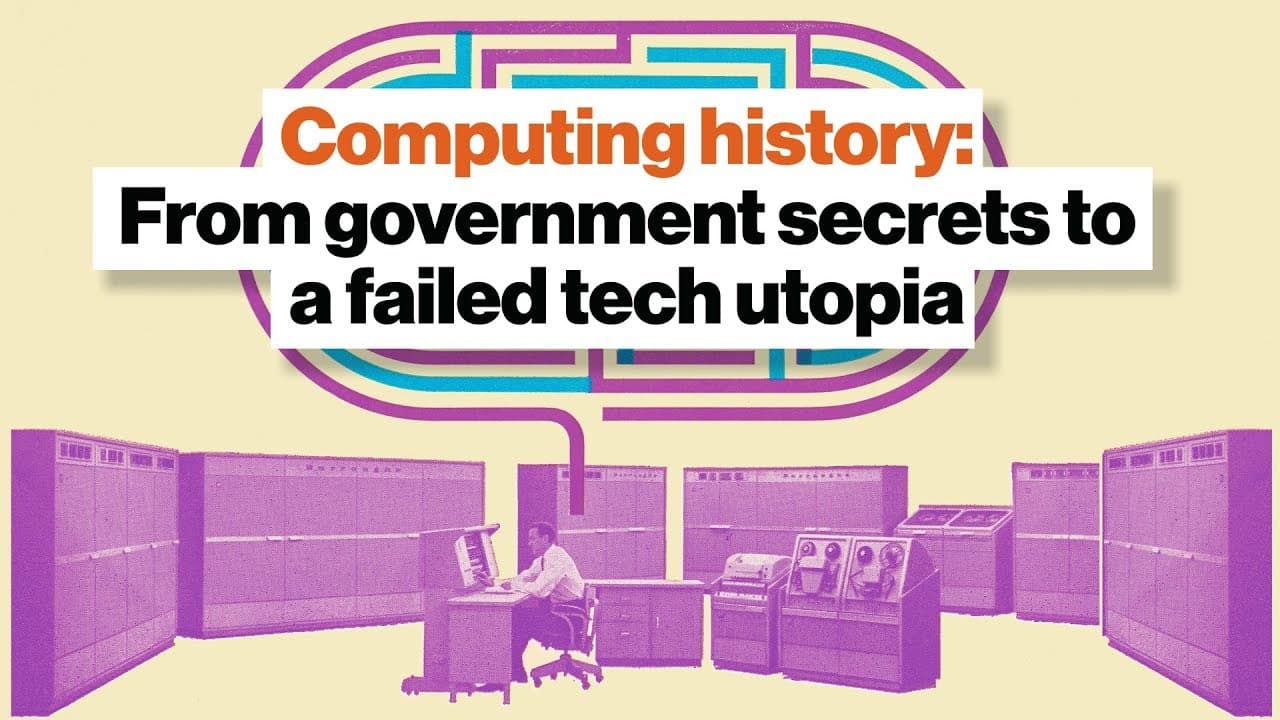
Computing history: From government secrets to a failed tech utopia | Margaret O'Mara | Big Think
TL;DR
From fears of robot overlords to empowering individuals through personal computing, technology has evolved, shaping generations.
Transcript
Ever since the advent of digital computing, technologists had been thinking about how computers could enlarge human capacity, and both in ways that were empowering and also ways that were terrifying. I mean, worries about the robot overlords have been with us for a very long time. You know, there was this combination of fascination and fear with wh... Read More
Key Insights
- 😨 Early computers evoked fascination and fear, shaping public perception of technology.
- 💻 The personal computer generation aimed to democratize technology for empowerment and equity.
- 🧑💻 Technologists believed in techno-utopianism, seeing technology as a tool for liberation and communication.
- ❓ Expectations of technology solving societal issues clashed with its actual impact.
- 🥺 The evolution of technology led to both connection and division in society through social media.
- 😨 Personal computing shifted the narrative from fears of robot overlords to empowering individuals.
- 💻 The countercultural influences of the 1960s shaped the values of the personal computer generation.
Install to Summarize YouTube Videos and Get Transcripts
Explore YouTube Video Summarizer or Get YouTube Transcript Extractor
Questions & Answers
Q: How did early computers influence public perception?
Early computers were viewed with fascination and fear, seen as electronic brains that could outperform humans, shaping society's views on technology with a mix of awe and trepidation.
Q: What motivated the personal computer generation to change technology's role in society?
The personal computer generation, inspired by countercultural movements of the 1960s, sought to democratize technology, shifting it from government control to personal empowerment, enlightenment, and equity.
Q: What key values drove technologists of the personal computer generation?
Technologists of the personal computer generation shared a belief in techno-utopianism, viewing technology as a tool for empowerment and liberation from institutional controls, aiming to address societal issues through personal computing.
Q: How did the initial vision of technology's role in society differ from its actual impact?
While the personal computer generation idealized technology as a solution to societal problems, the reality showed that technology, despite its liberating potential, also created new challenges such as division through social media.
Summary & Key Takeaways
-
Early computers were seen as both empowering and terrifying, leading to fascination and fear in society.
-
The personal computer generation emerged in the 1960s, focusing on empowerment, enlightenment, and equity through technology.
-
Technologists believed in a techno-utopianism, aiming to use computers for liberation and communication.
Read in Other Languages (beta)
Share This Summary 📚
Summarize YouTube Videos and Get Video Transcripts with 1-Click
Try YouTube Summary with ChatGPT & Claude or YouTube Transcript Generator
Explore More Summaries from Big Think 📚




Summarize YouTube Videos and Get Video Transcripts with 1-Click
Try YouTube Summary with ChatGPT & Claude or YouTube Transcript Generator