Why Aren't Index Funds Breaking the Market?
TL;DR
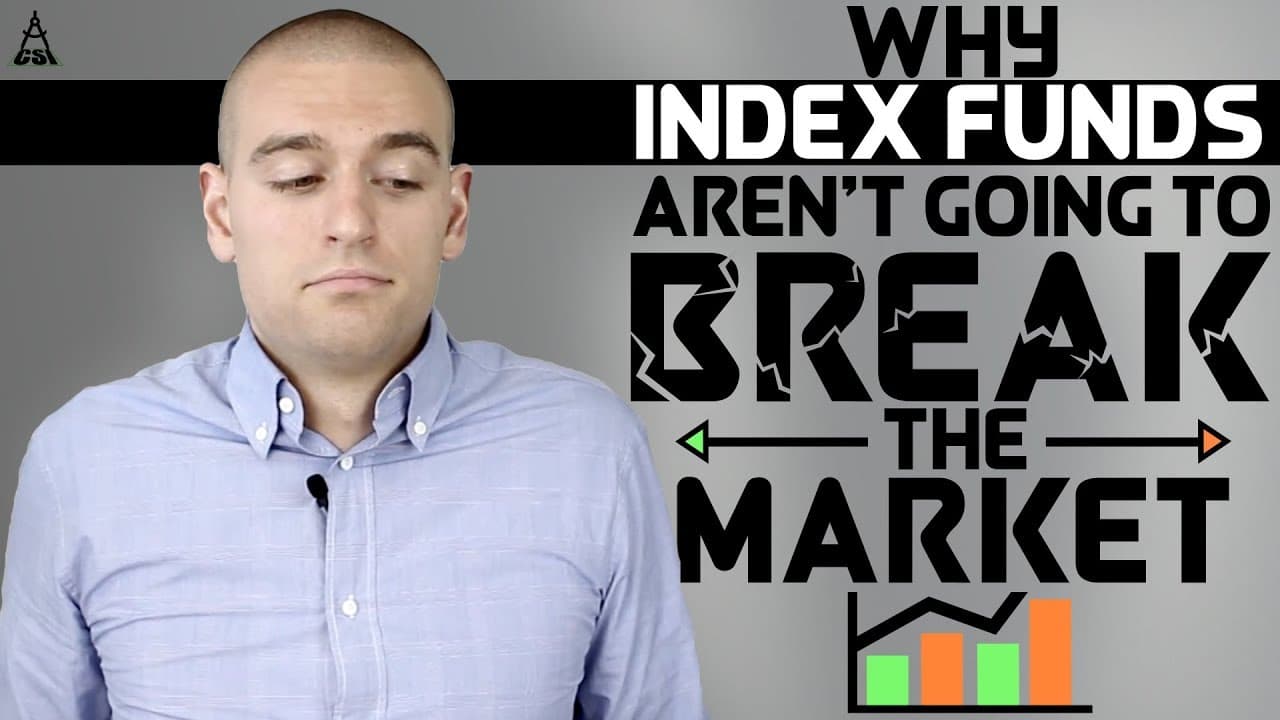
Index funds are unlikely to break the market because market efficiency relies on competition among active managers. Although index investing is growing due to the underperformance of actively managed funds, the presence of informed active managers helps maintain market efficiency. Therefore, even with more investors turning to index funds, the market is expected to remain stable.
Transcript
The idea of index funds was conceived in the 1970s, and received immediate support from some of the smartest academics and economists in the world at the time. Industry practitioners on the other hand, laughed at the idea. Index funds were even called un-American. Who wants to be average? The first index fund that could be accessed by retail invest... Read More
Key Insights
- 😮 Actively managed funds have historically dominated the investment market, but their underperformance has contributed to the rise of index funds.
- 💓 Markets are efficient, making it difficult for active managers to consistently beat the market.
- 🫰 The growth of index funds is unlikely to break the market as long as there is sufficient competition among active managers.
- 🫰 The effects of index investing on market efficiency depend on who turns to passive investing and the costs of uncovering relevant information.
Install to Summarize YouTube Videos and Get Transcripts
Explore YouTube Video Summarizer or Get YouTube Transcript Extractor
Questions & Answers
Q: Why were index funds initially ridiculed and considered un-American?
Index funds were initially seen as unappealing because they represented average market returns, and investors preferred the opportunity for higher returns offered by actively managed funds.
Q: Why have index funds gained popularity in recent years?
The failure of actively managed funds to outperform their benchmark indices has led investors to reconsider their investment strategies. Index funds offer lower fees and comparable returns, making them an attractive option.
Q: What is market efficiency and how does it affect active managers?
Market efficiency means that security prices reflect all available information, making it difficult for active managers to gain an information edge and consistently beat the market. This is because any relevant information they possess is already priced into stocks.
Q: How does the Grossman-Stiglitz paradox relate to index investing?
The Grossman-Stiglitz paradox suggests that if too many investors index, it may attract active managers who can profit from market inefficiencies. This influx of active managers would then push the market back towards efficiency.
Summary & Key Takeaways
-
Index funds were initially laughed at and considered un-American, but have gained popularity in recent years.
-
Actively managed funds have historically dominated the investment market, but their underperformance has contributed to the rise of index funds.
-
Markets are efficient, making it difficult for active managers to consistently beat the market, leading to the popularity of index investing.
Read in Other Languages (beta)
Share This Summary 📚
Summarize YouTube Videos and Get Video Transcripts with 1-Click
Try YouTube Summary with ChatGPT & Claude or YouTube Transcript Generator
Explore More Summaries from Ben Felix 📚





Summarize YouTube Videos and Get Video Transcripts with 1-Click
Try YouTube Summary with ChatGPT & Claude or YouTube Transcript Generator