Black holes give birth to new universes: Cosmological evolution | Jeffrey Shainline
TL;DR
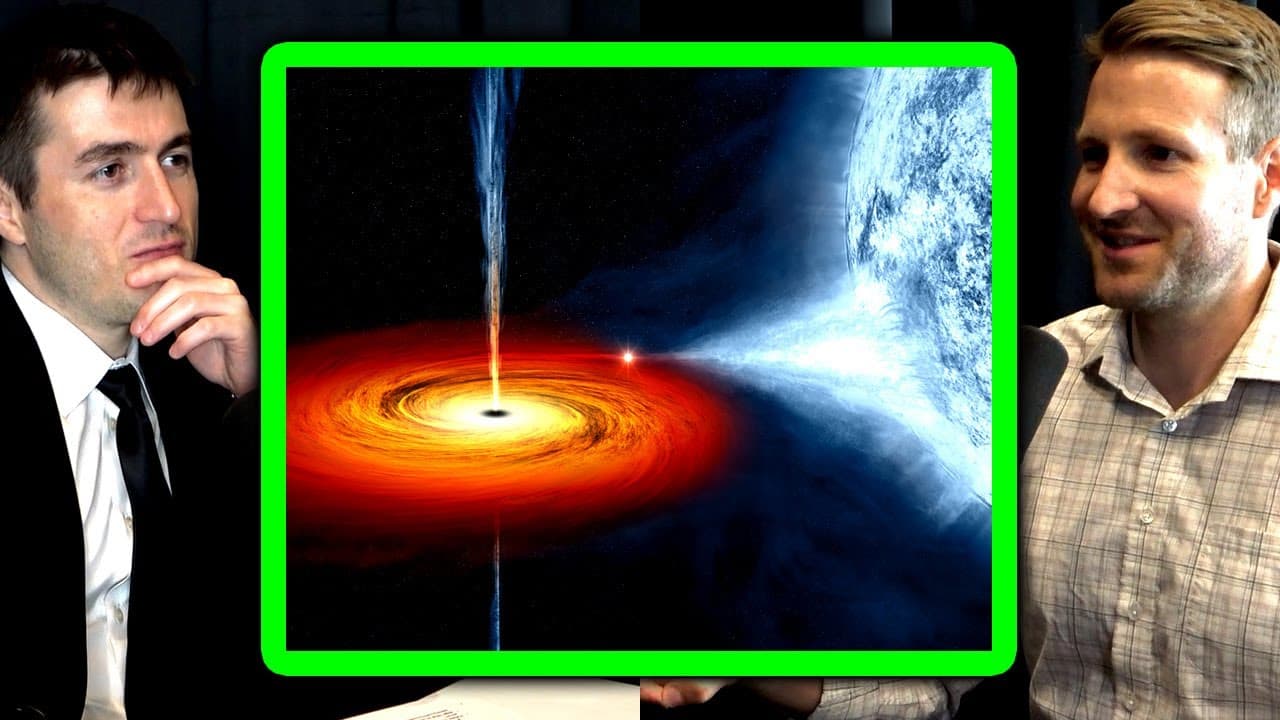
The content explores the concept of cosmological natural selection and the idea that intelligent civilizations could create new universes through technological means.
Transcript
see i wonder if nature in this kind of discussion if nature is a catalyst for innovation or if it's a ceiling for innovation so like is it going to always limit us like what you talking about silicon is it just make it super easy to do awesome stuff in a certain dimension but we could still do awesome stuff in other ways it'll just be harder or it ... Read More
Key Insights
- 🥺 Cosmological natural selection proposes that black holes can be seen as the embryos of new universes, leading to an evolutionary process of universes with varying physics parameters.
- ✴️ The physics of our universe may have evolved to optimize the production of stars, which are essential for creating black holes and potentially generating offspring universes.
- 🤩 Technological civilizations could potentially surpass the natural rate of star production and create new universes through the compression of matter into singularities.
Install to Summarize YouTube Videos and Get Transcripts
Explore YouTube Video Summarizer or Get YouTube Transcript Extractor
Questions & Answers
Q: Who is Lee Smolin and what is his idea of cosmological natural selection?
Lee Smolin is a theoretical physicist who proposed the idea of cosmological natural selection. According to this concept, black holes in one universe can be seen as the big bang of another universe, leading to an evolutionary process of universes with slightly different physics parameters through quantum fluctuations.
Q: How does the concept of cosmological natural selection challenge our understanding of the universe?
Cosmological natural selection suggests that the universe is not a unique entity but part of a larger multiverse, with numerous universes evolving along different paths. It presents the idea that our universe's physics may have evolved to maximize the production of stars and black holes, which potentially opened the door for the emergence of intelligent beings.
Q: Could technological civilizations play a role in creating new universes?
The content proposes that technological civilizations could efficiently compress matter into singularities, creating black holes that could become progenitors of new universes. By utilizing advanced technologies and manipulating gravitational forces, these civilizations could potentially outpace the natural rate of star production in creating offspring universes.
Q: How does the possibility of technological universe creation tie into our understanding of the universe's purpose?
The content highlights that cosmological natural selection alone does not provide an explanation for the existence of intelligent beings. It suggests that through technological advancements, civilizations could become active participants in the universe's evolution and play a role in the creation of new universes, potentially giving purpose to their existence.
Summary & Key Takeaways
-
The content introduces the concept of cosmological natural selection, proposed by physicist Lee Smolin, which suggests that the universe evolves and produces offspring universes through black holes.
-
It explains the connection between the Big Bang, inflationary cosmology, and the production of matter in the universe.
-
The content discusses how the physics of our universe may have evolved to maximize the production of stars, which in turn create black holes and potentially give rise to new universes.
Read in Other Languages (beta)
Share This Summary 📚
Summarize YouTube Videos and Get Video Transcripts with 1-Click
Try YouTube Summary with ChatGPT & Claude or YouTube Transcript Generator
Explore More Summaries from Lex Clips 📚




Summarize YouTube Videos and Get Video Transcripts with 1-Click
Try YouTube Summary with ChatGPT & Claude or YouTube Transcript Generator