Every day you live, you impact the planet | Jane Goodall
TL;DR
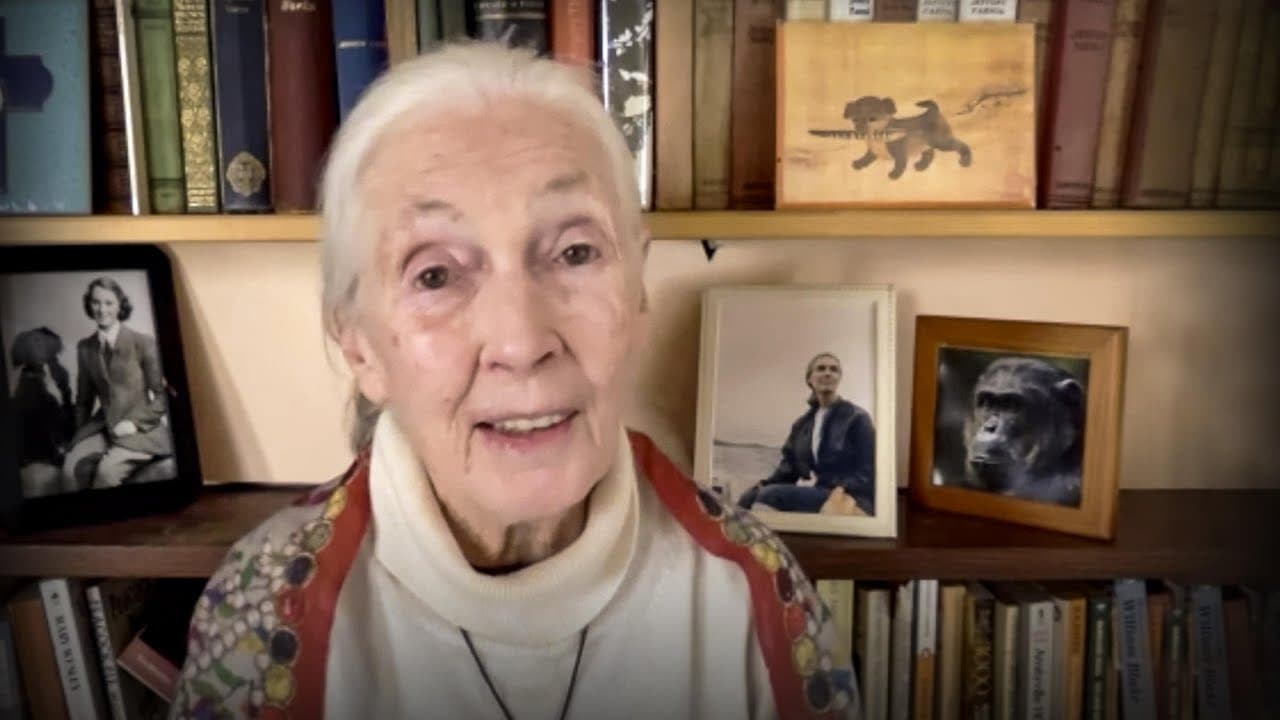
In this interview, Dr. Jane Goodall discusses the connection between the destruction of the environment and the spread of zoonotic diseases like COVID-19, as well as her work in chimpanzee conservation and the importance of ethical choices in protecting the planet.
Transcript
Chris Anderson: Dr. Jane Goodall, welcome. Jane Goodall: Thank you, and I think, you know, we couldn't have a complete interview unless people know Mr. H is with me, because everybody knows Mr. H. CA: Hello, Mr. H. In your TED Talk 17 years ago, you warned us about the dangers of humans crowding out the natural world. Is there any sense in which yo... Read More
Key Insights
- 🌍 Destruction of the environment, including loss of habitat and human-animal interactions, contributes to the spread of zoonotic diseases like COVID-19. Animals in cramped conditions at wild-animal markets in Asia provide ideal conditions for viruses to jump to humans.
- 🐒 Jane Goodall broke through societal barriers to become a leading scientist, driven by her love for animals and supported by her mother's encouragement.
- 🔍 Goodall's patient observation techniques allowed her to gain the trust of chimpanzees, leading to groundbreaking discoveries about their tool use and behavior.
- 😄 Chimpanzees exhibit a sense of humor, seen in their playful games and teasing behavior.
- 👥 Chimpanzees also exhibit violent behavior and primitive war, highlighting the close relationship between aggression and our primate relatives.
- 🌳 Nature is both beautiful and terrifying, and while humans have the ability to plan and modify the environment, our destruction of nature and lack of respect for it threatens our future and the future of our children.
- 🌱 Goodall's community-based conservation approach, putting people at the center, has been successful in engaging local communities in protecting chimpanzees and their habitats.
- 💪 Goodall's passion for wildlife and the natural world, combined with her gift for communication, fuels her tireless activism and inspires others, especially young people, to take action to protect the planet.
Install to Summarize YouTube Videos and Get Transcripts
Explore YouTube Video Summarizer or Get YouTube Transcript Extractor
Questions & Answers
Q: In your TED Talk, you mentioned that zoonotic diseases like COVID-19 are partly due to the destruction of the environment. Can you explain how this happens?
Destruction of the environment leads to animals losing their habitat and being crowded together. This can result in a virus from a reservoir species jumping into a new species, such as humans. Additionally, animals being pushed into closer contact with humans, such as in wild animal markets, can create ideal conditions for viruses to spill over from animals to humans.
Q: How were you able to break through as a female scientist in the 1960s and make groundbreaking discoveries about chimpanzees?
I had a supportive mother who encouraged my love for animals. Despite societal expectations and sexism, I pursued my passion. Although there were no other scientists doing what I was doing, I persevered and worked hard to take advantage of every opportunity. My breakthrough came through my patience and determination to gain the trust of the chimpanzees and observe their behavior.
Q: What were the most exciting moments you discovered about chimpanzee behavior?
One of the most exciting moments was observing a chimpanzee using and making tools to fish for termites. This observation challenged the scientific belief that only humans used and made tools. It was this observation and the accompanying descriptions and film footage that helped change the minds of scientists who doubted chimpanzees' capabilities.
Q: Have you observed a sense of humor in chimpanzees?
Yes, chimpanzees have a sense of humor that can be witnessed when they play games. For example, a larger chimpanzee may playfully tease a smaller one by repeatedly pulling away a vine the smaller one is trying to catch. The smaller one may cry, and the larger one may laugh, showing elements of humor in their interaction.
Q: You have talked about the violent nature of chimpanzee groups. How did you process this observation and did it affect your perception of human violence?
The instances of violence among chimpanzee groups initially surprised me and made me realize that they are more similar to humans than I thought. It reminded me of my first encounter with human evil, witnessing the aftermath of the Holocaust. This observation reinforced my belief that aggression is innate in both humans and chimpanzees, although humans have the ability to plan and engage in more calculated acts of violence, which is a significant difference between our species.
Q: How should we think about nature, considering its scary and beautiful aspects?
Nature encompasses a spectrum of evolution, which includes beautiful and terrifying aspects. Although many environmentalists see nature as pure and humans as destructive, it is important to acknowledge and respect the terrifying aspects of nature. Our ability to modify and manipulate the environment, plan for the future, and engage in destructive actions sets us apart from other species. It is crucial to find a balance where we appreciate nature's awesomeness while also recognizing our responsibility to protect and sustain it.
Q: What worries you the most about the future of our planet?
The fact that we have a small window of time to address the harm we have caused and slow down climate change worries me the most. The urgency to take action is clear, but many people understand the problems yet fail to act. Getting enough people to take action and make ethical choices is essential for the future of our planet and the well-being of future generations.
Q: What is the hope for the future, according to you?
My greatest hope lies in the younger generation. The youth are increasingly aware of the environmental issues we face and are taking action through programs like "Roots and Shoots." Their enthusiasm and passion give me hope. Additionally, advancements in technology and our ability to communicate globally provide tools for positive change. By making ethical choices and taking individual actions, we can collectively move towards a better world for future generations.
Summary & Key Takeaways
-
Dr. Jane Goodall discusses the connection between the destruction of the environment and the spread of zoonotic diseases like COVID-19, highlighting the need to respect and protect animals.
-
She reflects on her breakthrough as a female scientist and the importance of a supportive upbringing in pursuing her passion for studying animals.
-
Dr. Goodall emphasizes the importance of embracing nature and finding a balance between our ability to modify the environment and our responsibility to protect it. She advocates for a shift towards ethical choices and greater engagement in conservation efforts.
Read in Other Languages (beta)
Share This Summary 📚
Summarize YouTube Videos and Get Video Transcripts with 1-Click
Try YouTube Summary with ChatGPT & Claude or YouTube Transcript Generator
Explore More Summaries from TED 📚


Summarize YouTube Videos and Get Video Transcripts with 1-Click
Try YouTube Summary with ChatGPT & Claude or YouTube Transcript Generator