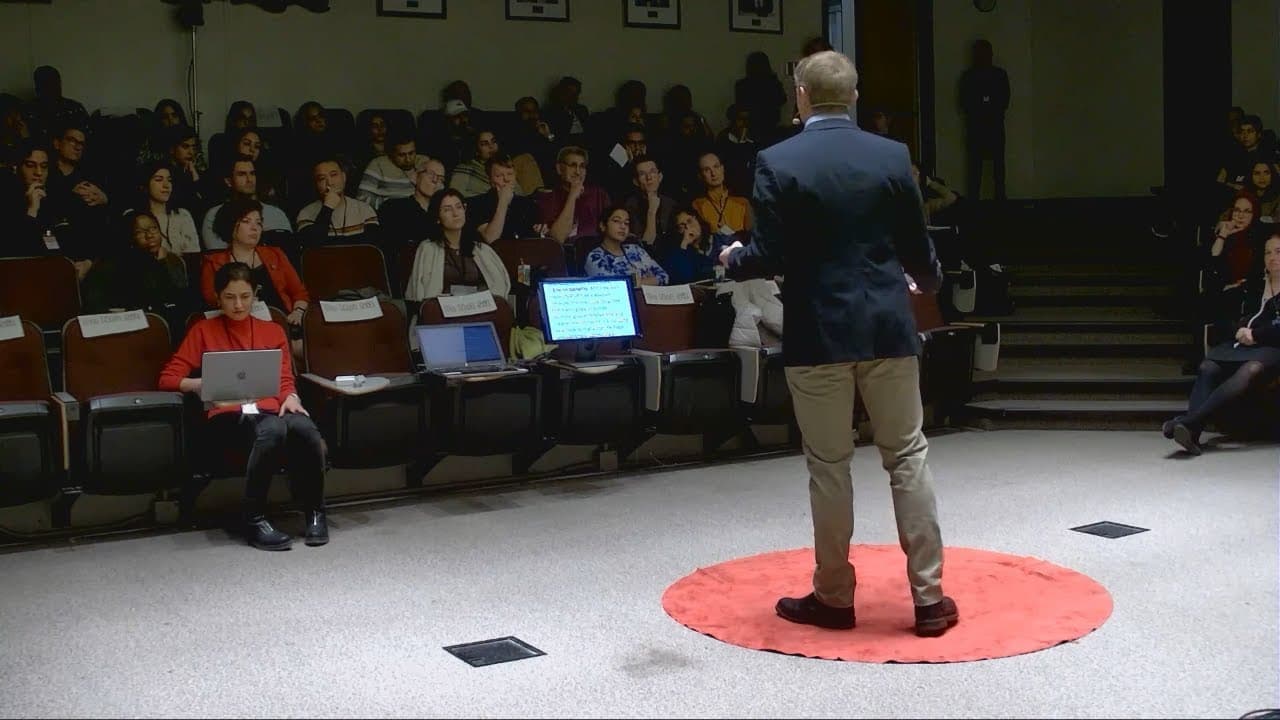
The ethical dilemma of natural solutions to climate crises | Brian Robinson | TEDxPlateauMontRoyal
TL;DR
Nature-based solutions, like reforestation, are crucial but have complex challenges and limitations.
Transcript
we are undeniably in a new climate era new climate territory globally we've just seen the two hottest years on record 2023 and 2024 our oceans are about six inches higher than they were a hundred years ago our Glaciers are disappearing ice sheets are shrinking right emissions have just kept increasing and we don't see them stopping so what can we d... Read More
Key Insights
- 🌐 The recent surge in global temperatures and ocean levels highlights the urgency of addressing climate change.
- 🪡 Economic interests often overshadow the need for immediate emission reductions, complicating climate action strategies.
- 🥹 Nature-based solutions hold promise for climate mitigation but must be implemented thoughtfully to avoid ecological and social repercussions.
- 📌 Successful reforestation requires careful selection of planting locations and species to ensure ecological compatibility and prevent adverse effects.
- 🤨 The lack of rigor in carbon market operations raises doubts about the efficacy and accountability of purchasing carbon credits.
- 🗯️ Equity and local community rights must be prioritized in carbon credit schemes to avoid external exploitation and disenfranchisement.
- ⚾ A clear understanding of the effectiveness and impacts of nature-based solutions is essential to avoid relying too heavily on potentially misleading strategies.
Install to Summarize YouTube Videos and Get Transcripts
Explore YouTube Video Summarizer or Get YouTube Transcript Extractor
Questions & Answers
Q: What are some of the main challenges posed by limiting carbon emissions?
Limiting carbon emissions poses significant challenges as it often conflicts with economic growth and stability. Societies tend to prioritize immediate economic opportunities for today’s livelihoods over long-term sustainability commitments. This requires striking a balance between reducing emissions and maintaining economic prosperity, making it a complex issue that involves tough decision-making on both individual and collective levels.
Q: How effective are engineering solutions like carbon capture technologies?
Current engineering solutions for carbon capture, such as machines designed to suck carbon from the atmosphere, have not proven to be cost-effective or efficient at the scale needed. The technologies are still in developmental stages and face uncertainties regarding their scientific efficacy. As such, they are not a reliable standalone solution to the climate crisis, necessitating a focus on more natural interventions.
Q: What role do trees play in addressing climate change?
Trees serve as a dominant solution for combating climate change, primarily through reforestation and maintaining existing forests. They absorb carbon from the atmosphere, providing significant ecological benefits. However, successful tree planting is contingent upon selecting appropriate ecological sites and species, as planting in unsuitable areas can inadvertently lead to negative effects, like increasing warming.
Q: What concerns arise from large-scale reforestation initiatives?
Large-scale reforestation initiatives can inadvertently create tensions regarding land use and food security, as they may compete with agricultural land needed for food production. Moreover, poorly planned efforts may endanger local communities' rights and ecological resilience. Without careful consideration of local contexts, these initiatives risk causing more harm than good.
Q: How effective are current carbon market mechanisms?
The effectiveness of current carbon market mechanisms is questionable. Studies indicate that only a fraction (6% to 25%) of emissions reductions paid for through forest protection efforts result in real, measurable benefits. This raises concerns about the transparency and credibility of carbon markets and emphasizes the need for robust regulatory frameworks to ensure genuine impacts.
Q: What implications do private companies have on carbon credit initiatives?
Private companies can dominate carbon credit initiatives, potentially undermining local communities' rights and interests. For example, in Zimbabwe, a private firm controls a considerable portion of carbon credit rights. While this can provide immediate financial resources to the country, it can also lead to unequal power dynamics and disregard for local governance and needs.
Q: What does the term "climate catfishing" refer to in this context?
"Climate catfishing" refers to the deceptive practices surrounding nature-based climate solutions that appear beneficial at the surface but may lack substantial underlying efficacy or accountability. The term cautions against overly optimistic views of such solutions without rigorous evaluation of their actual effectiveness and societal impacts, urging a more transparent assessment of climate interventions.
Q: How can the balance between ecological restoration and economic activity be achieved?
Achieving a balance between ecological restoration and economic activity requires collaborative efforts among stakeholders, understanding local contexts, and implementing sustainable practices. It is crucial to design initiatives that both enhance environmental health and support economic needs, ensuring that nature-based solutions do not undermine food security or community rights while seeking long-term climate benefits.
Summary & Key Takeaways
-
The increasing global temperatures and rising sea levels demand urgent action against climate change, yet limiting emissions is economically complicated.
-
Nature-based solutions, particularly reforestation, show promise but face challenges in effectiveness, land use, and social impacts, questioning their viability.
-
Financial mechanisms are increasingly supporting nature-based initiatives, but the legitimacy and transparency of carbon markets are critical for real climate benefits.
Read in Other Languages (beta)
Share This Summary 📚
Summarize YouTube Videos and Get Video Transcripts with 1-Click
Try YouTube Summary with ChatGPT & Claude or YouTube Transcript Generator
Explore More Summaries from TEDx Talks 📚




Summarize YouTube Videos and Get Video Transcripts with 1-Click
Try YouTube Summary with ChatGPT & Claude or YouTube Transcript Generator