Price Ceilings: The US Economy Flounders in the 1970s
TL;DR
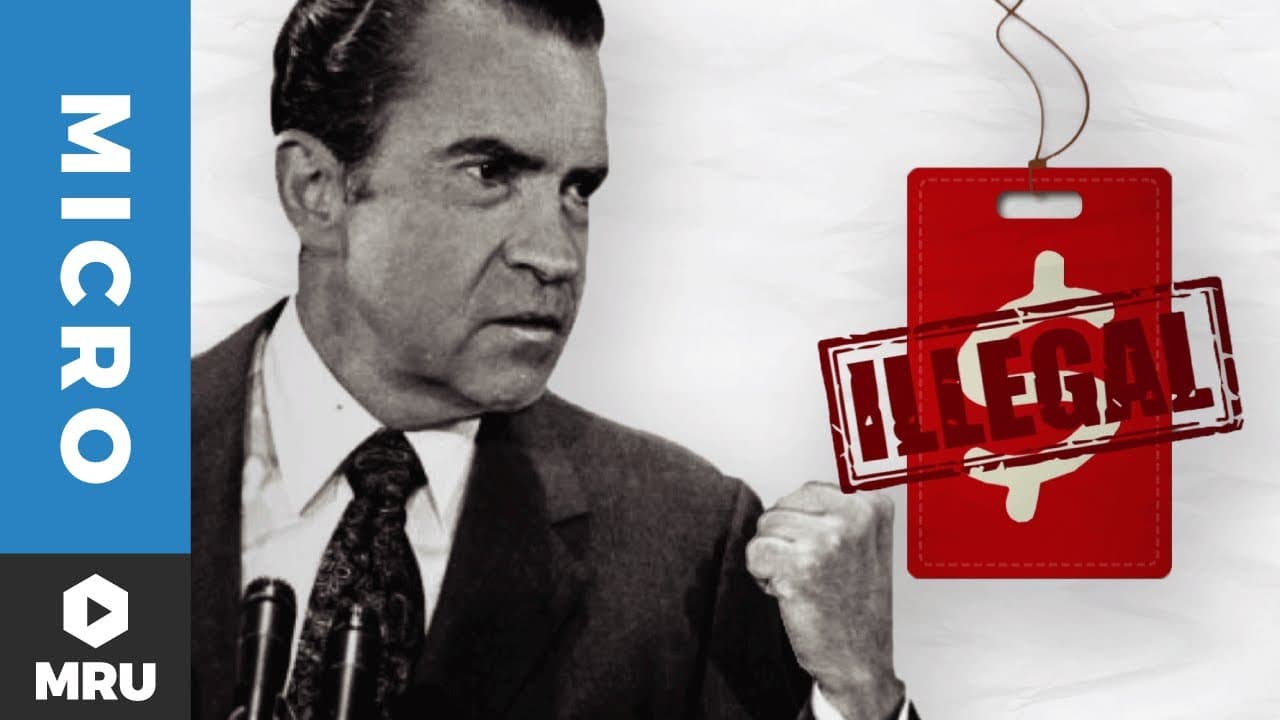
Nixon's 1971 price controls led to economic shortages and inefficiencies.
Transcript
♪ [music] ♪ - [President Nixon] I am today ordering a freeze on all prices and wages throughout the United States.” – [Announcer] In August of 1971, in an attempt to control inflation, President Richard Nixon simply declared that price increases were now illegal. Soon after Nixon's declaration, the situation in many markets started to look like ... Read More
Key Insights
- In 1971, President Nixon implemented price ceilings to curb inflation, making price increases illegal and leading to significant economic disruptions.
- Price ceilings prevented the market equilibrium, causing shortages as demand exceeded supply, particularly evident in the gasoline market during the 1970s.
- Consumers faced long lines and wasted time as they couldn't bid up prices, highlighting inefficiencies in the price control system.
- Price controls disrupted the coordination of economic activities, leading to shortages in essential materials like steel, affecting industries and construction.
- Entrepreneurs lacked incentives to redistribute resources effectively due to price ceilings, causing regional disparities in resource availability.
- Price ceilings led to unintended consequences, such as farmers drowning chicks to avoid losses due to controlled chicken prices but uncontrolled feed costs.
- The energy crisis worsened as price controls hindered oil redistribution, leaving some regions with excess and others with severe shortages.
- The video promises further exploration of price ceilings, their effects, and analysis using supply and demand concepts in subsequent content.
Install to Summarize YouTube Videos and Get Transcripts
Explore YouTube Video Summarizer or Get YouTube Transcript Extractor
Questions & Answers
Q: What were the main reasons behind Nixon's implementation of price ceilings?
Nixon implemented price ceilings in 1971 primarily to control inflation, which was a significant economic concern at the time. By making price increases illegal, he aimed to stabilize the economy and prevent the rapid rise of consumer prices. However, this intervention led to unintended consequences, including shortages and economic inefficiencies.
Q: How did price ceilings affect the gasoline market in the 1970s?
Price ceilings in the gasoline market led to significant shortages as the legal price was kept below the market equilibrium. Consumers couldn't bid up prices to signal demand, resulting in long lines and wasted time. This inefficiency meant that while monetary prices remained stable, the real cost in terms of time increased, exacerbating the energy crisis.
Q: What were the unintended consequences of price controls on industries?
Price controls led to widespread disruptions across industries. Shortages in essential materials like steel forced construction delays and factory closures. This dis-coordination caused ripple effects, with businesses reliant on these industries also facing shutdowns. The lack of economic incentives for resource redistribution further compounded these issues, highlighting the inefficacy of price controls.
Q: Why did farmers drown chicks during the price control period?
Farmers faced a dilemma due to price ceilings on chickens but not on feed. At controlled prices, selling chickens was unprofitable as feed costs remained high. To avoid financial losses, farmers resorted to drowning chicks, an extreme measure illustrating the severe unintended consequences of price controls on agricultural practices and market dynamics.
Q: How did price ceilings impact regional resource distribution?
Price ceilings disrupted the natural redistribution of resources, as entrepreneurs had no incentive to move goods from low-value to high-value areas. This was evident during the energy crisis when oil wasn't shipped from surplus regions to areas in need. Consequently, some regions faced shortages while others had excess resources, demonstrating the inefficiencies introduced by price controls.
Q: What role did the price system play before the implementation of price ceilings?
Before price ceilings, the price system effectively coordinated global economic activities, balancing supply and demand through price signals. It facilitated resource allocation by allowing prices to rise or fall based on market conditions. This dynamic system ensured efficient distribution, incentivizing production and consumption adjustments in response to changing demands and resource availability.
Q: How did price controls affect consumer behavior during the 1970s?
Consumers faced altered behavior due to price controls, as they couldn't use money to express demand. Instead, they spent time waiting in long lines, effectively 'bidding' with their time. This shift in consumer behavior highlighted the inefficiencies of price controls, where monetary stability was achieved at the cost of increased non-monetary expenses like time and convenience.
Q: What future content does the video promise regarding price ceilings?
The video promises to delve deeper into the concept of price ceilings, exploring their various effects and how to analyze these using supply and demand principles. It aims to provide a comprehensive understanding of the economic implications of price controls, preparing viewers for more detailed discussions on the topic in subsequent videos.
Summary & Key Takeaways
-
In 1971, Nixon imposed price ceilings to fight inflation, leading to shortages as demand exceeded supply. Consumers faced long lines, wasting time instead of spending money. Price controls disrupted economic coordination, causing shortages in industries and resources, with unintended consequences like drowned chicks due to unprofitable farming conditions.
-
Price ceilings created inefficiencies and regional disparities as entrepreneurs lacked incentives to redistribute resources. The energy crisis exemplified this, with oil shortages in some areas while others had excess. The video sets the stage for deeper analysis of price ceilings and their economic impacts in future content.
-
Nixon's price controls aimed to control inflation but resulted in economic chaos. Shortages, inefficiencies, and unintended consequences plagued the 1970s economy. The video highlights the failures of price ceilings and prepares viewers for further exploration of their effects using supply and demand analysis.
Read in Other Languages (beta)
Share This Summary 📚
Summarize YouTube Videos and Get Video Transcripts with 1-Click
Try YouTube Summary with ChatGPT & Claude or YouTube Transcript Generator
Explore More Summaries from Marginal Revolution University 📚

Summarize YouTube Videos and Get Video Transcripts with 1-Click
Try YouTube Summary with ChatGPT & Claude or YouTube Transcript Generator