Free will is both an illusion and real | Frank Wilczek and Lex Fridman
TL;DR
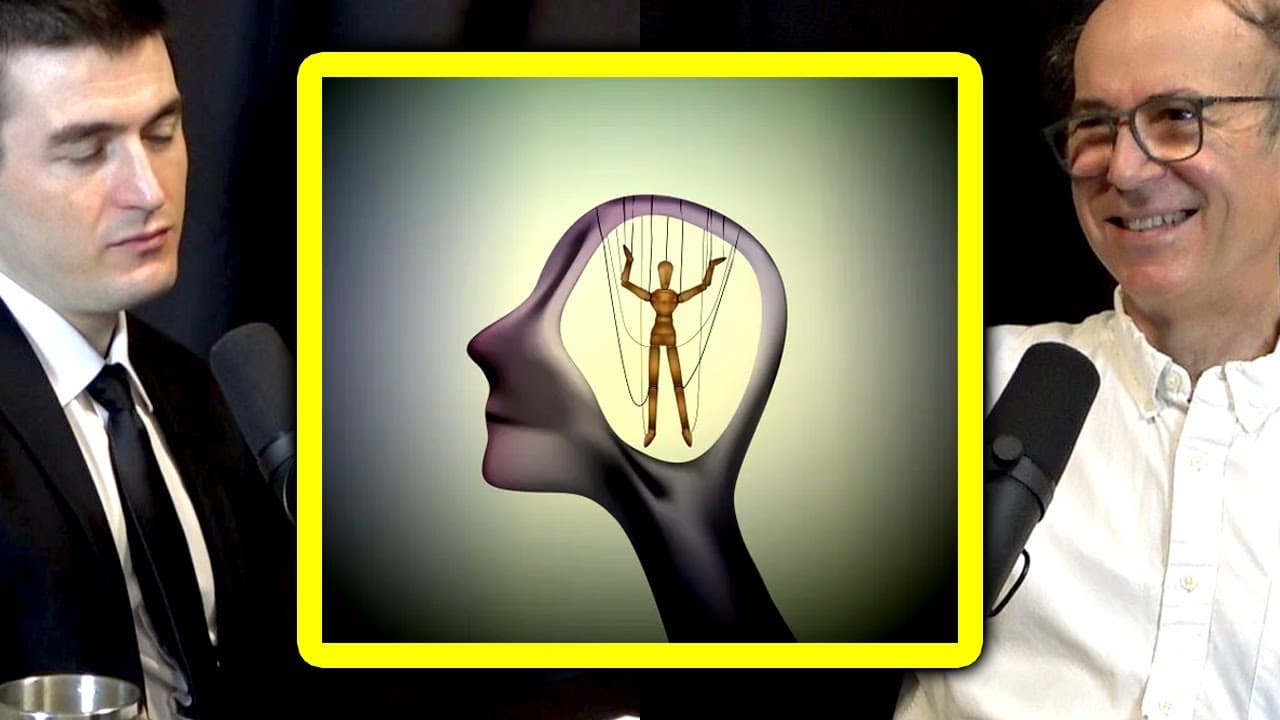
Complementarity suggests that embracing the idea that free will is both an illusion and not can lead to a more humble and liberating understanding of the world.
Transcript
in other cases like one that i like to talk like to think about is or like to point out as an example is is free will and determinism it's much less of a theorem and more more a uh more a a kind of uh way of thinking about things that i think is uh reassuring and avoids uh a lot of unnecessary quarreling and confusion the quarreling i'm okay with a... Read More
Key Insights
- ❓ Complementarity provides a framework for understanding contradictory truths and avoiding unnecessary quarreling.
- 🥺 Embracing complementarity leads to humility and a more expansive worldview.
- ❓ Complementarity encourages tolerance and appreciation for different perspectives.
- 🤯 Free will is a concept that we experience, but the emergent nature of the mind from matter suggests an alternative deterministic perspective.
- 👮 Complementarity challenges traditional beliefs in various fields, including philosophy, psychology, and law.
- 🤯 Complementarity can be a liberating concept that allows for mind expansion and acceptance of the universe.
- 🖐️ Quantum mechanics and the subtleties within it play a role in understanding the interplay between self-awareness and complementarity.
Install to Summarize YouTube Videos and Get Transcripts
Explore YouTube Video Summarizer or Get YouTube Transcript Extractor
Questions & Answers
Q: What is complementarity?
Complementarity is a concept that suggests embracing the idea that contradictory truths can coexist, such as free will being both an illusion and not, leading to a more harmonious and tolerant worldview.
Q: How does complementarity challenge our beliefs?
Complementarity challenges our beliefs by showing that ideas like the Earth not being the center of the universe, humans not being superior, and the mind emerging from matter require humility and a willingness to accept that our understanding may be limited.
Q: Does complementarity limit our thinking?
No, complementarity actually expands our thinking by encouraging the exploration of different perspectives and understanding things in alternative ways, enhancing our overall understanding of the world.
Q: How does complementarity relate to self-awareness?
Complementarity suggests that there will always be a discrepancy between the "god's eye view" that sees everything objectively and the limited perspective of the individual consciousness, leading to potential conflicts between determinism and the perception of free will.
Summary & Key Takeaways
-
Complementarity is a way of thinking that avoids unnecessary quarreling and confusion by accepting that free will is both an illusion and not.
-
Complementarity teaches us humility by challenging our beliefs about our place in the universe and the nature of the mind.
-
Embracing complementarity allows for tolerance and multiple perspectives, expanding our understanding of the world.
Read in Other Languages (beta)
Share This Summary 📚
Summarize YouTube Videos and Get Video Transcripts with 1-Click
Try YouTube Summary with ChatGPT & Claude or YouTube Transcript Generator
Explore More Summaries from Lex Clips 📚


Summarize YouTube Videos and Get Video Transcripts with 1-Click
Try YouTube Summary with ChatGPT & Claude or YouTube Transcript Generator