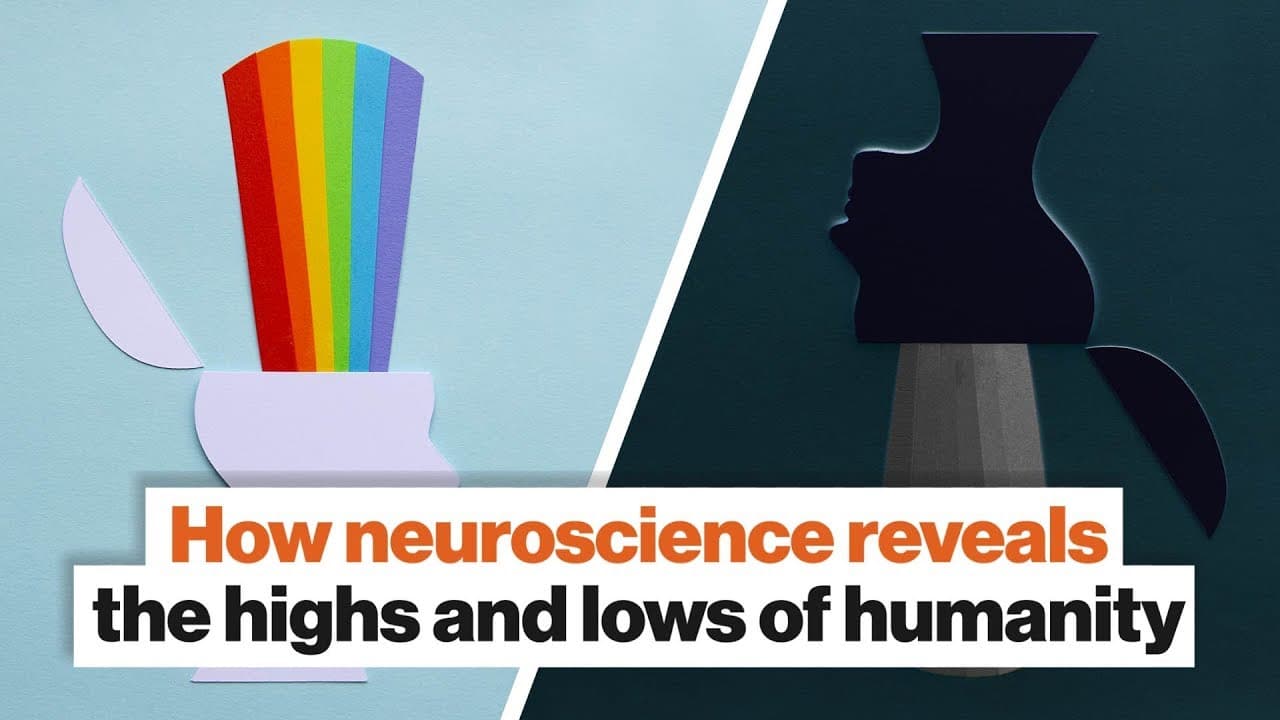
How neuroscience shows the highs and lows of humanity | Adam Waytz | Big Think
TL;DR
Neuroscience reveals how human touch and perception affects our interactions and relationships.
Transcript
What I like about studying humanization and dehumanization is that we now have a variety of methods at our disposal. And neuroscience is often not the perfect method to study a lot of things, but it offers a great insight to humanization and dehumanization because we now know that there is a prescribed set of regions that tends to come online, or b... Read More
Key Insights
- 🧠 Neuroscience reveals specific brain regions activated when perceiving others as fully human or less human, indicating social biases.
- 🥺 Perception of outgroup members or marginalized individuals often leads to reduced brain activation associated with humanization.
- 😨 Human touch has the ability to reduce the perception of pain, enhance cooperation among individuals, and add value to handmade goods through signals of care and authenticity.
- 📡 Studies demonstrate that human touch signals cooperative intent and authenticity, giving meaning to everyday experiences and objects.
- 🫵 Brain activity related to humanization and dehumanization is influenced by how individuals are perceived, with certain groups being viewed as less human.
- ❓ Neuroscience offers insights into how humanization and dehumanization affect social interactions and relationships.
- 🖐️ Human touch plays a significant role in interpersonal relationships by reducing pain perception, fostering cooperation, and adding value to everyday experiences.
Install to Summarize YouTube Videos and Get Transcripts
Explore YouTube Video Summarizer or Get YouTube Transcript Extractor
Questions & Answers
Q: How does neuroscience contribute to understanding humanization and dehumanization?
Neuroscience utilizes brain imaging to identify specific regions activated when perceiving individuals as fully human or less than human, providing valuable insights into social cognition and biases.
Q: What impact does perception have on brain activity related to humanization?
Studies show that brain regions associated with humanization are less active when perceiving outgroup members or marginalized individuals, highlighting biases in how certain groups are viewed.
Q: How does human touch influence interpersonal relationships?
Human touch has been shown to reduce the perception of pain, enhance cooperation among individuals, and add value to handmade goods by signaling care, cooperation, and authenticity.
Q: Why is human touch considered psychologically significant?
Human touch is psychologically important due to its power in reducing pain, fostering cooperation, and adding meaning to everyday experiences and objects through signals of care and authenticity.
Summary & Key Takeaways
-
Neuroscience enables the study of humanization and dehumanization by examining brain regions activated when thinking about people versus objects or engaging with others' mental states.
-
Studies show that certain groups are perceived as less human, leading to decreased brain activity in mentalizing networks.
-
Human touch is powerful, reducing pain perception, improving cooperative behavior, and adding value to handmade goods.
Read in Other Languages (beta)
Share This Summary 📚
Summarize YouTube Videos and Get Video Transcripts with 1-Click
Try YouTube Summary with ChatGPT & Claude or YouTube Transcript Generator
Explore More Summaries from Big Think 📚




Summarize YouTube Videos and Get Video Transcripts with 1-Click
Try YouTube Summary with ChatGPT & Claude or YouTube Transcript Generator