Why Are Weather Forecasts Often Wrong About Rain?
TL;DR
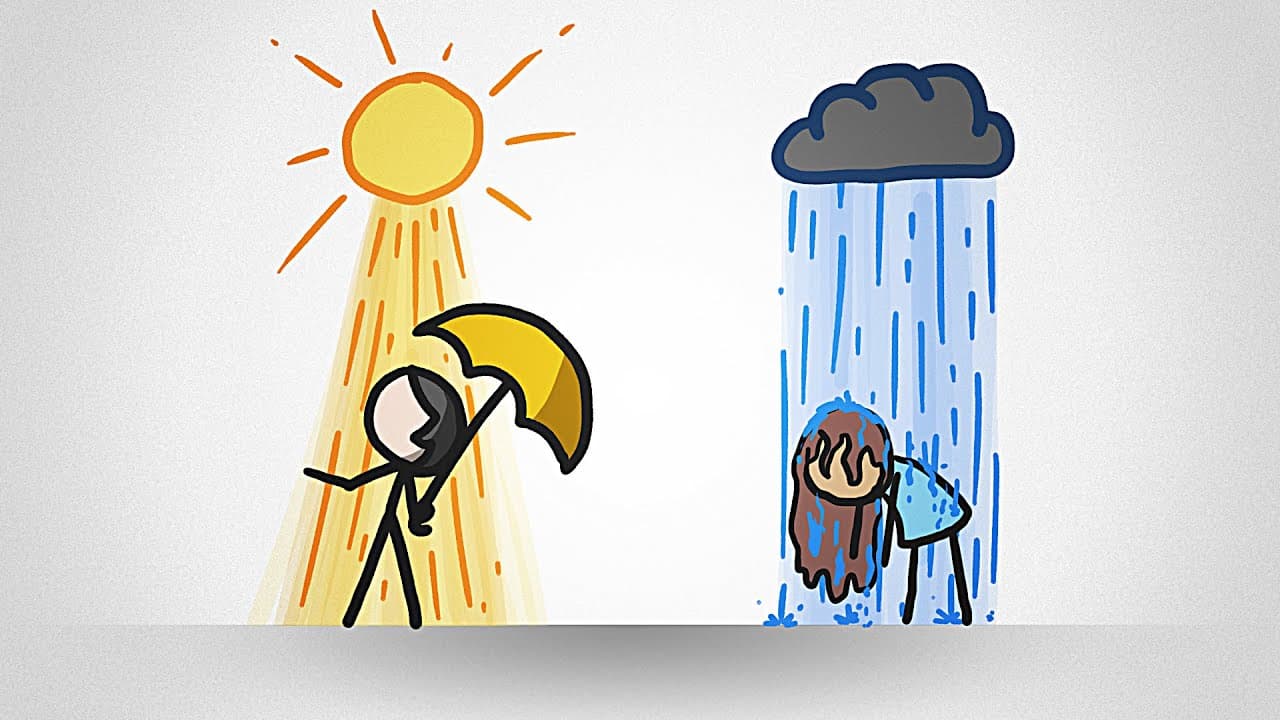
Weather forecasts frequently struggle with predicting rain due to the complexity of convective rain, which is initiated by localized heating of the ground. Unlike frontal rain from large air masses, convective rain can vary greatly in intensity and duration, making it difficult to forecast accurately. Improved forecasting methods, such as those using AI, aim to enhance short-term predictions.
Transcript
When asked to predict whether it will rain in a specific place in the next few hours, meteorologists get it wrong a lot. Which is super frustrating - rain seems like it should be easy to track, and knowing if it’s going to rain is a pretty important detail for all of us. But it turns out that rain - at least some of it - is really hard to forecast ... Read More
Key Insights
- 🧠 Frontal rain from air mass collision is easier to forecast than convective rain triggered by ground heat.
- 🧠 Convective rain's unpredictability arises from localized factors, making intensity and duration forecasts challenging.
- 🍉 DeepMind's AI technology utilizes radar data analysis to improve short-term weather forecasting accuracy.
- 🥵 Meteorologists face difficulties in predicting convective rain due to the complexities of ground heat influence on air masses.
- 🧠 Enhanced rain prediction benefits various sectors such as agriculture, aviation, and emergency preparedness.
- 👨🔬 DeepMind's commitment to diversity through scholarships fosters inclusive AI research for societal benefits.
- 🧠 Convective rain's tendency to occur in summer and urban areas poses challenges for outdoor events.
Install to Summarize YouTube Videos and Get Transcripts
Explore YouTube Video Summarizer or Get YouTube Transcript Extractor
Questions & Answers
Q: Why do meteorologists find it difficult to predict convective rain?
Meteorologists struggle with convective rain prediction due to its dependence on ground heat, making it challenging to forecast the specifics of air mass movement and water vapor condensation.
Q: How does frontal rain differ from convective rain in terms of predictability?
Frontal rain is more predictable as it results from the collision of air masses, creating distinct patterns that radar systems can track accurately, unlike convective rain triggered by ground heat.
Q: What challenges arise from convective rain prediction regarding its intensity and duration?
Predicting the intensity and duration of convective rain is challenging due to the variability in ground heat, air mass elevation, water vapor quantity, and localized factors that influence the formation and dissipation of these rain systems.
Q: How does DeepMind's AI contribute to improving weather forecasting?
DeepMind's AI analyzes radar data using generative modeling to predict short-term weather changes, enhancing the accuracy of forecasts by foreseeing the next sequences based on previous data patterns.
Summary & Key Takeaways
-
Meteorologists struggle to predict convective rain caused by ground heat, unlike frontal rain from air masses collision.
-
Convective rain's variability makes forecasting its intensity, duration, and coverage challenging.
-
DeepMind's AI aims to improve short-term weather forecasts by analyzing radar data in a unique way.
Read in Other Languages (beta)
Share This Summary 📚
Summarize YouTube Videos and Get Video Transcripts with 1-Click
Try YouTube Summary with ChatGPT & Claude or YouTube Transcript Generator
Explore More Summaries from MinuteEarth 📚




Summarize YouTube Videos and Get Video Transcripts with 1-Click
Try YouTube Summary with ChatGPT & Claude or YouTube Transcript Generator