How do ears help with balancing? | #aumsum #kids #science #education #children
TL;DR
The inner ear helps maintain balance by detecting head movements through fluid and cilia.
Transcript
How do ears help with balancing? They really do. You don't believe me. Ok. Can you play a guitar and walk at the same time? How do you think you are able to maintain your balance? Do you know why you can't balance yourself anymore? Wait, I will tell you. This happens because there is a connection between our ears and body balance. Our ear consists ... Read More
Key Insights
- 😂 The inner ear plays a vital role in maintaining balance through its three semicircular canals.
- 🤕 Fluid and hair cells in the canals detect head movements and send signals to the brain.
- 🤕 Different canals correspond to various head movements like nodding, tilting, and shaking.
- ✋ Inertia in the fluid can cause balance issues after motion stops.
- 😍 The inner ear works in synergy with eyes and muscles to stabilize balance during activities.
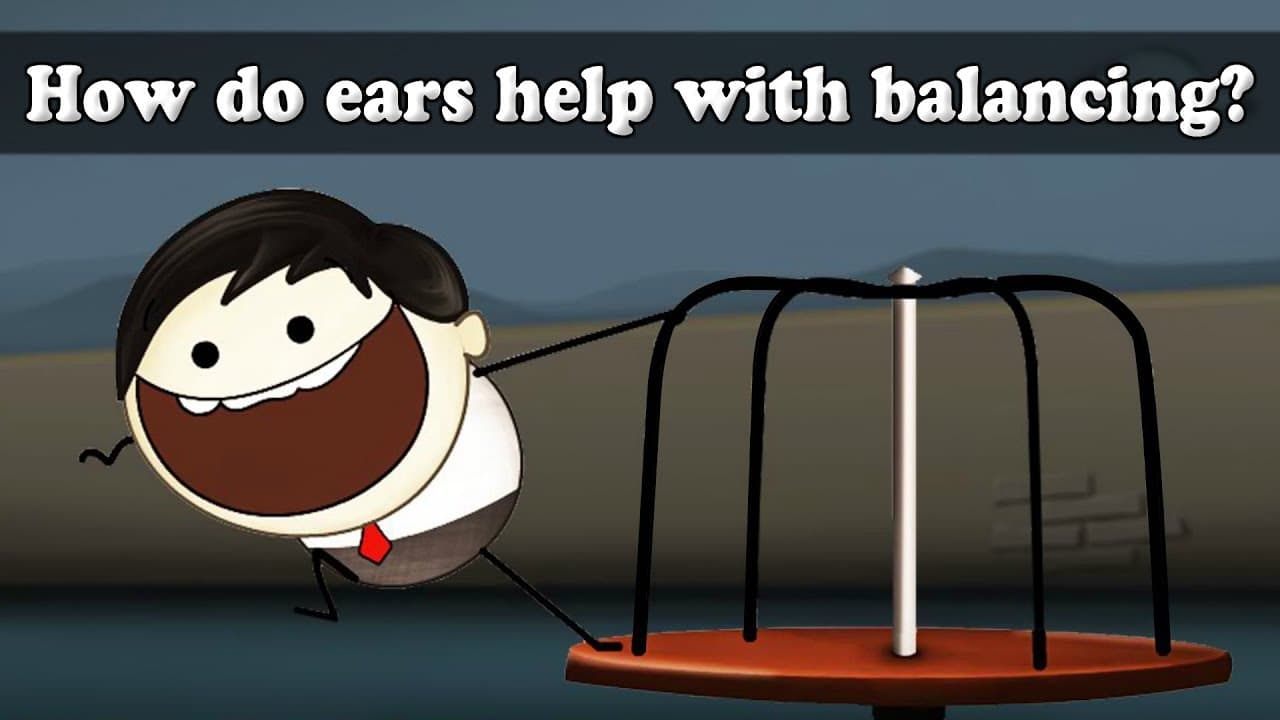
- 👰♀️ Riding a merry-go-round can disrupt balance perception due to continued fluid motion in the canals.
- 😂 Ears are crucial in ensuring stability and equilibrium while performing daily tasks.
Install to Summarize YouTube Videos and Get Transcripts
Explore YouTube Video Summarizer or Get YouTube Transcript Extractor
Questions & Answers
Q: How are ears connected to maintaining balance?
Ears play a crucial role in balance through the inner ear's semicircular canals, which detect head movements and send signals to the brain for balance adjustment.
Q: What are the three semicircular canals in the inner ear responsible for?
The superior canal helps with yes motions, the posterior canal with tilting motions, and the lateral canal with no motions, aiding the brain in understanding head movements.
Q: How does fluid and cilia in the semicircular canals function?
When we move our heads, the fluid in the canals moves, stimulating the hair cells (cilia) to send signals to the brain about the direction of the head movement.
Q: Why do we experience balance issues after being on a merry-go-round?
After riding and stopping, the fluid in the semicircular canals continues moving due to inertia, misleading the brain about motion, leading to balance difficulties.
Summary & Key Takeaways
-
The inner ear has three parts: outer, middle, and inner, working with eyes and muscles to maintain balance during activities.
-
Three semicircular canals in the inner ear contain fluid and hair cells that send signals to the brain when head movements occur.
-
Inertia in the fluid of semicircular canals can disrupt balance perception, causing difficulties after motion stops.
Read in Other Languages (beta)
Share This Summary 📚
Summarize YouTube Videos and Get Video Transcripts with 1-Click
Try YouTube Summary with ChatGPT & Claude or YouTube Transcript Generator
Explore More Summaries from It's AumSum Time 📚



Summarize YouTube Videos and Get Video Transcripts with 1-Click
Try YouTube Summary with ChatGPT & Claude or YouTube Transcript Generator