What Is the Activated Sludge Process in Wastewater Treatment?
TL;DR
The activated sludge process is a key biological method used in wastewater treatment to remove organic material using microorganisms in an aerated basin and clarifier system. It effectively reduces biochemical oxygen demand (BOD) and total suspended solids (TSS), with critical parameters like mixed liquor suspended solids and dissolved oxygen concentration that must be optimized for efficiency.
Transcript
welcome to this session this will be on the an overview of the activated sludge process in wastewater treatment activated sludge is the main secondary biological process that's used in virtually all wastewater treatment plants worldwide this course is not designed to teach you how to design an activated sludge system it's designed more to give you ... Read More
Key Insights
- 🌱 The activated sludge process is a widely used secondary biological treatment method in wastewater treatment plants.
- ⌛ Important parameters such as mixed liquor suspended solids concentration, dissolved oxygen concentration, and solids retention time must be carefully monitored and controlled for optimal process performance.
- 🦾 Different types of activated sludge systems, such as diffused air systems and mechanical surface aeration systems, offer flexibility in design and efficiency in removing organic material.
Install to Summarize YouTube Videos and Get Transcripts
Explore YouTube Video Summarizer or Get YouTube Transcript Extractor
Questions & Answers
Q: What is the purpose of the activated sludge process in wastewater treatment?
The activated sludge process is used to remove organic material from wastewater by utilizing microorganisms in an aerated basin and clarifier system. It is an effective method for reducing biochemical oxygen demand (BOD) and total suspended solids (TSS) levels in wastewater.
Q: What are some important parameters to consider in operating an activated sludge system?
Important parameters include mixed liquor suspended solids concentration, dissolved oxygen concentration, hydraulic retention time, solids retention time, and food to mass ratio. These parameters ensure the proper growth and activity of microorganisms, as well as efficient removal of organic material.
Q: What are the different types of activated sludge systems used in wastewater treatment plants?
The two most common types are diffused air systems and mechanical surface aeration systems. Diffused air systems involve bubbling air from the floor of the tank, while mechanical surface aeration systems use mechanical devices to introduce air into the wastewater. Each type has its advantages and is used based on specific plant requirements.
Q: How does the activated sludge process contribute to the overall wastewater treatment flow sheet?
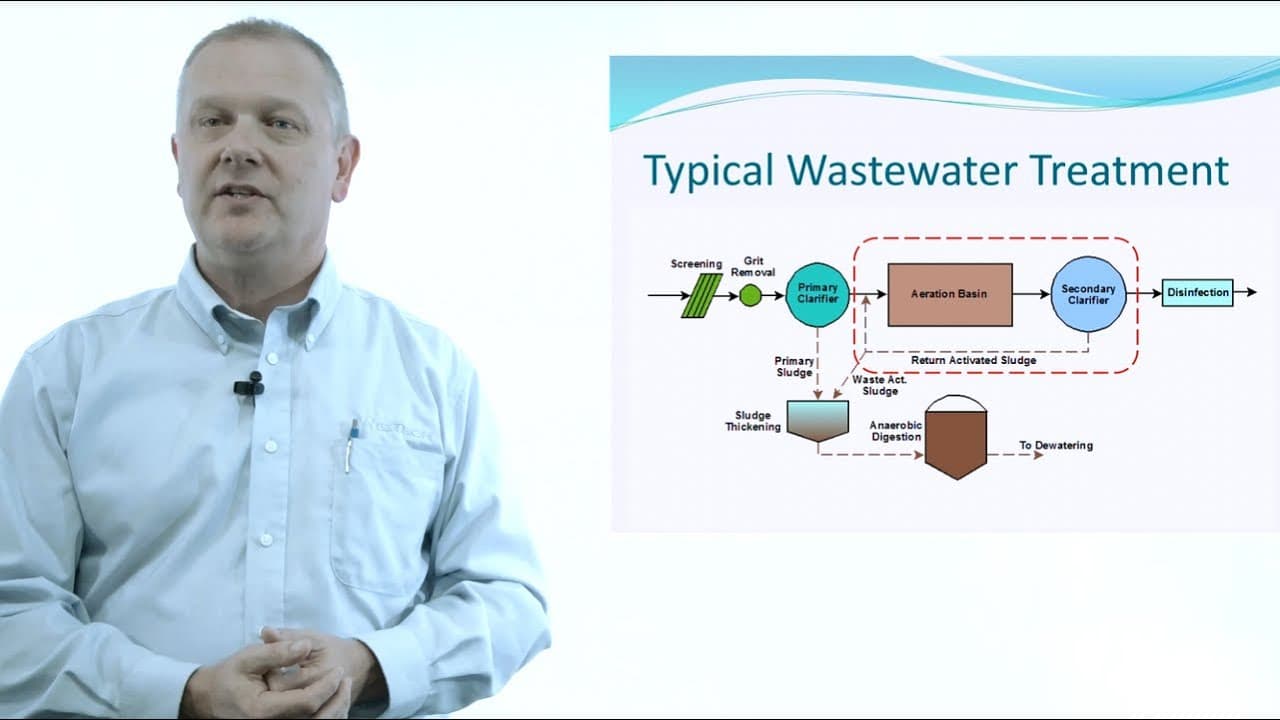
The activated sludge process is typically included after screening, grit removal, and primary treatment stages in the wastewater treatment flow sheet. It is responsible for removing a significant portion of the contaminants, reducing BOD and TSS levels before moving on to disinfection and solids handling stages.
Key Insights:
- The activated sludge process is a widely used secondary biological treatment method in wastewater treatment plants.
- Important parameters such as mixed liquor suspended solids concentration, dissolved oxygen concentration, and solids retention time must be carefully monitored and controlled for optimal process performance.
- Different types of activated sludge systems, such as diffused air systems and mechanical surface aeration systems, offer flexibility in design and efficiency in removing organic material.
- The activated sludge process plays a crucial role in reducing BOD and TSS levels in wastewater before final disinfection and solids handling.
Summary & Key Takeaways
-
The activated sludge process is the main secondary biological process used in wastewater treatment plants globally.
-
This video provides an overview of the process, important parameters, biochemistry involved, and different types of systems used in treatment plants.
-
The process involves removing organic material from the wastewater using microorganisms in an aerated basin and clarifier system.
Read in Other Languages (beta)
Share This Summary 📚
Summarize YouTube Videos and Get Video Transcripts with 1-Click
Try YouTube Summary with ChatGPT & Claude or YouTube Transcript Generator
Explore More Summaries from Blacoh 📚
Summarize YouTube Videos and Get Video Transcripts with 1-Click
Try YouTube Summary with ChatGPT & Claude or YouTube Transcript Generator