How to choose Chess Openings based on your Rating
TL;DR
Select chess openings based on personal preference and knowledge.
Transcript
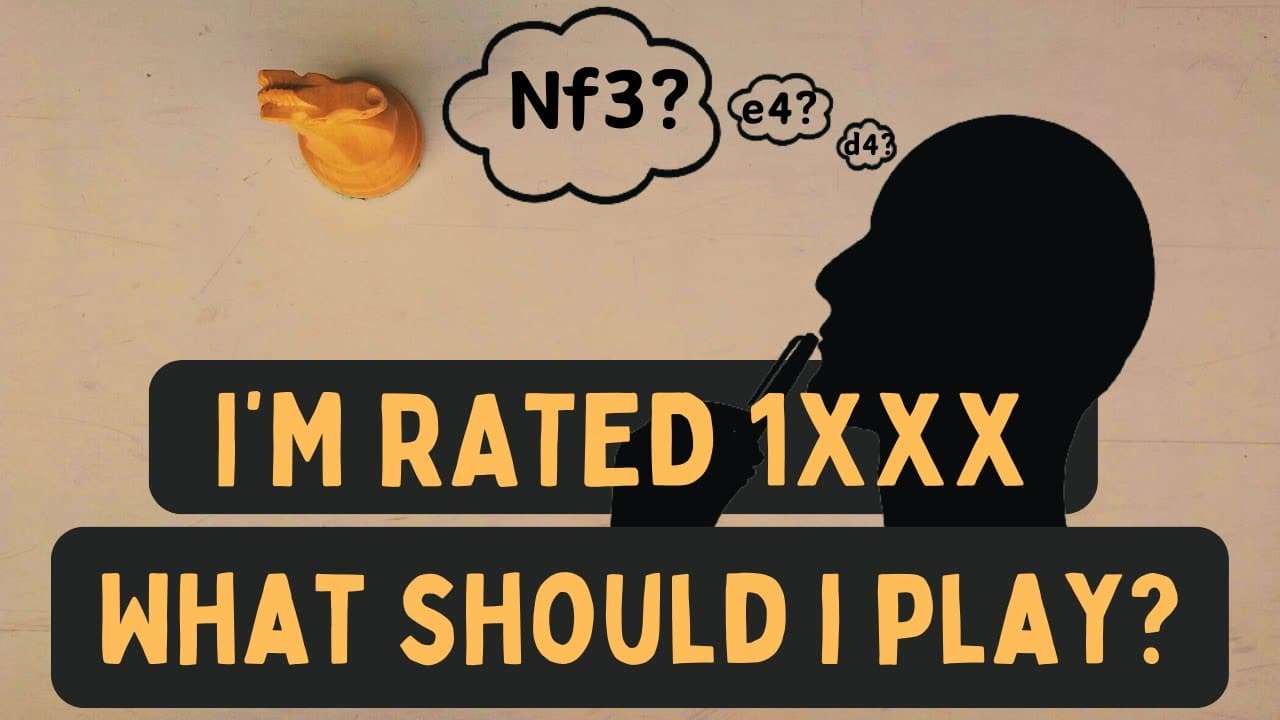
hi everyone Sean here today I'm going to try to answer a question I've been getting a lot a lot a lot people keep asking me I'm rated this high should I play the Sicilian I'm this is my rating what should I play should I play the Kings Indian if I'm 1500 should I play the Kings Gambit if I'm 900 I&... Read More
Key Insights
- Personal preference is crucial in choosing chess openings; play what you enjoy, whether it's dynamic or static positions.
- Consider the types of positions you enjoy, such as wild and aggressive or slow and positional, when selecting openings.
- Familiarity with specific opening structures can guide your choice; leverage existing knowledge for strategic advantage.
- Using tools like Chessbook can enhance your study of chess openings by allowing for practice and review of mistakes.
- Your rating and whether you play online or over-the-board (OTB) will influence the complexity and seriousness of your repertoire.
- A broad repertoire is beneficial for OTB players to avoid predictability and improve exposure to varied structures.
- Time investment in studying openings should align with your goals; complex openings require more preparation.
- Define your chess goals clearly, whether it's improvement or rating gain, to guide your choice of openings.
Install to Summarize YouTube Videos and Get Transcripts
Explore YouTube Video Summarizer or Get YouTube Transcript Extractor
Questions & Answers
Q: What is the most crucial factor in choosing chess openings?
The most crucial factor in choosing chess openings is personal preference. It's important to play openings that you enjoy and feel comfortable with, as this will enhance your overall chess experience and performance. Whether you prefer dynamic or static positions, your enjoyment should guide your choice.
Q: How can familiarity with opening structures benefit a player?
Familiarity with specific opening structures can provide a strategic advantage. If you understand the typical plans and pawn structures within an opening, you can navigate the positions more effectively and exploit opponents' weaknesses. This knowledge can lead to better outcomes from the opening phase and into the middlegame.
Q: What role does Chessbook play in studying openings?
Chessbook is a tool that aids in studying chess openings by allowing players to import and practice their repertoire. It helps identify and focus on mistakes, quizzes users on unfamiliar positions, and offers model games for study. This makes learning openings more interactive and effective, especially for players who struggle with online tools.
Q: How does a player's rating influence their opening choices?
A player's rating influences their opening choices by determining the complexity and seriousness of their repertoire. Higher-rated players may need to prepare more thoroughly and avoid unsound gambits, while lower-rated players can experiment with less conventional openings. Rating also affects the level of preparation required for over-the-board play.
Q: Why is a broad repertoire important for over-the-board players?
A broad repertoire is important for over-the-board players to avoid predictability and make it harder for opponents to prepare. It also exposes players to a variety of pawn structures and tactical themes, enhancing their overall chess understanding and adaptability. This diversity in openings can lead to improved performance in tournaments.
Q: How should time investment in studying openings be approached?
Time investment in studying openings should align with a player's goals and available time. Complex openings require more preparation, so players with limited time might opt for simpler systems. Conversely, those with more time can delve into intricate openings like the Sicilian or King's Indian, which demand deeper understanding and preparation.
Q: What should be considered when defining chess goals?
When defining chess goals, players should consider whether they aim for improvement or immediate rating gains. If the goal is to improve, players should choose versatile openings that expose them to various types of positions. If the goal is rating gain, sticking to familiar openings that yield consistent results might be more beneficial.
Q: What is recommended for players aiming to improve at chess?
For players aiming to improve at chess, it's recommended to play versatile openings that offer a range of positions, such as E4, D4, and C4 with white, and multiple defenses against E4 and D4 with black. This approach exposes players to different structures and tactical themes, fostering a deeper understanding of the game.
Summary & Key Takeaways
-
Choosing chess openings involves personal preference and knowledge. Consider the types of positions you enjoy and your familiarity with specific structures to guide your choice. Tools like Chessbook can aid in studying and practicing openings effectively.
-
Your rating and whether you play online or over-the-board will influence your repertoire. A broad repertoire is beneficial for OTB players to avoid predictability and improve exposure to varied structures. Time investment in studying openings should align with your goals.
-
Define your chess goals clearly, whether it's improvement or rating gain, to guide your choice of openings. Playing what you enjoy is crucial, but consider more complex openings if your goal is to improve and learn different types of positions.
Read in Other Languages (beta)
Share This Summary 📚
Summarize YouTube Videos and Get Video Transcripts with 1-Click
Try YouTube Summary with ChatGPT & Claude or YouTube Transcript Generator
Explore More Summaries from Hanging Pawns 📚



Summarize YouTube Videos and Get Video Transcripts with 1-Click
Try YouTube Summary with ChatGPT & Claude or YouTube Transcript Generator