How we can find ourselves in data | Giorgia Lupi
TL;DR
This content explores the author's personal experiences with data visualization and highlights the importance of including empathy and human qualities in data analysis and representation.
Transcript
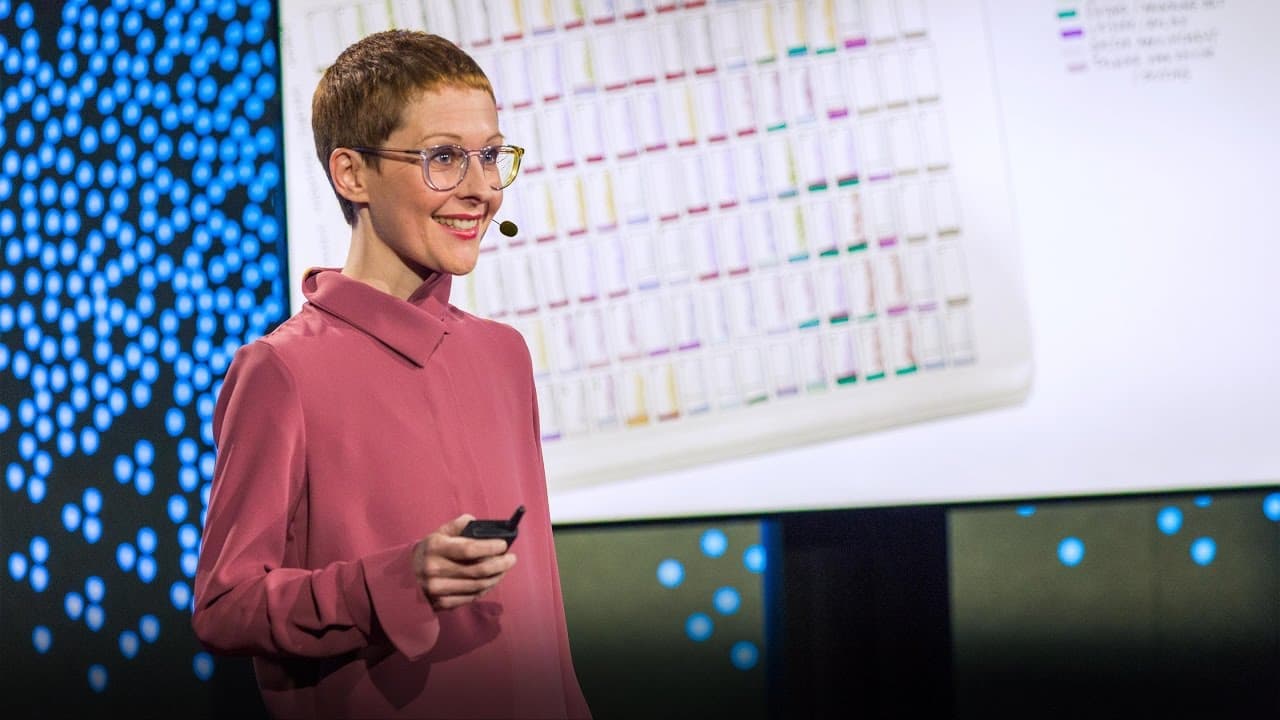
This is what my last week looked like. What I did, who I was with, the main sensations I had for every waking hour ... If the feeling came as I thought of my dad who recently passed away, or if I could have just definitely avoided the worries and anxieties. And if you think I'm a little obsessive, you're probably right. But clearly, from this visua... Read More
Key Insights
- 📊 Data visualization: Data visualizations provide insights that go beyond traditional images and charts on our phones, allowing us to understand ourselves and others better.
- 🌐 Misrepresentation of reality: Data can sometimes give us a distorted image of reality, leading to surprises and unforeseen outcomes, as seen in political elections and other contexts.
- 💡 Connection between data and human stories: Data becomes meaningful when it is used to tell human stories and create connections between people, such as the "Friends in Space" project connecting an astronaut with people on Earth.
- 🔌 Technology as a means, not an end: While data can be powered by technology, it is human stories and curiosity that drive the use of data, rather than focusing solely on the numbers and technology.
- 📫 Communication through data: The "Dear Data" project demonstrates how data can be used as a means of communication, fostering a deeper understanding of oneself and others.
- 🔍 Context is crucial: Data alone cannot provide a complete solution or representation of reality. Including context, nuances, and human qualities in data collection and analysis is essential.
- 🌍 Data humanism: Similar to the Renaissance humanism movement, there is a need to place human nature and empathy at the center of data, ensuring that data are representative of our humanity and do not mislead us.
- 🧑 Data for humanity: Ultimately, data should be used not only for efficiency but also to enhance our understanding of ourselves and others, making us more humane in the process.
Install to Summarize YouTube Videos and Get Transcripts
Explore YouTube Video Summarizer or Get YouTube Transcript Extractor
Questions & Answers
Q: What does the speaker do for a living?
The speaker runs a data visualization design company and works with data to make information accessible through visual representations.
Q: Can data always represent reality?
No, data are always just a tool used to represent reality and are never the real thing.
Q: What personal experience made the speaker realize that data can be distorted?
When Silvio Berlusconi was unexpectedly elected as president in Italy, it made the speaker realize that his data sample was limited and skewed, giving him a distorted image of reality.
Q: What is the main lesson the speaker learned from working with data?
The speaker learned that to truly connect data to human stories and make them meaningful, it is important to include empathy, imperfection, and human qualities in the process of collecting, processing, and displaying data.
Summary & Key Takeaways
-
The speaker reflects on their personal experiences with data and how it can be misleading, using examples of political elections and an astronaut's mission to space.
-
They discuss the importance of using data to tell human stories and create connections, rather than simply focusing on numbers and technology.
-
The speaker advocates for including empathy, imperfection, and human qualities in the design and interpretation of data to make it more representative and meaningful.
Read in Other Languages (beta)
Share This Summary 📚
Summarize YouTube Videos and Get Video Transcripts with 1-Click
Try YouTube Summary with ChatGPT & Claude or YouTube Transcript Generator
Explore More Summaries from TED 📚




Summarize YouTube Videos and Get Video Transcripts with 1-Click
Try YouTube Summary with ChatGPT & Claude or YouTube Transcript Generator