What Role Does Social Interaction Play in Human Evolution?
TL;DR
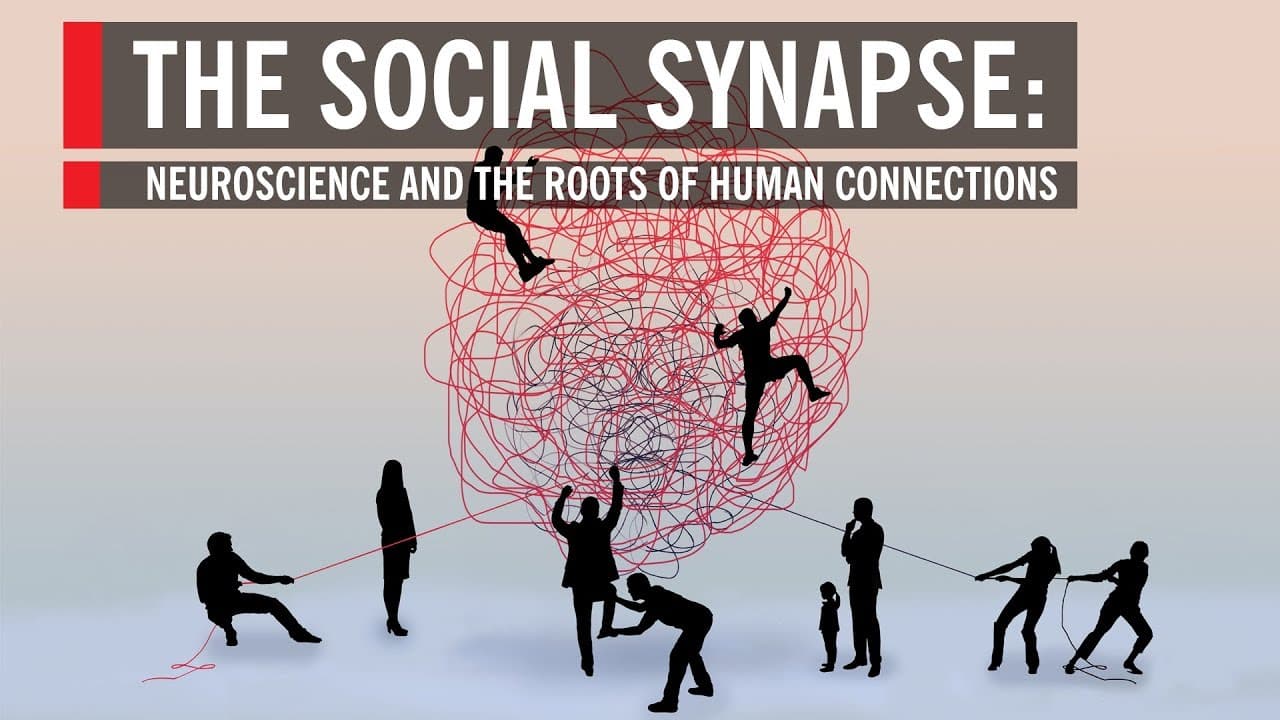
Social interaction is crucial to human evolution, as our brains are uniquely designed for complex communication and social connections. This capacity for culture and shared knowledge not only differentiates us from other species but also drives our survival and societal advancements, enabling problem-solving and cooperation that shape human behavior.
Transcript
we human beings enter the world full of possibility who will we become how will we affect the world how will the world affect us one thing is sure we will interact with the world with other people the fetus begins to develop an auditory system at seventeen to nineteen weeks an infant can make eye contact at one to two months and we arrived with a s... Read More
Key Insights
- 🤩 Social intelligence and communication are key factors in human evolution.
- ❓ Other species also exhibit social behaviors and cognitive skills.
- ❓ The capacity for culture contributes to human survival and progression.
- 🧠 Brain size and complexity support social interactions and communication.
- 💠 Social learning and innovation shape human behavior and cognition.
- 🪛 Cooperation, problem-solving, and societal advancement are driven by social interaction.
- 🖐️ Culture and communication play a crucial role in the development of complex societies.
Install to Summarize YouTube Videos and Get Transcripts
Explore YouTube Video Summarizer or Get YouTube Transcript Extractor
Questions & Answers
Q: How does the development of social intelligence play a role in human evolution?
Social intelligence, including communication and collaboration, has shaped human evolution by promoting cooperation, problem-solving, and the development of complex societies. It has allowed us to thrive as a species.
Q: Can other species exhibit similar levels of social intelligence and cognitive skills as humans?
While other species may display social behaviors and cognitive abilities, the capacity for culture and communication is unique to humans. This distinguishes us in terms of innovation, problem-solving, and societal advancement.
Q: How does brain size and complexity relate to human capacities for social interaction?
Human brain size and complexity have evolved to support social interaction, communication, and cultural learning. This has influenced our ability to cooperate, create societies, and adapt to changing environments.
Q: What role does social learning and innovation play in shaping human behavior and cognition?
Social learning and innovation have been fundamental in shaping human behavior and cognition. They have facilitated the transmission of knowledge, the development of cultural practices, and the advancement of complex social structures.
Summary & Key Takeaways
-
Humans evolved with a brain designed for social interactions and communication, influencing our evolution.
-
Other species also exhibit social behavior and cognitive skills, with potential drivers for evolution.
-
The capacity for culture, including shared knowledge and communication, may be key to human survival and progression.
Read in Other Languages (beta)
Share This Summary 📚
Summarize YouTube Videos and Get Video Transcripts with 1-Click
Try YouTube Summary with ChatGPT & Claude or YouTube Transcript Generator
Explore More Summaries from World Science Festival 📚




Summarize YouTube Videos and Get Video Transcripts with 1-Click
Try YouTube Summary with ChatGPT & Claude or YouTube Transcript Generator