Intro to C Programming - Storage Classes - Variables - Scope Of Variable
TL;DR
This video lecture discusses the four types of storage classes in C programming: automatic, external, static, and register.
Transcript
in this easy ed video lecture we are going to learn storage classes where we will learn the four types of storage classes namely automatic external static and register let's start with introduction to storage classes variables in C are declared by the type of data they can hold the name of the variable is associated with the memory location which s... Read More
Key Insights
- 🎅 Variables in C are associated with memory locations that store their values during program execution.
- 🎅 There are four storage classes in C: automatic, external, static, and register.
- 🚫 Automatic variables are local to the function or block where they are declared.
- 📁 External variables are accessible to multiple program modules and have file scope.
- ❤️🩹 Static variables retain their values between function calls or block reentries and have a lifetime until the end of the program.
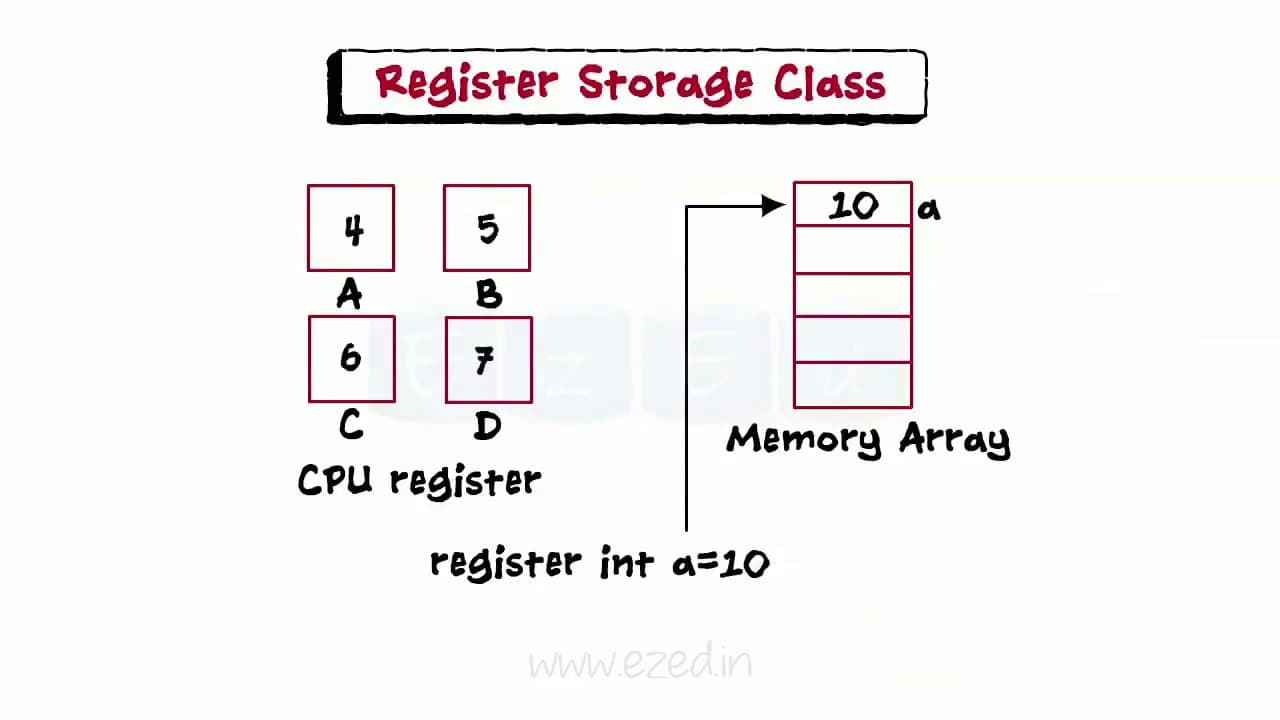
- 👻 Register storage class is used to allow fast access to variables by storing them in CPU registers.
- ®️ The default value of static variables is 0, while the default value of register variables is garbage.
Install to Summarize YouTube Videos and Get Transcripts
Explore YouTube Video Summarizer or Get YouTube Transcript Extractor
Questions & Answers
Q: What are storage classes in C programming?
Storage classes in C define the scope, longevity, and visibility of variables, determining where they are stored and how long they exist.
Q: What is the difference between automatic and external variables?
Automatic variables are declared within functions and have block scope, while external variables are accessible to multiple program modules and have file scope.
Q: How are static variables different from automatic and external variables?
Static variables retain their values between function calls or block reentries and have a lifetime until the end of the program. They can be declared as either local or external.
Q: What is the purpose of register storage class?
Register storage class is used to allow fast access to variables by storing them in CPU registers. They have a lifetime until the end of the function or block.
Key Insights:
- Variables in C are associated with memory locations that store their values during program execution.
- There are four storage classes in C: automatic, external, static, and register.
- Automatic variables are local to the function or block where they are declared.
- External variables are accessible to multiple program modules and have file scope.
- Static variables retain their values between function calls or block reentries and have a lifetime until the end of the program.
- Register storage class is used to allow fast access to variables by storing them in CPU registers.
- The default value of static variables is 0, while the default value of register variables is garbage.
- Storage classes determine the scope, longevity, and visibility of variables in C programming.
Summary & Key Takeaways
-
Variables in C are associated with memory locations that store their values during program execution.
-
Storage classes in C define the scope, longevity, and visibility of variables.
-
Automatic variables are declared within functions, have block scope, and are destroyed when the function is exited.
-
External variables are accessible to multiple program modules and have file scope.
Read in Other Languages (beta)
Share This Summary 📚
Summarize YouTube Videos and Get Video Transcripts with 1-Click
Try YouTube Summary with ChatGPT & Claude or YouTube Transcript Generator