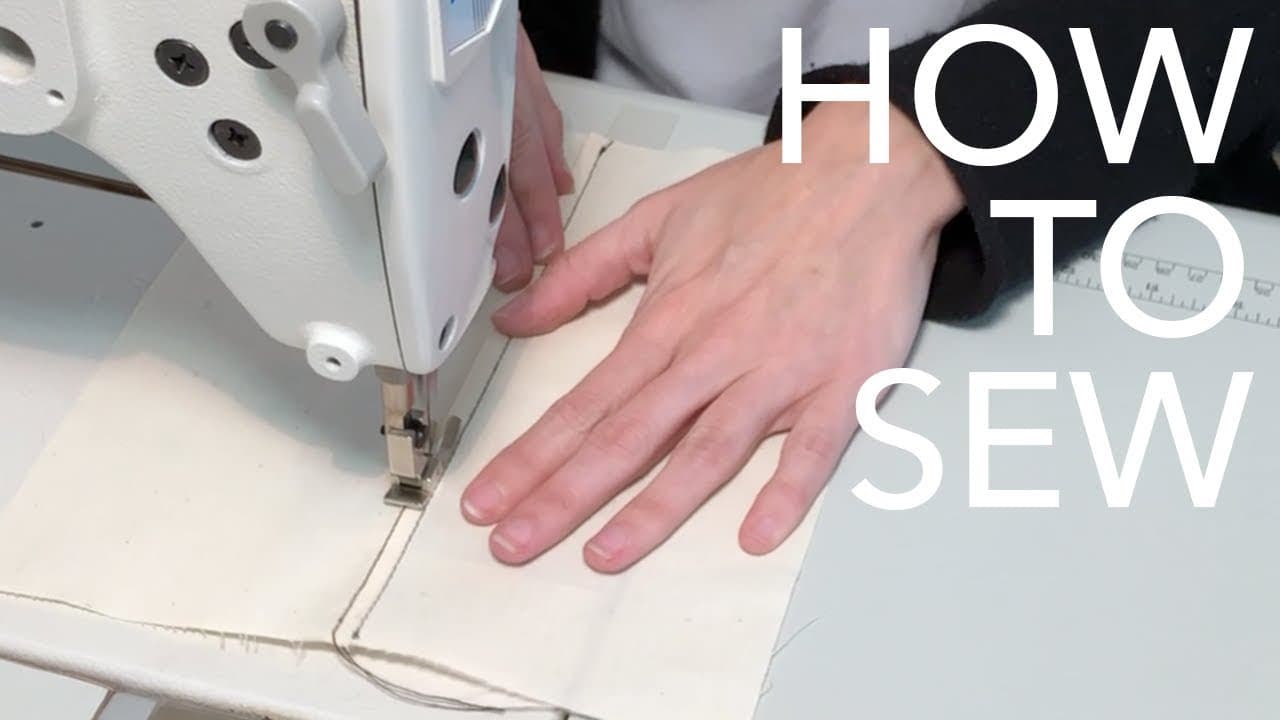
How To Sew 8 Common Seams
TL;DR
Learn basic sewing techniques from a professional seamstress on different types of seams and stitches.
Transcript
hey party people I'm behind the camera today and this installment oh look the construction series with Mariah we are going to well she is gonna show you I'm officially anything she is gonna show you how to so some of the most common scenes that we use to construct clothes okay she is working on a Jew key industrial single needle lock stitch machine... Read More
Key Insights
- 👷 Seam accuracy is crucial for proper garment construction.
- 🫓 Understanding various seam types like welt and flat felled seams enhances garment durability and aesthetics.
- 🪡 Practice, precision in seam allowances, and attention to fabric characteristics are essential for mastering sewing techniques.
- 😨 Curved seams demand additional care to prevent distortion and maintain a smooth finish.
- 😑 Pinning, pressing, and trimming aid in achieving clean and professional-looking seams.
- 🛟 Different seam types serve specific purposes, from strength to decorative finishes.
- 🐝 Mariah's emphasis on practice and attention to detail underscores the importance of honing sewing skills.
Install to Summarize YouTube Videos and Get Transcripts
Explore YouTube Video Summarizer or Get YouTube Transcript Extractor
Questions & Answers
Q: Why is it important to maintain a precise seam allowance while sewing?
Maintaining a precise seam allowance ensures that the pieces align correctly, prevents distortion of the fabric, and results in professional-looking finished garments. It is crucial for proper construction and fit.
Q: What are the benefits of using different types of seams like welt seams and flat felled seams?
Welt seams offer strength, durability, and a decorative finish, making them suitable for heavy fabrics like denim. Flat felled seams provide a clean finish and extra strength, perfect for unlined garments.
Q: How does practicing curved seams differ from sewing straight seams?
Curved seams, which involve working with the bias of the fabric, require extra care to prevent stretching and maintain a consistent quarter-inch seam allowance. Trimming excess fabric and pressing are essential for smooth and even curves.
Summary & Key Takeaways
-
Mariah demonstrates basic straight stitches, edge stitches, top stitches, welt seams, flat felled seams, French seams, corner seams, and curved seams.
-
She emphasizes the importance of precise seam allowances, pinning, and pressing for clean and professional-looking results.
-
Practice, attention to detail, and understanding the fabric are key to mastering sewing techniques.
Read in Other Languages (beta)
Share This Summary 📚
Summarize YouTube Videos and Get Video Transcripts with 1-Click
Try YouTube Summary with ChatGPT & Claude or YouTube Transcript Generator
Explore More Summaries from Zoe Hong 📚


Summarize YouTube Videos and Get Video Transcripts with 1-Click
Try YouTube Summary with ChatGPT & Claude or YouTube Transcript Generator