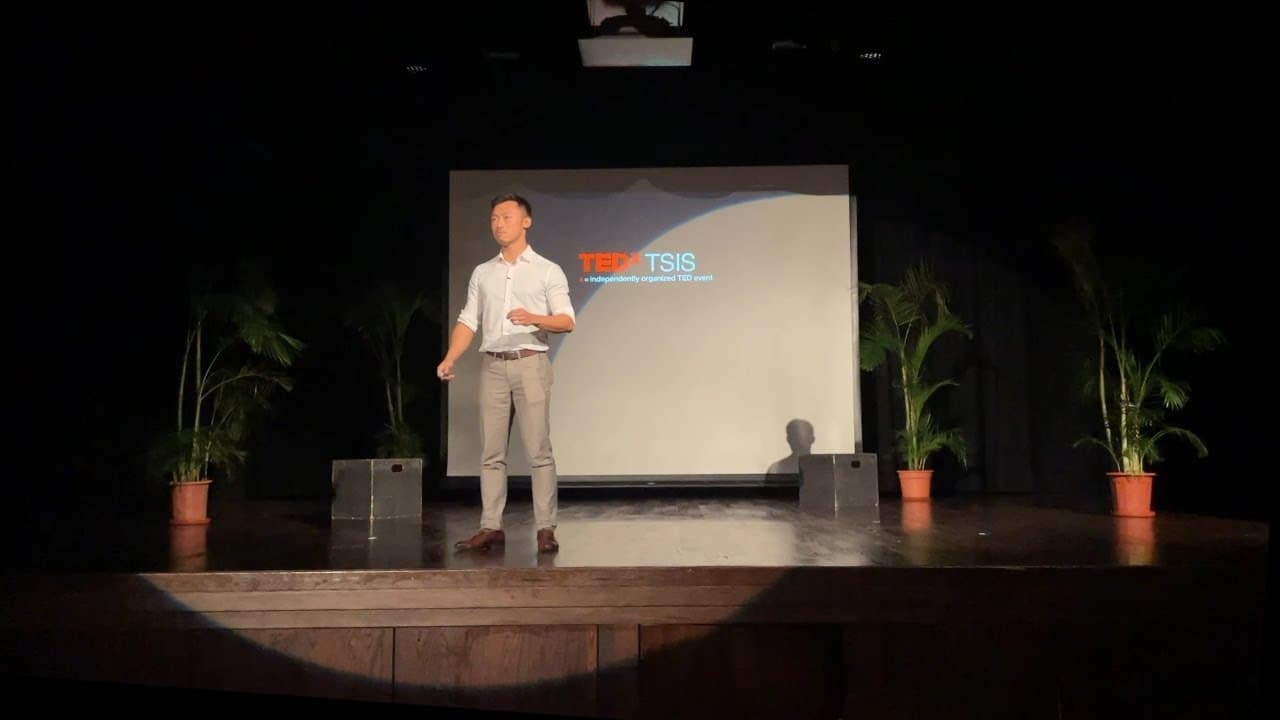
What kind of future should we work towards? | Kenneth Chan | TEDxTSIS
TL;DR
Our ability to care about large numbers is limited, but an identified victim can make us care deeply. The moral circle has expanded throughout history, but we may still be blind to the rights of future generations. The future holds limitless potential for humanity, but also existential risks.
Transcript
despite the pressure of that introduction allow me to try and take you on a journey that tries to tie together some of the threads of the presentations that we've heard previously that'll take you through a journey of three perspectives on Caren on the expanding moral Circle and on the size of the future first of all can you guess the total number ... Read More
Key Insights
- 😨 Our ability to care is limited by our capacity to comprehend large numbers.
- 🥺 An identified victim can evoke stronger emotions and lead to increased donations or actions.
- 🗯️ The moral circle has expanded throughout history, but we may still overlook the rights of future generations.
- 🥹 The future holds immense potential for humanity, but also existential risks.
- 🍉 The long-term well-being of future generations should be a moral priority.
- ✳️ Existential risks are significant, and safeguarding against them is crucial for our survival and flourishing.
- 🪡 The size of the future population is overwhelming, emphasizing the need for responsible decision-making and planning.
Install to Summarize YouTube Videos and Get Transcripts
Explore YouTube Video Summarizer or Get YouTube Transcript Extractor
Questions & Answers
Q: Why do large numbers fail to evoke the same level of care as an identified victim?
Our internal ability to care is limited, and comprehending large numbers is challenging. An identified victim, such as the Syrian refugee child, can make the issue more relatable and emotionally impactful.
Q: How has the moral circle expanded throughout history?
In the past, certain groups of people were marginalized and denied rights. Over time, society has recognized the importance of moral consideration for these groups, leading to progress in human rights.
Q: Who are the "future people" that deserve moral consideration?
"Future people" refers to future generations who will face the consequences of our actions and mistakes today. They are uniquely vulnerable and voiceless, making it crucial to consider their well-being.
Q: How many future humans are predicted to exist?
Estimates suggest that there could be up to 80 trillion future humans. Considering technological advancements, the potential for human growth and exploration is immense.
Summary & Key Takeaways
-
52 million children die before the age of five every year, but the world is still improving compared to the past.
-
The image of a Syrian refugee child captivated the world's attention and led to increased donations, highlighting the scope and sensitivity of our ability to care.
-
The moral circle has expanded over time, but we may still be unaware of the rights of future generations.
Read in Other Languages (beta)
Share This Summary 📚
Summarize YouTube Videos and Get Video Transcripts with 1-Click
Try YouTube Summary with ChatGPT & Claude or YouTube Transcript Generator
Explore More Summaries from TEDx Talks 📚
Summarize YouTube Videos and Get Video Transcripts with 1-Click
Try YouTube Summary with ChatGPT & Claude or YouTube Transcript Generator