How to Find Low Competition Keywords for SEO
TL;DR
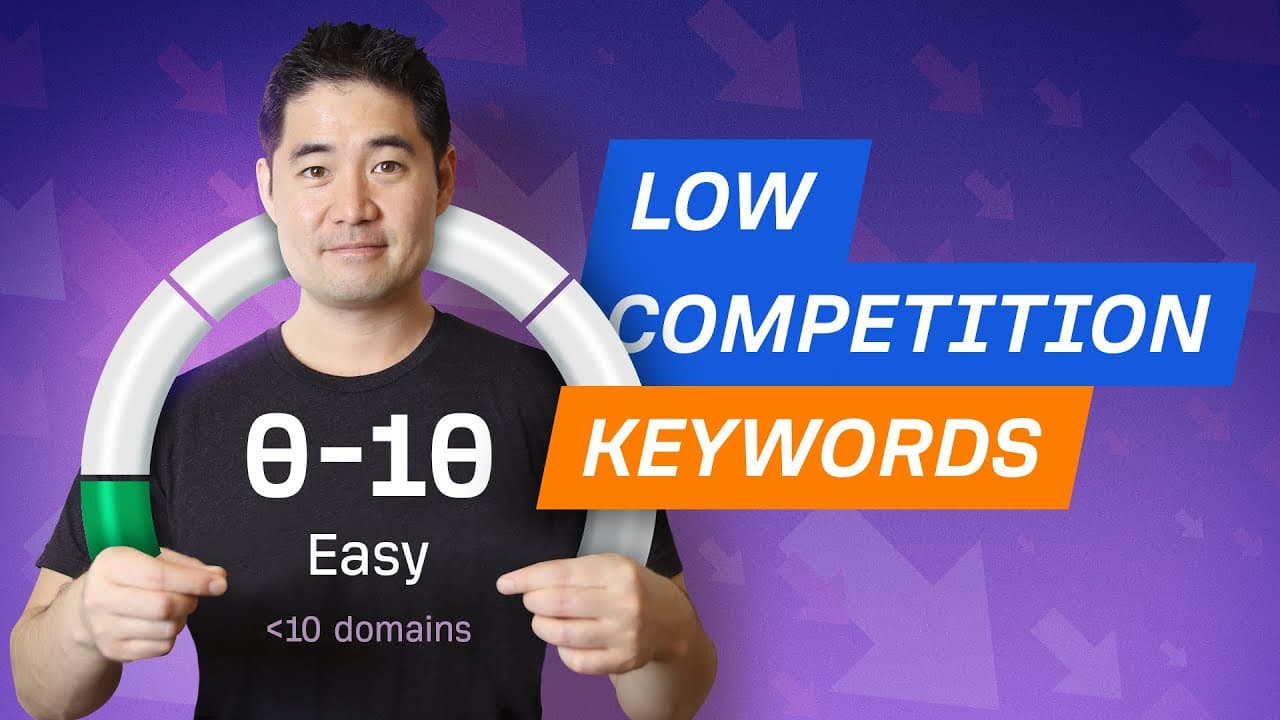
Learn a 5-step process to identify low competition keywords.
Transcript
Everyone wants to rank for competitive keywords, but sometimes, it's just not possible in the short term. And that's why everyone loves low competition keywords. They're easy to rank for. You don't need many and in some cases, any backlinks to the page, and they send you a decent amount of consistent search traffic month over month. So in this vide... Read More
Key Insights
- Low competition keywords are easier to rank for and don't require many backlinks, providing consistent search traffic.
- A 5-step process helps identify and validate low competition keywords effectively, ensuring they are truly easy to rank for.
- Brainstorming broad topics or seed keywords related to your niche is the first step in finding low competition keywords.
- Using keyword research tools like Ahrefs' Keywords Explorer expands topics and provides valuable search data.
- Filtering keywords by difficulty scores helps narrow down potential low competition topics, though it's not the only factor to consider.
- Matching searcher intent is crucial; even low competition keywords won't rank if the content doesn't align with what users seek.
- Assessing the true difficulty of a keyword requires analyzing factors beyond backlinks, including brand equity and topical authority.
- Low competition keywords are ideal for new or low-authority sites, but targeting higher competition topics can yield more traffic and value.
Install to Summarize YouTube Videos and Get Transcripts
Explore YouTube Video Summarizer or Get YouTube Transcript Extractor
Questions & Answers
Q: What is a low competition keyword?
A low competition keyword is one that is easier to rank for in search engines due to factors such as fewer backlinks required and lower overall competition. These keywords can provide consistent search traffic and are ideal for websites with lower authority or newer sites looking to establish their presence.
Q: Why is searcher intent important in keyword research?
Searcher intent is crucial because it represents the reason behind a user's query. Even if a keyword has low competition, failing to match the searcher intent means the content won't satisfy user needs, leading to poor rankings. Understanding intent ensures that content aligns with what users expect to find.
Q: How can you identify potential low competition keywords?
To identify potential low competition keywords, start by brainstorming broad topics related to your niche. Use keyword research tools to expand these topics and filter them by low difficulty scores. Assess searcher intent and manually evaluate each keyword's competition by analyzing the top-ranking pages and their authority.
Q: What role do keyword research tools play in finding low competition keywords?
Keyword research tools are essential for expanding seed keywords, providing data on search volume, keyword difficulty, and other metrics. They help generate comprehensive keyword lists and offer insights into how often words and phrases are searched, aiding in identifying low competition opportunities.
Q: How can you assess if a keyword is truly low difficulty?
Assessing if a keyword is truly low difficulty involves more than just looking at keyword difficulty scores. It requires evaluating the top-ranking pages for backlinks, domain authority, brand equity, and topical relevance. Manual assessment of these factors helps determine if a keyword is genuinely easy to rank for.
Q: What are the benefits of targeting low competition keywords?
Targeting low competition keywords offers several benefits: easier ranking opportunities, less reliance on backlinks, and consistent search traffic. They are particularly advantageous for new or low-authority websites, helping them build visibility and authority without competing directly with established sites on high-competition keywords.
Q: Why should you also target higher competition topics?
Targeting higher competition topics is important because they often lead to more traffic and links, which are crucial for SEO success. These topics generally have higher commercial value, and while they are more challenging, they contribute to long-term growth and authority, complementing the strategy of targeting low competition keywords.
Q: What is the significance of brand equity in keyword competition?
Brand equity plays a significant role in keyword competition as established brands often have built-in trust and authority, making it challenging for new sites to outrank them. Even with low difficulty scores, competing against well-known brands can be tough due to their reputation and user preference, highlighting the need for a strategic approach.
Summary & Key Takeaways
-
The video guides viewers through a 5-step process to identify low competition keywords, emphasizing the importance of searcher intent and manual assessment of keyword difficulty. It explains how to brainstorm seed keywords, use research tools, and assess competition beyond just backlinks.
-
Low competition keywords are valuable for new or low-authority sites, providing easier ranking opportunities. However, the tutorial stresses the importance of also targeting higher competition topics for increased traffic and commercial value, advising a balanced approach for long-term SEO success.
-
The tutorial highlights the need to understand searcher intent and the limitations of relying solely on keyword difficulty metrics. It provides practical examples and tips for using tools like Ahrefs to find and validate low competition keywords, encouraging a comprehensive strategy for effective SEO.
Read in Other Languages (beta)
Share This Summary 📚
Summarize YouTube Videos and Get Video Transcripts with 1-Click
Try YouTube Summary with ChatGPT & Claude or YouTube Transcript Generator
Explore More Summaries from Ahrefs 📚




![Why Your Blog Content Has to be Great [6.1] thumbnail](/_next/image?url=https%3A%2F%2Fi.ytimg.com%2Fvi%2F4qPaHyOQA9c%2Fhqdefault.jpg&w=750&q=75)
Summarize YouTube Videos and Get Video Transcripts with 1-Click
Try YouTube Summary with ChatGPT & Claude or YouTube Transcript Generator