How to Transform Messy Information into Clarity
TL;DR
Transforming messy information into clarity involves effective information architecture. This requires understanding that users shape information through their perceptions and experiences, necessitating a focus on language and the creation of controlled vocabularies for consistent communication.
Transcript
you guys all like that song Talking Heads anybody who doesn't know who the Talking Heads are you should probably look that up listen to them immediately so hi thank you so much for being here and for welcoming me into your community this is my first time speaking at a conference of this nature so I'm really excited to convert some of you to informa... Read More
Key Insights
- Information is a unique material, unlike physical materials, as it is intangible and subjective, shaped by users' perceptions and experiences.
- Language plays a crucial role in information architecture; organizations often overlook its importance, leading to miscommunication and inefficiencies.
- Controlled vocabularies are essential for consistency and clarity in communication within organizations, though they can be challenging to establish and maintain.
- There is no singular 'right way' to organize information; the structure should align with organizational goals and user needs.
- Using visual aids and diagrams can help unify understanding and facilitate communication among team members, preventing misinterpretations.
- Information architecture requires collaboration across various roles, ensuring diverse perspectives are considered in organizing and labeling information.
- It's important to balance simplicity and complexity in diagrams to accurately represent processes and avoid misleading interpretations.
- Information architecture is a shared responsibility, not limited to designated roles; everyone in an organization contributes to its practice.
Install to Summarize YouTube Videos and Get Transcripts
Explore YouTube Video Summarizer or Get YouTube Transcript Extractor
Questions & Answers
Q: What is the significance of language in information architecture?
Language is vital in information architecture as it influences how information is perceived and understood within an organization. Miscommunication due to inconsistent language can lead to inefficiencies and misunderstandings. Establishing a controlled vocabulary helps ensure clarity and consistency, facilitating better collaboration and decision-making.
Q: How can organizations implement a controlled vocabulary effectively?
To implement a controlled vocabulary effectively, organizations should form a cross-functional team representing various roles to collaboratively develop and maintain it. This approach ensures diverse perspectives are considered, preventing misunderstandings. It's crucial that the vocabulary remains a living document, adaptable to changes in organizational needs and language evolution.
Q: Why is there no 'right way' to organize information?
There is no 'right way' to organize information because each organization has unique goals and user needs. The structure should be tailored to these specific contexts, ensuring it effectively supports organizational objectives. What works for one organization may not suit another, making flexibility and adaptability essential in information architecture.
Q: How do visual aids benefit information architecture?
Visual aids, such as diagrams, help unify understanding among team members by providing a clear representation of complex processes. They facilitate communication, prevent misinterpretations, and serve as tools for collaboration. Visual aids help teams align on a shared vision, enabling more effective problem-solving and decision-making.
Q: What role does collaboration play in information architecture?
Collaboration is crucial in information architecture as it brings together diverse perspectives, ensuring a comprehensive approach to organizing and labeling information. Involving team members from various roles helps identify potential miscommunications and align language and structure with organizational goals, enhancing overall effectiveness and efficiency.
Q: How can organizations balance simplicity and complexity in diagrams?
Organizations should aim for diagrams that accurately represent processes without oversimplifying or omitting critical details. It's important to include enough complexity to convey the full scope of a process while maintaining clarity. Iterative feedback and collaboration can help refine diagrams to achieve this balance, ensuring they serve as effective communication tools.
Q: Why is information architecture a shared responsibility?
Information architecture is a shared responsibility because it involves contributions from all team members, not just designated roles. Everyone in an organization interacts with and influences information, making it essential for all to engage in its architecture. This collective effort ensures a more cohesive and effective approach to managing information.
Q: How can organizations encourage the practice of information architecture?
Organizations can encourage the practice of information architecture by raising awareness of its importance and providing training and resources. Promoting cross-functional collaboration and establishing processes for developing controlled vocabularies and visual aids can also foster a culture that values and actively engages in information architecture.
Summary & Key Takeaways
-
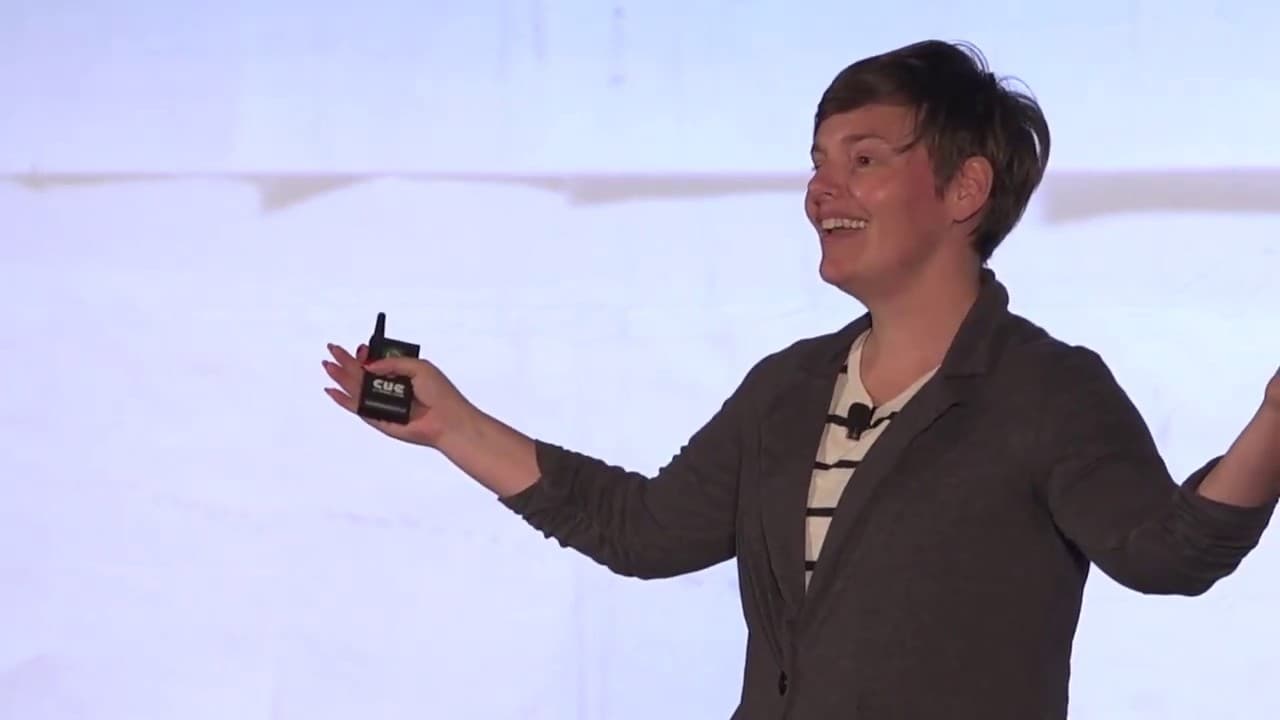
Abby Covert discusses the challenges of working with information as a material, emphasizing its intangible nature and the role of user perception in shaping it. She highlights the importance of language in information architecture, pointing out common organizational pitfalls in communication.
-
The talk underscores the necessity of controlled vocabularies for consistent communication and the importance of collaborative efforts in developing them. Covert explains that there isn't a single correct way to organize information, as it must align with specific goals and user needs.
-
Visual aids like diagrams are crucial for shared understanding among team members, helping to clarify complex processes. Covert encourages organizations to recognize information architecture as a shared responsibility, involving contributions from all team members.
Read in Other Languages (beta)
Share This Summary 📚
Summarize YouTube Videos and Get Video Transcripts with 1-Click
Try YouTube Summary with ChatGPT & Claude or YouTube Transcript Generator