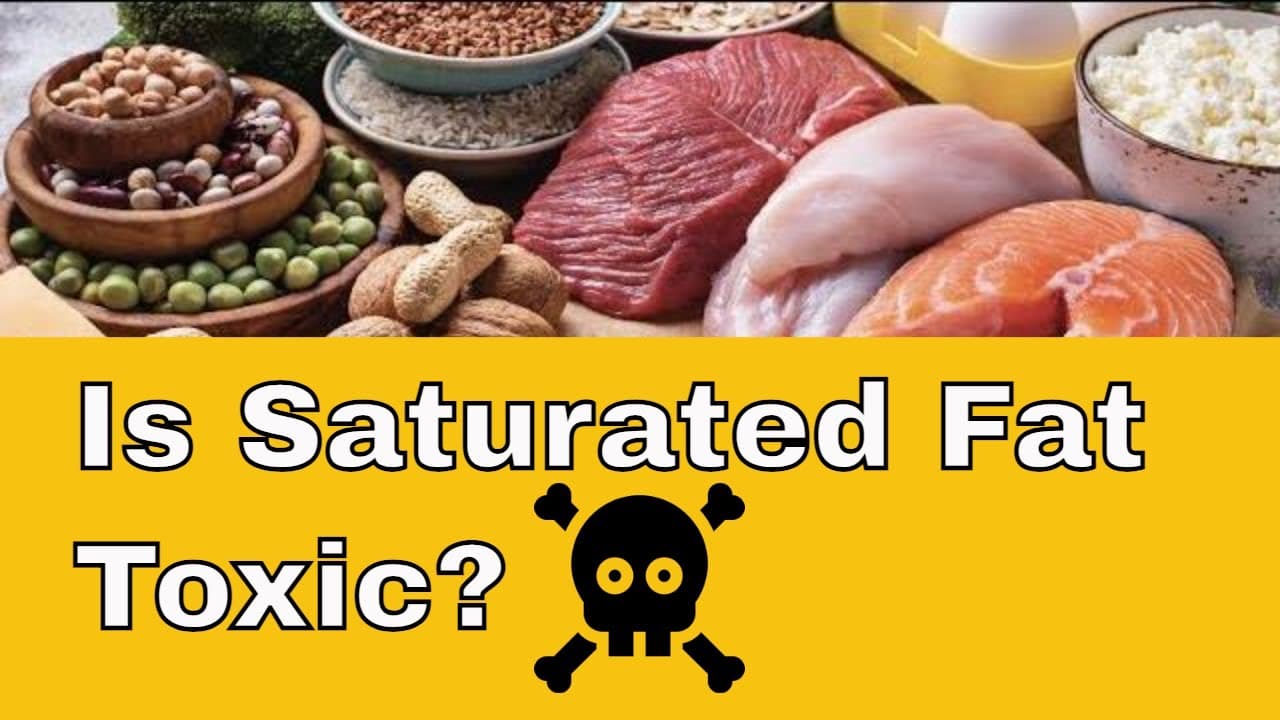
Is Saturated Fat Safe for Your Heart Health?
TL;DR
Numerous studies indicate that saturated fats from whole foods do not increase the risk of heart disease and may even offer protection against stroke. The ketogenic diet aligns with this evidence, promoting natural fats rather than carbohydrates, which are linked to heart health risks. Reevaluating dietary guidelines may be necessary, as the focus should shift from specific nutrients to the overall quality of foods consumed.
Transcript
is the keto diet unhealthy it recommends eating plenty of total fat and saturated fat and isn't that going to clog up your arteries causing heart attacks and strokes we're going to review the latest scientific evidence as reviewed by the top heart doctors should you eat saturated fat since the 1960s doctors have been saying that we ... Read More
Key Insights
- Recent studies suggest that saturated fats in whole foods like dairy and meat do not increase heart disease risk.
- The ketogenic diet, which promotes high fat intake, aligns with findings that natural fats may be protective against stroke.
- Historical dietary guidelines were based on limited evidence and have been challenged by newer research.
- The correlation between saturated fat intake and blood levels is more influenced by carbohydrate consumption.
- The shift from animal fats to vegetable oils introduced trans fats, now known to increase heart disease risk.
- Low-fat diets may inadvertently raise risk factors for heart disease by increasing carbohydrate intake.
- The French paradox highlights that high saturated fat intake does not necessarily correlate with higher heart disease rates.
- Eating whole foods high in natural fats might offer protective benefits against diseases like diabetes and stroke.
Install to Summarize YouTube Videos and Get Transcripts
Explore YouTube Video Summarizer or Get YouTube Transcript Extractor
Questions & Answers
Q: What is the main argument against the belief that saturated fats cause heart disease?
The main argument against the belief that saturated fats cause heart disease is based on recent studies indicating that saturated fats found in natural foods like whole fat dairy and red meat do not increase the risk of heart disease. Instead, these studies suggest that these fats may actually offer protective benefits against stroke, challenging the traditional view.
Q: How did historical dietary guidelines influence public perception of fat consumption?
Historical dietary guidelines heavily influenced public perception by recommending low-fat diets, based on limited and selectively interpreted data. This led to a significant shift from animal fats to vegetable oils and margarine, which introduced trans fats now known to increase heart disease risk. These guidelines shaped decades of dietary habits despite lacking robust scientific evidence.
Q: What role does carbohydrate consumption play in blood saturated fat levels?
Carbohydrate consumption significantly influences blood saturated fat levels through a process called de novo lipogenesis, where excess carbohydrates are converted into fats by the liver. This process results in higher blood saturated fat levels, suggesting that dietary carbohydrates, rather than fats, are more closely linked to blood lipid profiles and potentially heart disease risk.
Q: Why were trans fats initially considered heart-healthy, and what changed?
Trans fats were initially considered heart-healthy because they were derived from vegetable oils, which were thought to lower serum cholesterol levels. However, it was later discovered that the hydrogenation process used to stabilize these oils created trans fats, which significantly increased heart disease risk, leading to a reevaluation of their health impact.
Q: What is the significance of the French paradox in the saturated fat debate?
The French paradox refers to the observation that French populations, despite consuming diets high in saturated fats from whole foods like dairy, experience lower rates of heart disease. This paradox challenges the notion that saturated fat intake directly correlates with heart disease risk, suggesting that natural saturated fats may not be as harmful as once believed.
Q: How do recent studies view the relationship between fat intake and heart disease?
Recent studies view the relationship between fat intake and heart disease as more complex than previously thought, finding no direct correlation between the amount of dietary fat consumed and heart disease risk. Instead, these studies indicate that natural fats may offer protective benefits, and emphasize the importance of whole food consumption over isolated nutrient focus.
Q: What are the potential benefits of consuming whole foods high in natural fats?
Consuming whole foods high in natural fats, such as full-fat dairy and red meat, may offer protective benefits against diseases like stroke and diabetes. These foods contain complex nutrient matrices that interact in ways that potentially reduce disease risk, challenging the simplistic view of saturated fats as inherently harmful.
Q: How has the ketogenic diet been viewed in light of recent research findings?
In light of recent research findings, the ketogenic diet, which promotes high natural fat intake, is viewed more favorably. It aligns with evidence suggesting that natural saturated fats do not increase heart disease risk and may be protective against stroke. This has led some physicians to support the diet for its potential health benefits, including weight loss and metabolic health improvements.
Summary & Key Takeaways
-
The video challenges the long-held belief that saturated fats cause heart disease, citing recent studies showing no direct link between natural saturated fats and heart disease risk. Instead, these fats may offer protection against stroke, shifting focus from nutrient-based to food-based dietary recommendations.
-
Jason Fung reviews the historical context of dietary guidelines that advocated for low-fat diets, which were based on limited and cherry-picked data. He emphasizes the importance of considering whole foods rather than isolating nutrients like saturated fats when assessing dietary health impacts.
-
The video discusses how carbohydrate intake, rather than dietary fat, influences blood saturated fat levels. It highlights the role of de novo lipogenesis in converting excess carbohydrates to fats, suggesting that reducing carbohydrates could be more beneficial for heart health than limiting natural fat intake.
Read in Other Languages (beta)
Share This Summary 📚
Summarize YouTube Videos and Get Video Transcripts with 1-Click
Try YouTube Summary with ChatGPT & Claude or YouTube Transcript Generator
Explore More Summaries from Dr. Jason Fung 📚



Summarize YouTube Videos and Get Video Transcripts with 1-Click
Try YouTube Summary with ChatGPT & Claude or YouTube Transcript Generator