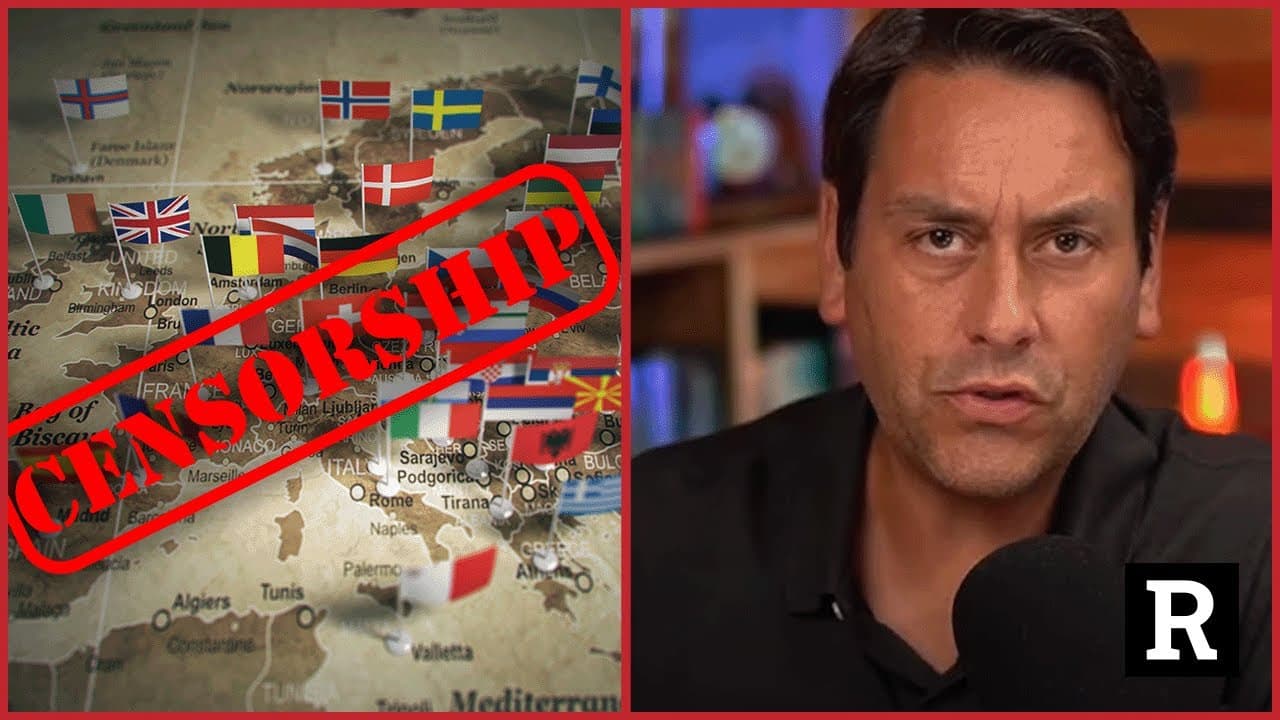
Europe just dealt a DEVASTATING blow to FREE SPEECH | Redacted with Clayton Morris
TL;DR
The Digital Services Act (DSA) in Europe is now enforceable and aims to protect against dangerous online content, but critics argue it is an attack on free speech and personal freedoms.
Transcript
well did Europe just take a big step to eliminate personal freedoms and free speech with the passage and the now enforcement of the Digital Services act European Union commissioner Terry Bretton says this will strengthen democracy by protecting you from dangerous online content listen today the Digital Services act the so-called DSA becom... Read More
Key Insights
- 🥶 The DSA aims to protect against dangerous online content, but its enforcement can potentially restrict free speech and personal freedoms.
- 🤨 Vague categories like disinformation and hate speech can be prone to interpretation and politicization, which raises concerns about censorship.
- ✊ The DSA gives the European Commission and member states significant power over large social media platforms, raising questions about democratic decision-making.
- 🎮 Awareness and grassroots organizing can help combat potential censorship and control imposed by the DSA.
- ✊ The DSA's provisions during times of crisis raise concerns about potential abuse of power and suppression of information.
- 💁 Critics argue that trusting faceless bureaucrats to regulate online content can undermine the trustworthiness of information and limit access to diverse viewpoints.
- ✊ The DSA's enforcement powers, including the ability to impose fines, give significant authority to these regulatory bodies.
Install to Summarize YouTube Videos and Get Transcripts
Explore YouTube Video Summarizer or Get YouTube Transcript Extractor
Questions & Answers
Q: What is the purpose of the Digital Services Act (DSA) in Europe?
The DSA aims to update regulations on online content, particularly illegal content like misinformation, hate speech, and child pornography.
Q: Who has the authority to police large social media platforms and search engines under the DSA?
The European Commission and member states of the European Union share the responsibility of policing issues like hate speech and disinformation on large platforms.
Q: Is there a concern about potential censorship and suppression of free speech under the DSA?
Critics argue that the DSA empowers bureaucracy to interpret vague categories like disinformation, which could lead to censorship and the suppression of free speech.
Q: How can individuals challenge the Digital Services Act in terms of their freedom of expression?
Citizens may need to bring legal challenges to the DSA, invoking existing European law that guarantees the right to receive and impart information without interference by public authorities.
Key Insights:
- The DSA aims to protect against dangerous online content, but its enforcement can potentially restrict free speech and personal freedoms.
- Vague categories like disinformation and hate speech can be prone to interpretation and politicization, which raises concerns about censorship.
- The DSA gives the European Commission and member states significant power over large social media platforms, raising questions about democratic decision-making.
- Awareness and grassroots organizing can help combat potential censorship and control imposed by the DSA.
- The DSA's provisions during times of crisis raise concerns about potential abuse of power and suppression of information.
- Critics argue that trusting faceless bureaucrats to regulate online content can undermine the trustworthiness of information and limit access to diverse viewpoints.
- The DSA's enforcement powers, including the ability to impose fines, give significant authority to these regulatory bodies.
- An ongoing legal battle may arise in response to the DSA, invoking the Charter of Fundamental Rights to challenge its restrictions on freedom of expression.
Summary & Key Takeaways
-
The Digital Services Act (DSA) is a law introduced by the European Union to update regulations on online content, specifically targeting illegal content like misinformation, hate speech, and child pornography.
-
The enforcement of the DSA gives the European Commission and member states the authority to police large social media platforms and search engines.
-
Critics argue that the DSA empowers bureaucracy to interpret vague categories like disinformation, leading to potential censorship and the suppression of free speech.
Read in Other Languages (beta)
Share This Summary 📚
Summarize YouTube Videos and Get Video Transcripts with 1-Click
Try YouTube Summary with ChatGPT & Claude or YouTube Transcript Generator
Explore More Summaries from Redacted 📚

Summarize YouTube Videos and Get Video Transcripts with 1-Click
Try YouTube Summary with ChatGPT & Claude or YouTube Transcript Generator