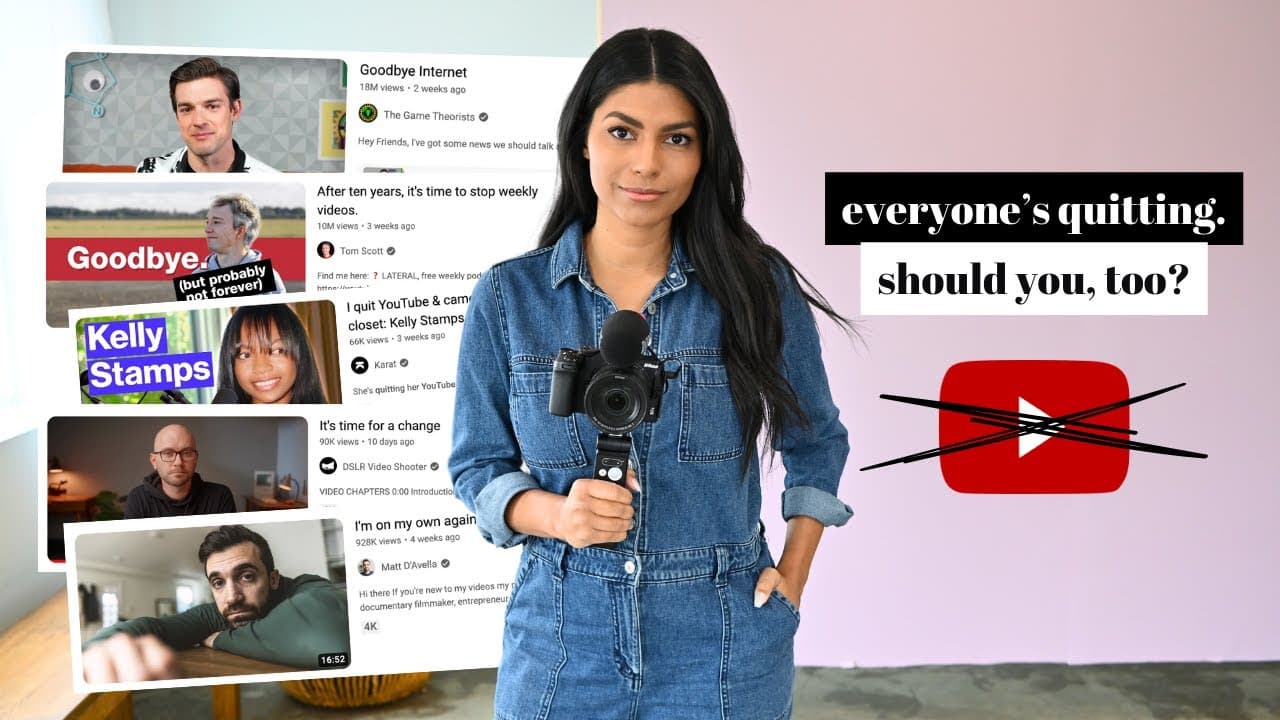
Why Everyone's Quitting YouTube
TL;DR
YouTubers face burnout, workload stress, and changing monetization.
Transcript
I honestly don't know what this video is going to be. I don't know if this is going to be a bonus podcast, a bonus video, if this is even going to go out, but I was asked about this in the freelance Friday club recently about this kind of wave of YouTubers who have announced that they're quitting. Or that they are scaling back or they're changing t... Read More
Key Insights
- Burnout is a major issue for YouTubers, driven by the all-consuming nature of content creation and the pressure to constantly produce engaging material.
- The workload for YouTubers has increased significantly, especially since 2020, with the rise of short-form content like TikTok adding to the pressure.
- Monetization on YouTube is changing, with ad revenue decreasing for some creators and brands shifting their budgets to platforms like Instagram and TikTok.
- YouTube is difficult to scale for smaller creators, as the platform still requires significant personal involvement and can't easily be outsourced.
- Being a YouTuber can be isolating, as the work is often done alone and creators may not have a local community of peers to connect with.
- Privacy concerns grow as creators age, with many choosing to share less personal information to protect themselves from potential threats.
- Aging on YouTube presents unique challenges, particularly for women, as there is pressure to maintain a youthful appearance and attitude.
- Despite these challenges, creators are finding ways to adapt by focusing on content that aligns with their passions and reframing their relationship with the platform.
Install to Summarize YouTube Videos and Get Transcripts
Explore YouTube Video Summarizer or Get YouTube Transcript Extractor
Questions & Answers
Q: Why are YouTubers experiencing burnout?
YouTubers are experiencing burnout due to the all-consuming nature of content creation, which demands significant time and effort. The pressure to constantly produce engaging material and maintain a presence on multiple platforms adds to the stress, leading many creators to feel overwhelmed and exhausted.
Q: How has the workload for YouTubers changed since 2020?
Since 2020, the workload for YouTubers has increased significantly, partly due to the rise of short-form content like TikTok. Creators now feel pressure to produce content across multiple platforms, learn new tools, and adapt to changing audience preferences, which adds to their already demanding schedules.
Q: What changes are occurring in YouTube monetization?
YouTube monetization is changing, with some creators experiencing a decrease in ad revenue. Brands are shifting their budgets to platforms like Instagram and TikTok, where they seek instant gratification and engagement. This shift forces creators to diversify their income streams and reconsider their reliance on YouTube ads.
Q: Why is YouTube difficult to scale for smaller creators?
YouTube is difficult to scale for smaller creators because it requires significant personal involvement and can't easily be outsourced. Tasks like filming, editing, and engaging with the audience are often done by the creator themselves, making it challenging to expand without sacrificing quality or authenticity.
Q: What are the privacy concerns faced by YouTubers?
As YouTubers age, privacy concerns become more prominent. Creators may choose to share less personal information to protect themselves from potential threats, such as harassment or stalking. The desire for privacy grows as creators seek to balance their public personas with their personal lives.
Q: How does aging affect YouTubers, particularly women?
Aging on YouTube presents unique challenges, especially for women, who face pressure to maintain a youthful appearance and attitude. The platform's youthful culture can create an environment where aging is perceived negatively, leading some creators to feel insecure about their appearance and relevance.
Q: How are creators adapting to the challenges of being a YouTuber?
Creators are adapting to the challenges of being a YouTuber by focusing on content that aligns with their passions and reframing their relationship with the platform. They are prioritizing personal fulfillment over algorithmic success and seeking to attract audiences that appreciate their authentic style and interests.
Q: What impact has the rise of TikTok had on YouTubers?
The rise of TikTok has added to the workload of YouTubers, as they feel compelled to create content across multiple platforms. While it offers a new distribution channel, many creators find that it does not significantly drive traffic to their YouTube channels, leading to frustration and a sense of obligation rather than opportunity.
Summary & Key Takeaways
-
The video discusses why many YouTubers are quitting or scaling back, citing burnout and the overwhelming workload as key reasons. The creator shares personal experiences and insights into the struggles of maintaining a YouTube channel.
-
Monetization changes are impacting creators, with some earning less from YouTube ads and seeing brands shift to other platforms. This financial pressure adds to the stress of sustaining a YouTube career.
-
The creator reflects on the isolation of being a YouTuber, privacy concerns, and the pressures of aging on the platform. Despite these challenges, they emphasize the importance of creating content that they are passionate about.
Read in Other Languages (beta)
Share This Summary 📚
Summarize YouTube Videos and Get Video Transcripts with 1-Click
Try YouTube Summary with ChatGPT & Claude or YouTube Transcript Generator
Explore More Summaries from Latasha James 📚



Summarize YouTube Videos and Get Video Transcripts with 1-Click
Try YouTube Summary with ChatGPT & Claude or YouTube Transcript Generator