Entire Saw Movie Series Timeline And Every Movie In The Franchise - Explored
TL;DR
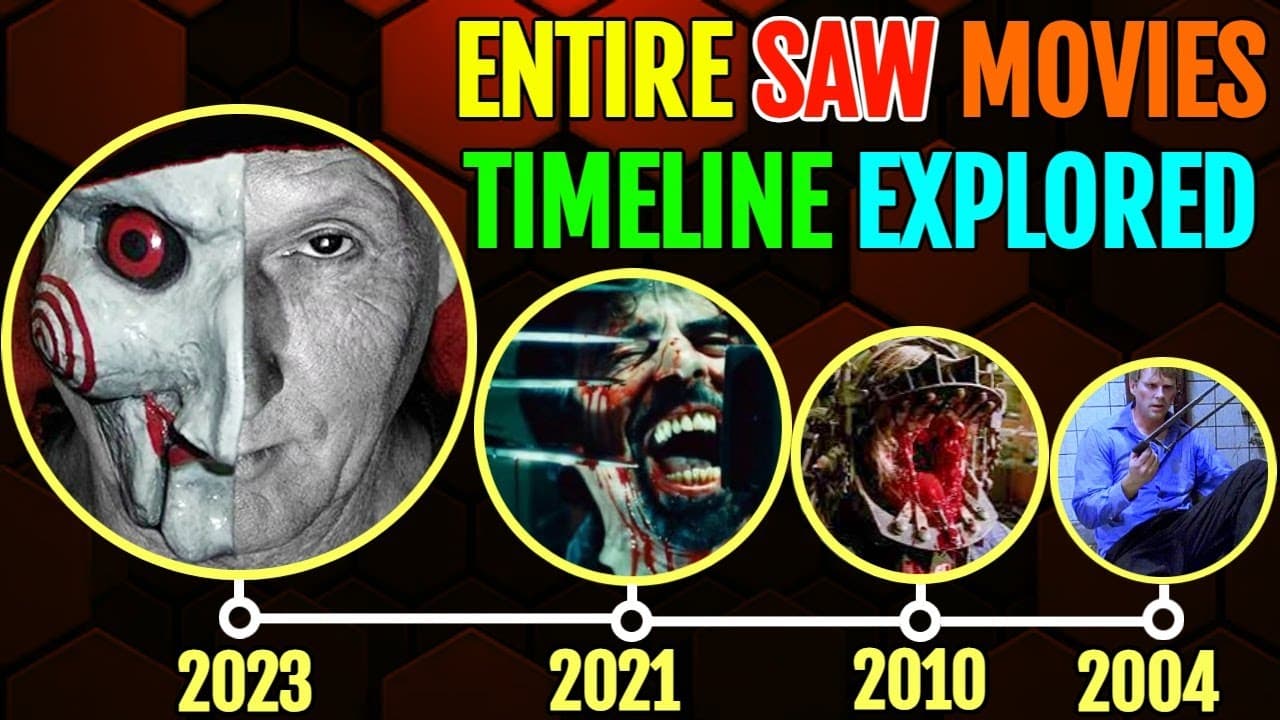
The video provides a detailed exploration of the Saw movie franchise and its intricate timelines.
Transcript
hey there guys this is Richard your host with another marvelous video be honest what's the first thought that comes to your mind when you hear the iconic phrase I want to play a game with you well if you ask us it's either mutilated life or mutilated death because trust us when we say there's no going back from there especially if the one saying it... Read More
Key Insights
- 🚱 The Saw franchise is known for its non-linear storytelling, often revealing critical plot twists through flashbacks that connect characters and events.
- 🥺 Jigsaw's philosophy promotes the idea that suffering may lead to personal growth and a renewed appreciation for life, reflecting deep moral questions.
- 🧍 Each film contributes to a larger narrative exploring themes of freedom, guilt, and accountability, testing characters' moral standings.
- 💯 The upcoming Saw X presents new traps while revisiting established characters, which fans expect to deepen the franchise's core themes.
- 🛟 The intricate traps in each film serve not only as physical challenges but also as moral tests, enforcing the philosophy of John Kramer.
- ❓ The evolving relationship between John Kramer and his apprentices, especially Amanda Young, highlights themes of mentorship and the struggle between guidance and moral divergence.
- 😱 The franchise's influence extends beyond horror, sparking discussions on ethics, justice, and the psychological complexities of its characters.
Install to Summarize YouTube Videos and Get Transcripts
Explore YouTube Video Summarizer or Get YouTube Transcript Extractor
Questions & Answers
Q: What motivates John Kramer, the Jigsaw killer, to create his infamous traps?
John Kramer, revealed as the Jigsaw killer, is motivated by a profound sense of purpose related to life and death. After suffering from terminal cancer and attempting suicide, he gains an appreciation for life. His traps are designed to test his victims’ will to live and force them to confront their past mistakes. He believes that by surviving his games, they will come to value their lives more deeply, hence his focus on redemption rather than simply inflicting punishment.
Q: How does the timeline of the Saw franchise deviate from the order of movie releases?
The timeline of the Saw franchise is nonlinear, with key plot points occurring out of the order of their film releases. For instance, Saw X serves as a direct sequel to the first film while simultaneously being a prequel to Saw II. This structure allows for intricate storytelling that reveals connections between characters, motives, and events that may not be apparent when considering the films in the order they were released.
Q: What unique traps are featured in Saw X, and how do they reflect John Kramer's philosophy?
While the specifics of traps in Saw X are not extensively detailed, it's mentioned that the film introduces new and inventive traps that are a hallmark of the franchise. They will reflect John Kramer's philosophy of testing individuals by forcing them to confront their moral failings and make life-or-death decisions. Expect creative use of physical challenges that echo the central theme of valuing life through suffering, characteristic of previous installations.
Q: Can you explain the relationship between Amanda Young and John Kramer in the series?
Amanda Young begins as a victim who survives one of Jigsaw's traps, but her experiences lead her to become one of Jigsaw's apprentices. Her relationship with Kramer develops into a complicated mentor-mentee bond, where Kramer sees potential in Amanda, believing she can carry on his legacy. However, as the series progresses, Amanda's methods diverge from Kramer's philosophy, leading to tension and conflict between them.
Q: What significance do flashbacks hold in understanding the Saw films' narratives?
Flashbacks are crucial in the Saw franchise as they provide context and background to characters' motivations, their past actions, and the ramifications of those actions. They often reveal hidden connections between characters and plotlines across different films, expose critical twists, and enhance the psychological depth of the narrative by illustrating how past traumas influence current events.
Q: How does the franchise explore themes of justice and morality?
The Saw franchise delves into complex themes of justice and morality by presenting characters in dire situations where they must confront their wrongdoings. The moral dilemmas faced by the characters highlight the consequences of their past actions, and Kramer's belief in a perverse form of justice forces them to reflect and potentially redeem themselves. This exploration leads viewers to question the nature of justice—whether it is punitive or rehabilitative.
Q: What impact does the Saw franchise have on horror film culture?
The Saw franchise has had a significant impact on horror film culture, particularly in its use of psychological horror combined with elaborate traps. It pioneered a style of storytelling that intertwines morality with horror, influencing a wave of psychological thrillers and horror films that focus on torture and survival. The franchise's unique portrayal of the antagonist’s philosophy adds layers of complexity that go beyond mere shock value, prompting discussions about ethics and human behavior.
Q: How are the victims chosen for Jigsaw's tests, and what does this say about the films' themes?
Jigsaw selects his victims based on their past actions, often targeting individuals he believes have failed to appreciate life or have committed moral wrongs. This choice reflects the franchise's overarching themes of redemption, free will, and the consequences of one's choices. By placing them in life-threatening situations, Jigsaw aims to provide them with an opportunity to confront their guilt and, ideally, to change for the better.
Summary & Key Takeaways
-
The video breaks down the complex timeline of the Saw franchise, focusing on the chronological sequence of events rather than release dates, revealing key connections between films.
-
Each movie in the franchise, starting from the first Saw film to the upcoming Saw X, is analyzed, detailing the plots, traps, and character developments woven throughout the series.
-
Key themes include human moral dilemmas, the consequences of actions, and the philosophical motivations behind John Kramer's infamous traps, illustrated through twists and plots over the nine films.
Read in Other Languages (beta)
Share This Summary 📚
Summarize YouTube Videos and Get Video Transcripts with 1-Click
Try YouTube Summary with ChatGPT & Claude or YouTube Transcript Generator
Explore More Summaries from Marvelous Videos 📚





Summarize YouTube Videos and Get Video Transcripts with 1-Click
Try YouTube Summary with ChatGPT & Claude or YouTube Transcript Generator