Jeff Bezos on why humans are special | Lex Fridman Podcast Clips
TL;DR
Humans are more power efficient and require less data compared to AI models, but scaling up AI has its own benefits. Language models can mimic truth without understanding it, raising the challenge of teaching them to distinguish true statements. The development of AI presents numerous opportunities, particularly in products like Alexa and for corporate clients in various industries.
Transcript
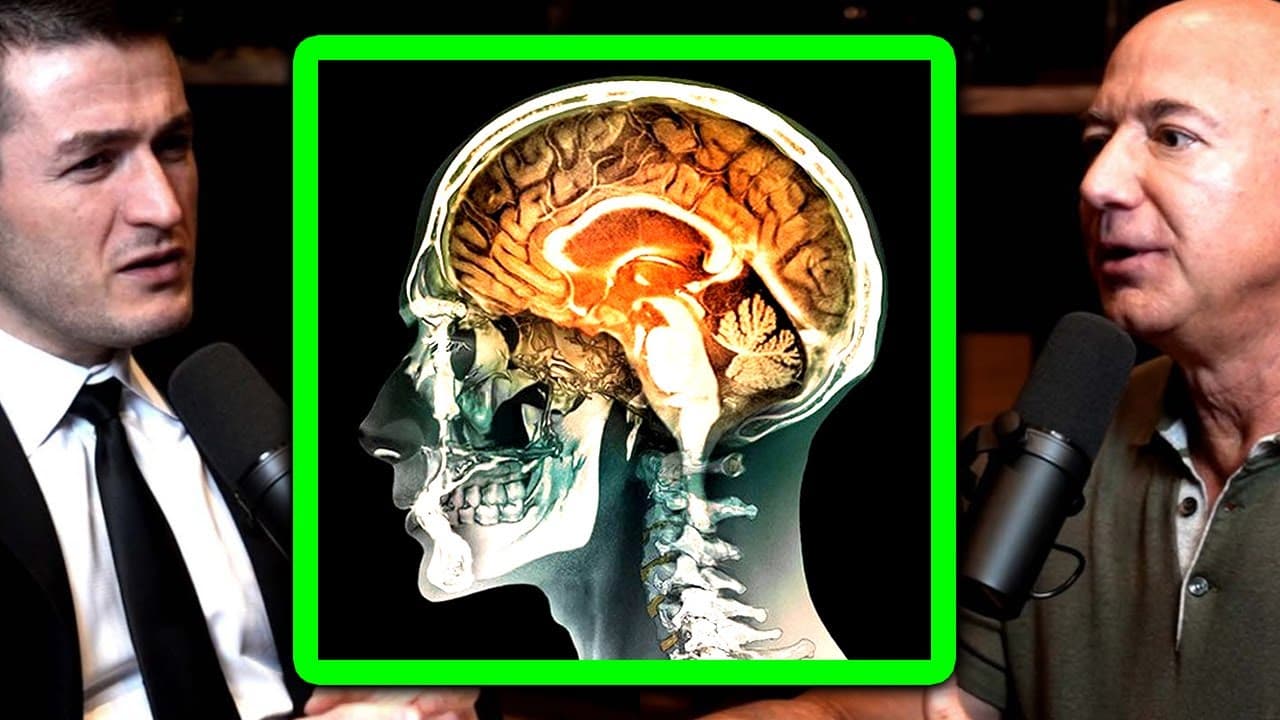
we do know that humans are doing something different um from these models in part because you know we're so power efficient you know the human brain does remarkable things and it does it on about 20 watts of power and you know uh the the AI techniques we use today use many kilowatts of power to do equivalent tasks so there's something interesting a... Read More
Key Insights
- ✊ The human brain's power efficiency and ability to learn with less data highlight its uniqueness compared to AI models.
- ⚖️ Scaling up AI models can have significant advantages, but it is not the only solution to improving performance.
- 😀 Language models face challenges in understanding and distinguishing true statements, despite their ability to generate original ideas.
- 💦 Alexa and Echo present exciting opportunities for product development, while AWS is working on models like Titan and Bedrock for corporate clients.
Install to Summarize YouTube Videos and Get Transcripts
Explore YouTube Video Summarizer or Get YouTube Transcript Extractor
Questions & Answers
Q: What sets humans apart from AI models in terms of power efficiency?
Humans operate on about 20 watts of power, while AI techniques today use many kilowatts of power for equivalent tasks. This indicates that there is something unique about the way the human brain functions.
Q: Why are humans able to learn skills like driving with fewer real-world examples compared to AI models?
Self-driving cars need to accumulate billions of miles to learn how to drive, while the average 16-year-old can figure it out with significantly fewer miles. Humans possess some undiscovered tricks that contribute to their efficient learning.
Q: How do large language models mimic truth without understanding it fully?
Large language models can generate accurate-sounding narratives, even if there is limited or insufficient training data on a particular topic. They excel at sounding like they're saying true things without being grounded in mathematical truth.
Q: What are the challenges of training language models to distinguish true statements?
Teaching language models to infer what is true or false is an interesting problem. Models need to be taught to say "I don't know" more often and to develop introspection to improve their understanding of truth.
Summary & Key Takeaways
-
Humans are highly power-efficient, with the brain functioning on 20 watts, compared to AI models that require many kilowatts of power for similar tasks.
-
Humans can learn complex skills, like driving, with relatively fewer training examples compared to AI models, which require extensive amounts of data.
-
Large language models have the ability to generate original and novel ideas, but struggle with inferring truth and often produce accurate-sounding but false narratives.
Read in Other Languages (beta)
Share This Summary 📚
Summarize YouTube Videos and Get Video Transcripts with 1-Click
Try YouTube Summary with ChatGPT & Claude or YouTube Transcript Generator
Explore More Summaries from Lex Clips 📚




Summarize YouTube Videos and Get Video Transcripts with 1-Click
Try YouTube Summary with ChatGPT & Claude or YouTube Transcript Generator