How Does Trump's Tax Law Impact Middle Class?
TL;DR
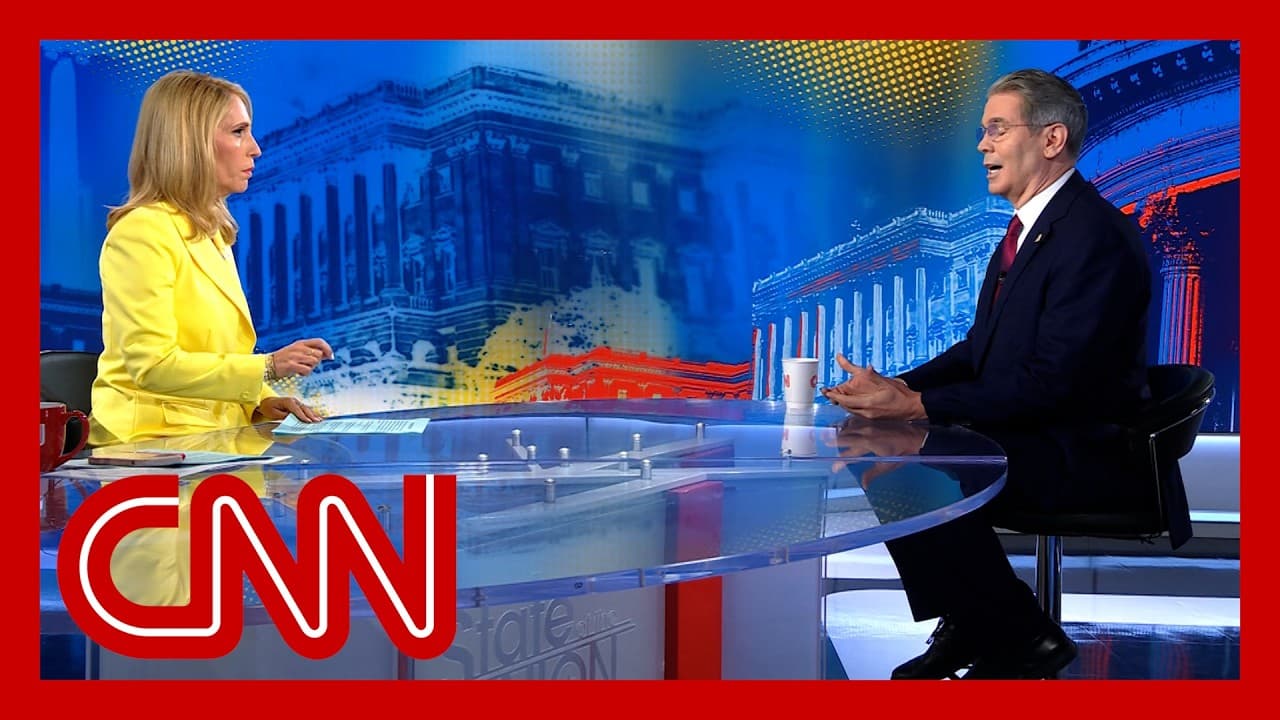
Trump's new tax law primarily benefits high-income earners, with the richest seeing a 2% income rise, while lower-income Americans may face a 3% income drop due to Medicaid cuts. Treasury Secretary Bessent argues the law aims to boost middle-class wages and make tax cuts permanent. Tariff negotiations are ongoing, with potential impacts on trade relationships.
Transcript
President Trump's big, beautiful bill is now law. And as he hits the road to sell Americans on that new law, the president is also facing another deadline this week. More than 100 countries have only three more days to meet the deadline he set to make tariff deals. Here with me now to talk about all of that is Treasury Secretary Scott Bessent. Than... Read More
Key Insights
- Trump's tax law is projected to benefit high-income earners the most, with significant income increases.
- Lower-income Americans might experience an income decrease due to cuts in Medicaid and food stamps.
- Treasury Secretary Scott Bessent claims the tax law is designed to enhance middle-class prosperity.
- The new law intends to make tax cuts permanent, affecting the distribution of tax burdens.
- Medicaid funding will increase by 20% over the next decade, but work requirements may change benefit eligibility.
- President Trump set a deadline for tariff negotiations, with potential increases for non-compliant countries.
- The U.S. holds leverage in tariff negotiations due to its trade deficit with many countries.
- Uncertainty around tariffs is challenging for small businesses, despite tax certainty provided by the new law.
Install to Summarize YouTube Videos and Get Transcripts
Explore YouTube Video Summarizer or Get YouTube Transcript Extractor
Questions & Answers
Q: How does Trump's tax law affect different income groups?
Trump's tax law is designed to primarily benefit high-income earners, with the richest Americans seeing an income rise of nearly 2%. In contrast, lower-income Americans might face a 3% income decrease due to cuts in programs like Medicaid and food stamps. The law aims to make tax cuts permanent, affecting the tax burden distribution.
Q: What are the key components of Trump's new tax law?
The key components of Trump's new tax law include permanent tax cuts, particularly benefiting high-income earners. It also involves a redistribution of the tax burden, with the highest earners paying a larger share. The law is criticized for potential negative impacts on lower-income individuals due to cuts in social programs like Medicaid.
Q: Why is there controversy over Medicaid changes in the tax law?
The controversy over Medicaid changes in the tax law stems from the introduction of work requirements for benefit eligibility. Critics argue that these requirements effectively alter benefits, contrary to Trump's promises. However, Treasury Secretary Bessent insists that there are no changes to benefits, only to eligibility criteria, which he claims has public support.
Q: What is the deadline for Trump's tariff negotiations?
The deadline for Trump's tariff negotiations is set for August 1st. Countries that do not reach an agreement by then may face a return to higher tariff levels established on April 2nd. The U.S. is leveraging its trade deficit to pressure countries into negotiating favorable terms, focusing on 18 key trading relationships.
Q: How does the U.S. leverage its trade deficit in tariff negotiations?
The U.S. leverages its trade deficit in tariff negotiations by using it as a point of pressure on surplus countries. These countries export more to the U.S. than they import, giving the U.S. a strategic advantage. The administration aims to renegotiate terms to address this imbalance, applying pressure through potential tariff increases.
Q: What impact do tariffs have on small businesses?
Tariffs create uncertainty for small businesses, making it challenging for them to plan and operate effectively. While the new tax law provides certainty in taxation, the ongoing negotiations and potential tariff increases cause concern. Businesses are wary of the impact on trade relationships and the potential costs of doing business internationally.
Q: How does the tax law aim to boost middle-class prosperity?
The tax law aims to boost middle-class prosperity by making tax cuts permanent and encouraging wage growth. Treasury Secretary Bessent argues that the law will lead to accelerated wages for middle-class workers, similar to the effects seen with Trump's first tax bill. The administration emphasizes affordability, safety, and growth as key outcomes.
Q: What are the public opinions on Medicaid work requirements?
Public opinion on Medicaid work requirements is mixed, with some support for the idea of able-bodied recipients fulfilling work or community service obligations. Treasury Secretary Bessent argues that these requirements are not burdensome and reflect a belief in individual agency. However, critics claim the requirements could disenfranchise vulnerable populations.
Summary & Key Takeaways
-
Scott Bessent discusses Trump's tax law, which reportedly benefits high-income earners more than the middle class. He argues that the law aims to boost wages and make tax cuts permanent, despite criticisms about Medicaid cuts affecting low-income Americans. Bessent emphasizes the law's focus on affordability and growth.
-
The interview also covers Trump's tariff policies, with a looming deadline for countries to negotiate new deals. Bessent highlights the U.S.'s leverage due to its trade deficit and anticipates several agreements soon. He defends the administration's approach, despite concerns about the impact on small businesses.
-
Bessent addresses criticisms about Medicaid work requirements, asserting they do not change benefits but ensure eligibility. He rebuffs claims that the requirements are burdensome, citing public support. The discussion underscores the administration's broader economic agenda, focusing on job creation and wage growth.
Read in Other Languages (beta)
Share This Summary 📚
Summarize YouTube Videos and Get Video Transcripts with 1-Click
Try YouTube Summary with ChatGPT & Claude or YouTube Transcript Generator
Explore More Summaries from CNN 📚




Summarize YouTube Videos and Get Video Transcripts with 1-Click
Try YouTube Summary with ChatGPT & Claude or YouTube Transcript Generator