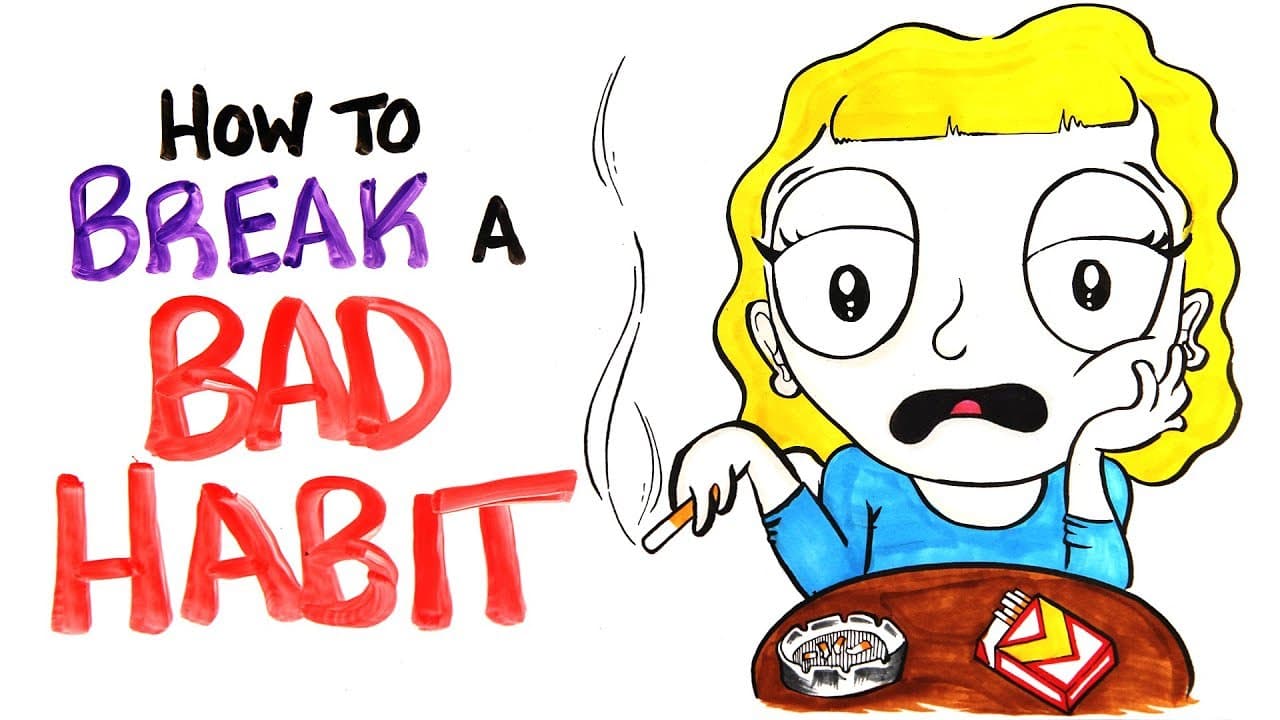
How to Identify the Loop Behind a Bad Habit
TL;DR
Bad habits persist because a cue automatically activates a learned routine associated with a reward. Repetition links the cue and reward, creating anticipation and cravings while reducing active decision-making during the routine. Identifying these three parts, cue, routine, and reward, clarifies why unwanted behavior can continue even when its reward is unpleasant or conflicts with conscious goals.
Transcript
This episode is supported by Blue Apron. We all have habits we'd like to break, whether it's biting your fingernails, smoking, or eating late at night. But why are these habits so hard to break? Perhaps you think your day is made up of deliberate, conscious decisions, but in reality, a University of Duke study found that 45% of your everyday beha... Read More
Key Insights
- Habits are repeated behaviors that commonly occur in the same setting. A Duke University study found that 45% of everyday behaviors are actions people repeat daily and tend to perform in the same location, showing how much ordinary behavior can operate through recurring patterns.
- The basal ganglia is associated with habitual behavior. The transcript describes it as one of the brain’s most primitive structures and notes that it also helps control processes such as breathing and swallowing, connecting habits with deeply rooted automatic functions.
- Chunking is the brain’s method of turning a sequence of actions into an automatic unit. It reduces the mental effort required for familiar tasks, including brushing teeth or backing out of a driveway, even though those skills may once have required deliberate concentration.
- A habit loop consists of a cue, a routine, and a reward. In the mouse experiment, the gate’s click served as the cue, running through the maze became the routine, and reaching the chocolate supplied the reward that reinforced the pattern.
- Repetition changes how the brain processes a familiar routine. After a week of maze training, the mouse immediately ran toward the chocolate, and its brain showed little activity after the gate clicked until it reached the reward.
- Cues can trigger routines without renewed conscious evaluation. Because the brain enters an automatic mode during a familiar routine, it participates less fully in decision-making, allowing the established behavior to unfold whenever its associated cue appears.
- Anticipation and cravings develop when a cue becomes linked with a reward. As those two parts of the loop become intertwined, the cue can create an expectation of the outcome before the habitual routine has even been completed.
- Habitual behavior can persist even when the immediate reward is poor. Habitual moviegoers ate popcorn whether it was fresh or stale, and their behavior was minimally affected by hunger or how much they liked the food.
Install to Summarize YouTube Videos and Get Transcripts
Explore YouTube Video Summarizer or Get YouTube Transcript Extractor
Questions & Answers
Q: What is the three-step loop behind a bad habit?
The three-step habit loop consists of a cue, a routine, and a reward. A cue initiates the behavior, the routine is the sequence of actions that follows, and the reward completes the pattern. In the maze experiment, the gate’s click was the cue, running through the maze was the routine, and finding chocolate was the reward.
Q: Why are bad habits so difficult to break?
Bad habits are difficult to break because repeated routines become automatic and begin unfolding whenever their cues appear. During these routines, the brain stops participating fully in conscious decision-making. The cue also becomes connected with anticipation of the reward, which creates cravings and strengthens the established pattern even when a person consciously prefers a different behavior.
Q: What role does the basal ganglia play in habits?
The basal ganglia is the brain structure associated with forming and executing habitual patterns. The transcript identifies it as one of the brain’s most primitive structures and says it also helps control breathing and swallowing. In the mouse experiment, its activity was initially intense throughout exploration but declined during the routine after the maze behavior became automatic.
Q: What does chunking mean in habit formation?
Chunking is the process through which the brain turns a practiced sequence into an automatic behavior pattern. It minimizes the mental effort and space needed to complete familiar tasks. Activities such as brushing teeth or backing out of a driveway may initially require attention, but repeated performance allows them to become routines that need little conscious thought.
Q: How did the mouse maze experiment demonstrate habit formation?
The mouse initially explored both sides of a T-shaped maze while its basal ganglia worked intensely throughout the process. After a week of training, it ran directly toward the chocolate as soon as the gate clicked. At that stage, brain activity was low during the run and increased again only when the mouse reached the chocolate reward.
Q: How do cues trigger habitual behavior?
A cue acts as the starting signal for a learned routine. In the maze experiment, the click of the opening gate prompted the mouse to begin running toward the chocolate. Once repetition had established the pattern, the mouse no longer needed to explore or make the same deliberate choices because the familiar cue automatically initiated the routine.
Q: Why can a habit continue when its reward is unpleasant?
A habit can continue despite an unpleasant result because the established cue can trigger the routine automatically, reducing the influence of present preferences and conscious judgment. The popcorn study showed this effect: habitual moviegoers ate the cinema popcorn whether it was fresh or stale, with hunger and how much they liked the food having minimal impact.
Q: How can someone identify the structure of a bad habit?
A person can examine the behavior as a three-part sequence: the event or setting that starts it, the repeated action that follows, and the outcome connected with that action. These correspond to the cue, routine, and reward. Recognizing this structure clarifies how the behavior starts and why it can unfold automatically instead of through a fresh decision.
Summary & Key Takeaways
-
Habits account for a substantial portion of everyday behavior. A Duke University study found that 45% of daily behaviors are repeated in the same location. These actions rely on automatic processes associated with the basal ganglia, allowing the brain to perform familiar routines without treating every step as a new conscious decision.
-
An MIT maze experiment illustrates how repetition changes behavior. A mouse initially explored extensively while its basal ganglia remained highly active. After a week of training, the gate’s click sent it directly toward chocolate. Brain activity then became limited between the initial cue and the final reward, demonstrating a process called chunking.
-
A habit follows a three-part loop consisting of a cue, routine, and reward. Repetition links the cue with anticipation of the reward, producing cravings and allowing the routine to unfold automatically. This automaticity can overpower current preferences, as habitual moviegoers ate popcorn regardless of hunger and whether the popcorn was fresh or stale.
Read in Other Languages (beta)
Share This Summary 📚
Summarize YouTube Videos and Get Video Transcripts with 1-Click
Try YouTube Summary with ChatGPT & Claude or YouTube Transcript Generator
Explore More Summaries from AsapSCIENCE 📚
Summarize YouTube Videos and Get Video Transcripts with 1-Click
Try YouTube Summary with ChatGPT & Claude or YouTube Transcript Generator