Every Man Will Have To Do THIS Surgery - Doctor Explains Prostate Problems & Surgeries
TL;DR
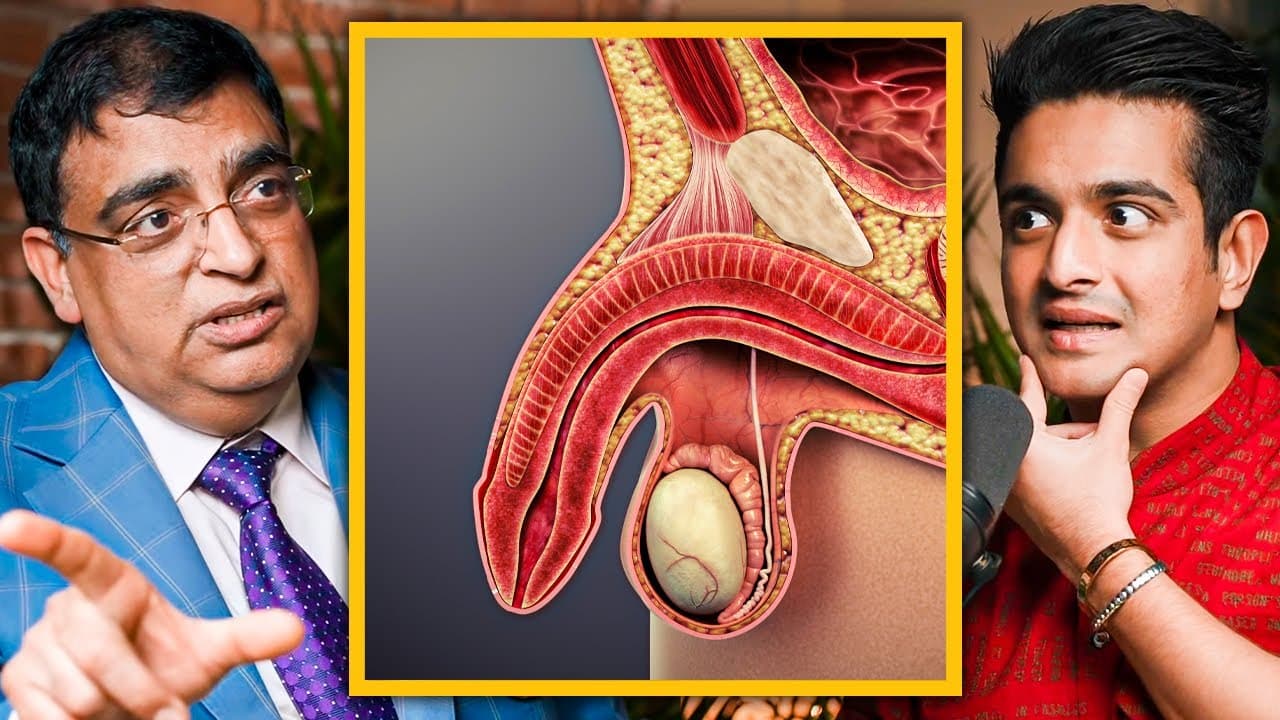
Prostate removal may be necessary for cancer or obstruction, with advances in minimally invasive surgical techniques.
Transcript
welcome to TRS Clips where you'll find happiness through your own curiosity how do you actually remove the prostate from someone what I've understood is there's two situations where a removal of a prostate is required the first is if there's a cancerous tumor the second is if the area around the prostate is not elastic enough and therefore the pros... Read More
Key Insights
- ❓ There are two primary indications for prostate removal: cancerous growths and urinary obstruction.
- 🧙♂️ Benign prostatic hyperplasia is common among men, with significant statistics illustrating its prevalence beyond the age of 40.
- 🪡 Modern pharmacological treatments have drastically reduced the need for surgical interventions in cases of benign prostatic enlargement.
- ❓ A well-executed patient selection process is fundamental to achieving successful surgical outcomes.
- ❓ Surgical advancements have transitioned from invasive procedures to laser technology that minimizes complications.
- ❓ Transurethral Resection (TURP) and laser techniques are currently the preferred methods for minimally invasive prostate surgery.
- 🚱 Effective treatment for prostate enlargement often prioritizes non-surgical methods before considering surgery.
Install to Summarize YouTube Videos and Get Transcripts
Explore YouTube Video Summarizer or Get YouTube Transcript Extractor
Questions & Answers
Q: What are the main reasons for prostate removal surgery?
Prostate removal is generally performed for two main reasons: the presence of a cancerous tumor and severe urinary obstruction due to prostatic enlargement. When the prostate enlarges, it can compress the urethra, causing painful urination. These conditions necessitate surgical intervention when other treatments are ineffective.
Q: How does benign prostatic hyperplasia manifest in older men?
Benign prostatic hyperplasia (BPH) often becomes apparent in men starting in their fourth decade of life. Although histological evidence of BPH can be found in most men over 40, clinical symptoms affect about 50% of men, resulting in urinary difficulties. Only a small percentage of these cases ultimately require surgical intervention due to the effectiveness of medication.
Q: What is the significance of patient selection in prostate surgery?
The selection of the right patient for prostate surgery is crucial. A skilled urologist must be able to justify that post-surgery, the patient’s condition will significantly improve. If improvement cannot be assured, surgery is not recommended, suggesting that careful assessment is essential for optimal outcomes.
Q: How have surgical techniques for prostate removal evolved?
Surgical techniques have significantly advanced from traditional open surgeries to minimally invasive methods. For instance, Transurethral Resection (TURP) uses a telescope to scrape off obstructing prostatic tissue with minimal body incisions, while laser techniques allow for bloodless procedures that enhance recovery and reduce hospital stays.
Q: What role do lasers play in modern prostate surgery?
Lasers, particularly holmium laser enucleation, revolutionized prostate surgery by allowing physicians to remove prostatic tissue with minimal bleeding. The laser acts like a welding tool that not only cuts but seals the surrounding tissues simultaneously, making recovery faster and less complicated compared to traditional methods.
Q: Can all cases of prostatic enlargement be treated with medication?
Not all cases of prostatic enlargement require surgery. Many patients can manage their symptoms effectively with medications designed to relieve urinary obstruction. The decision to opt for surgery typically arises when pharmaceutical interventions do not provide sufficient relief, making thorough evaluation vital.
Summary & Key Takeaways
-
Prostate removal is primarily considered when there is cancer or significant urinary obstruction caused by an enlarged prostate, particularly if medication fails to alleviate the symptoms.
-
Benign prostate enlargement is common in men over 40, but only a fraction require surgery due to effective pharmacological treatments available today.
-
Surgical techniques have evolved from invasive methods to minimally invasive procedures like Transurethral Resection and laser treatments, drastically reducing recovery times and complications.
Read in Other Languages (beta)
Share This Summary 📚
Summarize YouTube Videos and Get Video Transcripts with 1-Click
Try YouTube Summary with ChatGPT & Claude or YouTube Transcript Generator
Explore More Summaries from TRS Clips 📚





Summarize YouTube Videos and Get Video Transcripts with 1-Click
Try YouTube Summary with ChatGPT & Claude or YouTube Transcript Generator