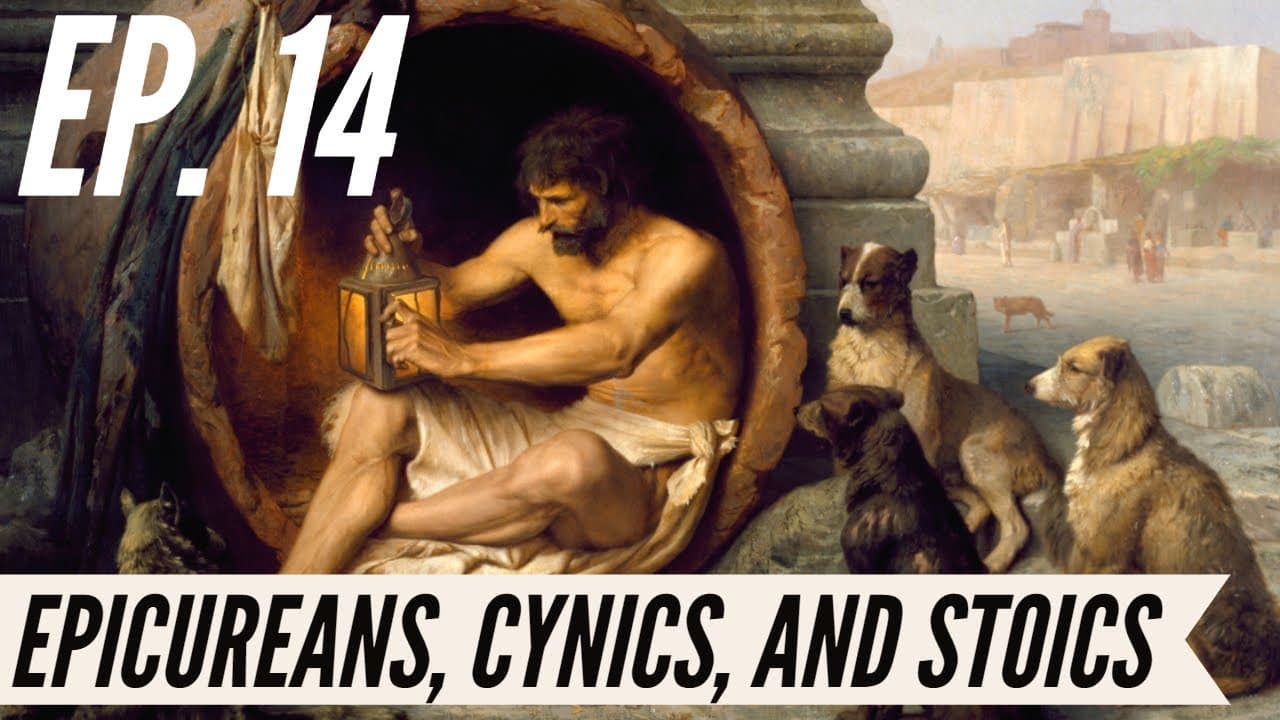
Ep. 14 - Awakening from the Meaning Crisis - Epicureans, Cynics, and Stoics
TL;DR
The video explores the Hellenistic Meaning Crisis focusing on the diagnoses and therapies proposed by the Epicureans and Stoics to tackle anxiety caused by the loss of agency and societal disruption.
Transcript
you welcome back to awakening from the meaning crisis last time we finished our look at the axial revolution in India we took a look at what was going on in the buddha's state of enlightenment we took a look at some of the cognitive science in such awakening experiences and then we moved to interpret following the sage advice of Bachelor some of th... Read More
Key Insights
- 😮 The Hellenistic Meaning Crisis during the post-Axial Revolution period led to a loss of connections, a rise in anxiety, and existential suffering.
- 😨 The Epicureans diagnose fear and the inability to manage anxiety as the primary challenge, offering therapies that involve accepting mortality and cultivating meaningful relationships.
- 🥰 The Stoics recognize the importance of setting our hearts on enduring values, emphasizing rational reflection and mindful co-identification to strengthen agency in the face of societal disruption.
- 🎮 Co-identification, the process of assuming and assigning identities, plays a pivotal role in shaping agency and managing anxiety.
- 👨💻 Moral principles should be separated from culturally defined purity codes to avoid confusion and harmful actions.
- 🌸 Stoic practices and insights continue to influence modern psychotherapeutic approaches, particularly in addressing anxiety and the loss of meaning.
Install to Summarize YouTube Videos and Get Transcripts
Explore YouTube Video Summarizer or Get YouTube Transcript Extractor
Questions & Answers
Q: How did Alexander the Great's conquests contribute to the Hellenistic Meaning Crisis?
Alexander's conquests disrupted the Greek culture, causing a loss of connections and a sense of dama side (loss of home). People were displaced, miles away from their polis, and had little political participation, leading to a heightened sense of anxiety and insignificance.
Q: What are the main insights provided by the Epicureans in dealing with anxiety?
The Epicureans argue that anxiety stems from fear and the inability to manage it. They propose accepting mortality rather than pursuing immortality and cultivating meaningful relationships and pursuit of wisdom as sources of meaning and happiness.
Q: How do the Stoics approach the Hellenistic Meaning Crisis?
The Stoics emphasize the importance of how we set our hearts rather than what we set them on. They advocate for mindful co-identification and rational reflection to strengthen agency and tackle anxiety caused by the loss of connection and societal disruption.
Q: How do the Stoics differentiate between moral principles and purity codes?
The Stoics believe that moral principles are not culturally dependent and should guide our actions, while purity codes are man-made and contingent. They encourage individuals to distinguish between these two, as confusion can lead to harmful actions and judgments.
Key Insights:
- The Hellenistic Meaning Crisis during the post-Axial Revolution period led to a loss of connections, a rise in anxiety, and existential suffering.
- The Epicureans diagnose fear and the inability to manage anxiety as the primary challenge, offering therapies that involve accepting mortality and cultivating meaningful relationships.
- The Stoics recognize the importance of setting our hearts on enduring values, emphasizing rational reflection and mindful co-identification to strengthen agency in the face of societal disruption.
- Co-identification, the process of assuming and assigning identities, plays a pivotal role in shaping agency and managing anxiety.
- Moral principles should be separated from culturally defined purity codes to avoid confusion and harmful actions.
- Stoic practices and insights continue to influence modern psychotherapeutic approaches, particularly in addressing anxiety and the loss of meaning.
- Both the Epicureans and Stoics provide valuable perspectives on how to navigate anxiety and existential suffering in a changing world.
Summary & Key Takeaways
-
The video begins with a recap of the previous discussions on the Axial Revolution, Buddhist enlightenment, and cognitive science's role in awakening experiences.
-
It then shifts its focus to the Hellenistic period, specifically examining the effects of Alexander the Great's conquests on Greek culture, leading to a loss of connections and a rise in anxiety and existential suffering.
-
The Epicureans diagnose fear and the inability to manage anxiety as the main problem, proposing a therapy of accepting mortality and cultivating meaningful relationships.
-
The Stoics, influenced by Socrates and the cynics, suggest that anxiety arises from setting our hearts on impermanent, culturally constructed identities, and advocate for mindful co-identification and rational reflection to strengthen agency.
Read in Other Languages (beta)
Share This Summary 📚
Summarize YouTube Videos and Get Video Transcripts with 1-Click
Try YouTube Summary with ChatGPT & Claude or YouTube Transcript Generator
Explore More Summaries from John Vervaeke 📚

Summarize YouTube Videos and Get Video Transcripts with 1-Click
Try YouTube Summary with ChatGPT & Claude or YouTube Transcript Generator