What Is the Reality of AI and Why Is It Misleading?
TL;DR
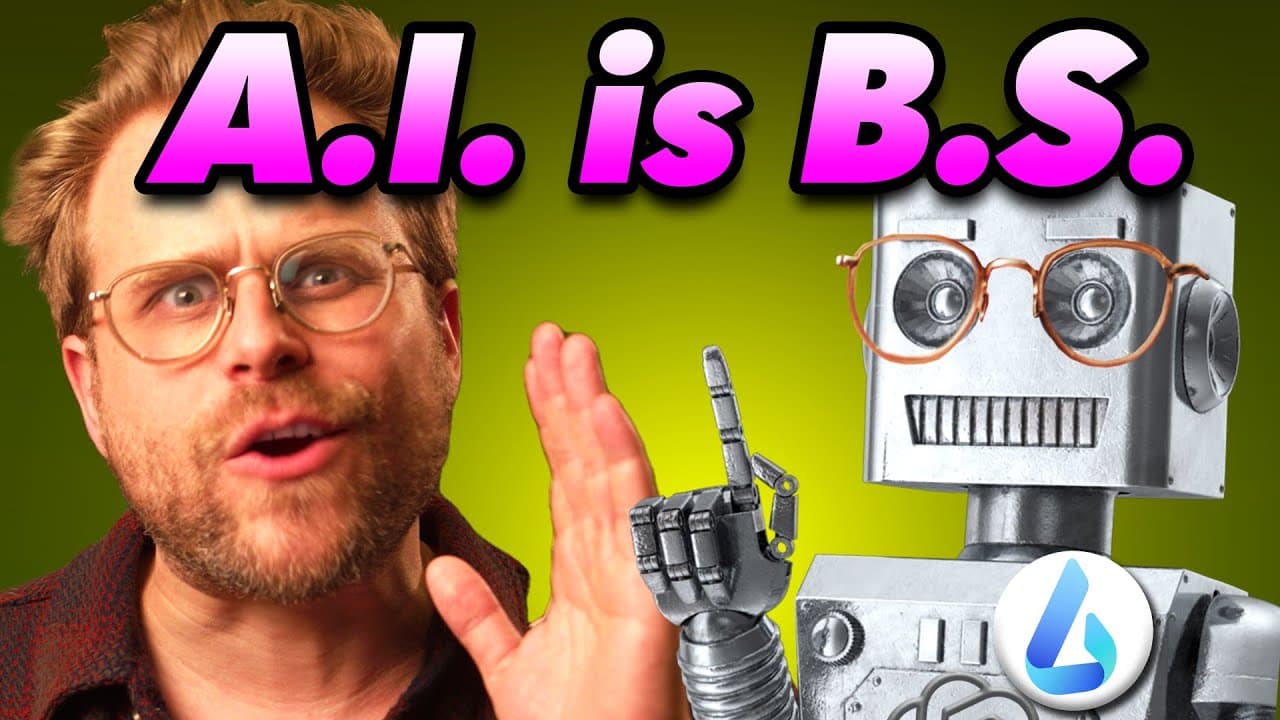
AI, as marketed by tech companies, often refers to imitation algorithms that cannot provide accurate factual information. These models, like ChatGPT and DALL-E, simply predict word sequences based on existing data, leading to misinformation. The real concern stems from these companies exploiting underpaid workers to produce the training data, without recognizing the valuable human labor involved.
Transcript
- So artificial intelligence has had a weird month. Bing's new AI search engine started gaslighting its own users worse than an abusive boyfriend. While Google shares lost $100 billion after their new AI chatbot made errors so obvious, even a simple Google search would've spotted them. But despite this massive failure, Google's announced they plan ... Read More
Key Insights
- 🥺 The term "AI" is often used as a marketing buzzword to inflate the capabilities of products, leading to exaggerated claims and false advertising.
- 💁 Language models like ChatGPT and DALL-E are imitation systems that rely on vast amounts of training data, but they cannot discern reliable information or create original content.
- 😃 The misuse and exploitation of AI technology by big tech companies pose significant risks, including the spread of misinformation and the devaluation of human labor.
- 🥺 AI language models can be deceiving, giving the illusion of human-like intelligence, leading to misplaced trust and potential harm.
- 🧑⚕️ The real danger of AI lies in the unethical practices of companies, such as underpaying workers and using their work without proper compensation.
Install to Summarize YouTube Videos and Get Transcripts
Explore YouTube Video Summarizer or Get YouTube Transcript Extractor
Questions & Answers
Q: Do AI language models like ChatGPT and DALL-E have the ability to provide accurate information?
No, these models are essentially imitators that rely on training data to predict the next word in a sentence. They cannot distinguish reliable sources from biased ones, leading to the spread of misinformation.
Q: How are tech companies exploiting human labor in relation to AI?
Companies like OpenAI and Microsoft are underpaying workers to sift through graphic and disturbing content to create the training data for their AI models. This exploitative practice is the foundation of their AI-powered products.
Q: Are self-driving cars a realistic application of AI?
No, the promises made by companies like Tesla about fully self-driving cars were based on lies and false advertising. Self-driving cars have proven to be unsafe, and the technology is far from being able to replace human drivers.
Q: Are AI language models a threat to artists and content creators?
Yes, AI models like DALL-E are built on the work of real artists, photographers, and writers, but these individuals are not compensated for their contributions. AI companies profit from the creative labor of others without giving credit or proper compensation.
Key Insights:
- The term "AI" is often used as a marketing buzzword to inflate the capabilities of products, leading to exaggerated claims and false advertising.
- Language models like ChatGPT and DALL-E are imitation systems that rely on vast amounts of training data, but they cannot discern reliable information or create original content.
- The misuse and exploitation of AI technology by big tech companies pose significant risks, including the spread of misinformation and the devaluation of human labor.
- AI language models can be deceiving, giving the illusion of human-like intelligence, leading to misplaced trust and potential harm.
- The real danger of AI lies in the unethical practices of companies, such as underpaying workers and using their work without proper compensation.
- AI is not a replacement for human creativity, problem-solving, and the ability to innovate and create new concepts that machines cannot replicate.
Summary & Key Takeaways
-
Tech companies are hyping up their products by claiming to use AI, when in reality, they are using imitation algorithms that cannot provide accurate information or perform complex tasks.
-
AI language models like ChatGPT and DALL-E are being inaccurately marketed as search engines, leading to misinformation and frustration for users.
-
Companies like OpenAI and Microsoft are exploiting underpaid workers to sift through toxic content and provide the training data for their AI models.
Read in Other Languages (beta)
Share This Summary 📚
Summarize YouTube Videos and Get Video Transcripts with 1-Click
Try YouTube Summary with ChatGPT & Claude or YouTube Transcript Generator
Explore More Summaries from Adam Conover 📚




Summarize YouTube Videos and Get Video Transcripts with 1-Click
Try YouTube Summary with ChatGPT & Claude or YouTube Transcript Generator