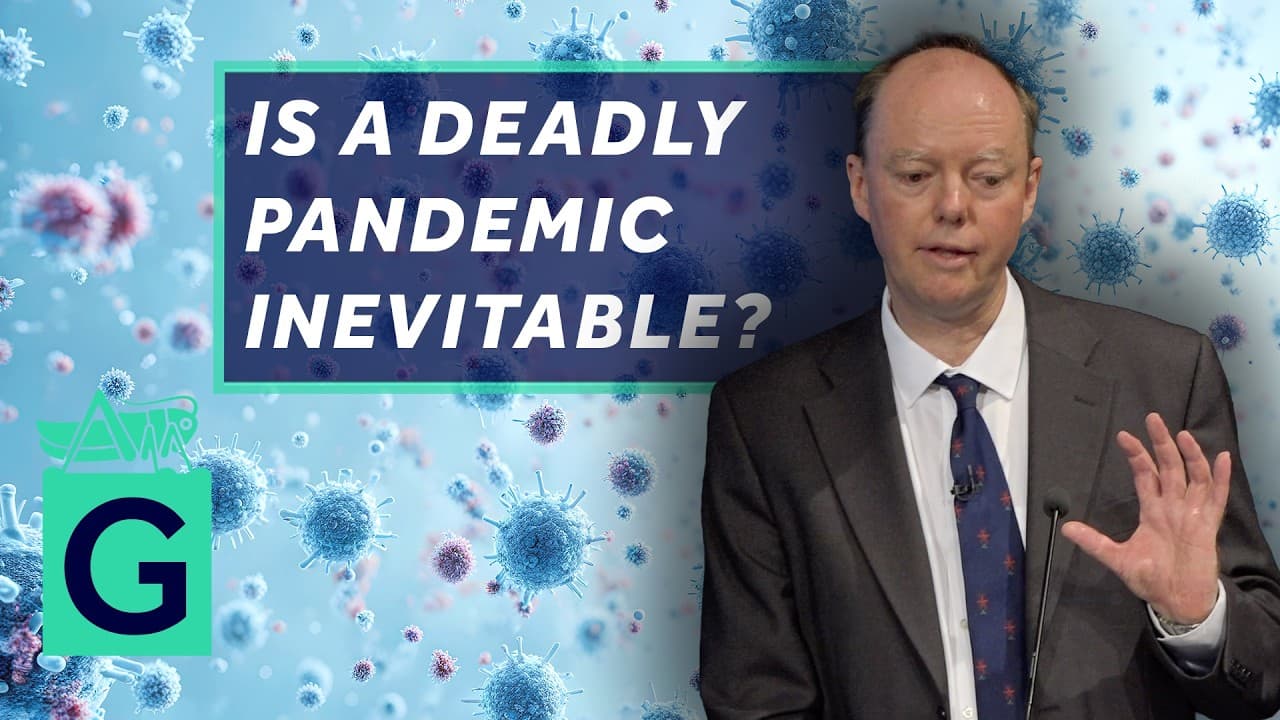
Prof Chris Whitty: How to Control a Pandemic
TL;DR
Infectious disease epidemics shaped history with serious societal impacts and varying routes of transmission.
Transcript
this evening I thought I would talk for about epidemics and the reason I've chosen this is a topic and chosen infectious diseases as my first year of lectures is because they were in this this year we're coming into which is the 500th year of the birth of Atomics Gresham by far the dominant part of medicine so when this College was founded medicine... Read More
Key Insights
- 💠 Historical epidemics like plague and smallpox significantly shaped societal structures and population dynamics.
- 🫱 The 1918 H1N1 influenza pandemic was a global threat, causing substantial mortality comparable to war casualties.
- 🎮 Route of transmission plays a crucial role in controlling epidemics, necessitating targeted interventions for touch, sexual, vector-borne, and waterborne diseases.
- 😷 Behavioral change and societal organization are vital aspects of epidemic control, alongside medical interventions like vaccines and drugs.
Install to Summarize YouTube Videos and Get Transcripts
Explore YouTube Video Summarizer or Get YouTube Transcript Extractor
Questions & Answers
Q: How did infectious diseases impact society during Sir Thomas Gresham's time?
Sir Thomas Gresham's era faced major epidemics like plague, smallpox, syphilis, and the English sweating sickness, leading to significant societal impacts and mortality rates.
Q: What major global infectious disease pandemic happened in the 20th century?
The 1918 H1N1 influenza pandemic, known as the Spanish flu, caused between 50 and 100 million deaths globally, surpassing the death toll of all wars in the USA in the 20th century.
Q: What strategies can be employed to control epidemics transmitted through touch?
For touch-transmitted epidemics like Ebola, interventions focusing on infection control in hospitals, safe burials, and isolation of symptomatic individuals play a crucial role in reducing disease transmission.
Q: How do vector-borne epidemics like Zika spread, and what challenges do they present?
Vector-borne diseases like Zika transmitted by mosquitoes can rapidly spread through populations, as seen in the Zika epidemic in Brazil. Climate changes and global travel facilitate the spread of such diseases.
Summary & Key Takeaways
-
Epidemics dominated medicine during Sir Thomas Gresham's time, with diseases like plague, smallpox, and syphilis prevalent.
-
Significant epidemics like the 1918 H1N1 influenza pandemic caused massive global mortality, impacting societies drastically.
-
Various routes of transmission such as touch, sexual contact, vectors, and water sources contribute to the spread of epidemics.
Read in Other Languages (beta)
Share This Summary 📚
Summarize YouTube Videos and Get Video Transcripts with 1-Click
Try YouTube Summary with ChatGPT & Claude or YouTube Transcript Generator
Explore More Summaries from Gresham College 📚

Summarize YouTube Videos and Get Video Transcripts with 1-Click
Try YouTube Summary with ChatGPT & Claude or YouTube Transcript Generator