Splat! 5 Species that Masquerade as Bird Droppings
TL;DR
Various small animals mimic bird droppings for defense, with convincing adaptations like appearance, smell, and behavior.
Transcript
[INTRO ♫] If you’re a small animal, one of your biggest challenges in life is making sure that you don’t get eaten. And there are all sorts of ways of doing this— like, being toxic, or blending in with your surroundings. Some species even disguise themselves as unpalatable things, like twigs and stones. That way, they can hide in plain sight. But w... Read More
Key Insights
- 💩 Animals like potter wasps and orb-weaver spiders employ visual mimicry to avoid becoming prey by looking like bird poop.
- 🐦 Chemical cues, like those emitted by bird-dung crab spiders, can enhance the effectiveness of mimicking bird droppings for defense.
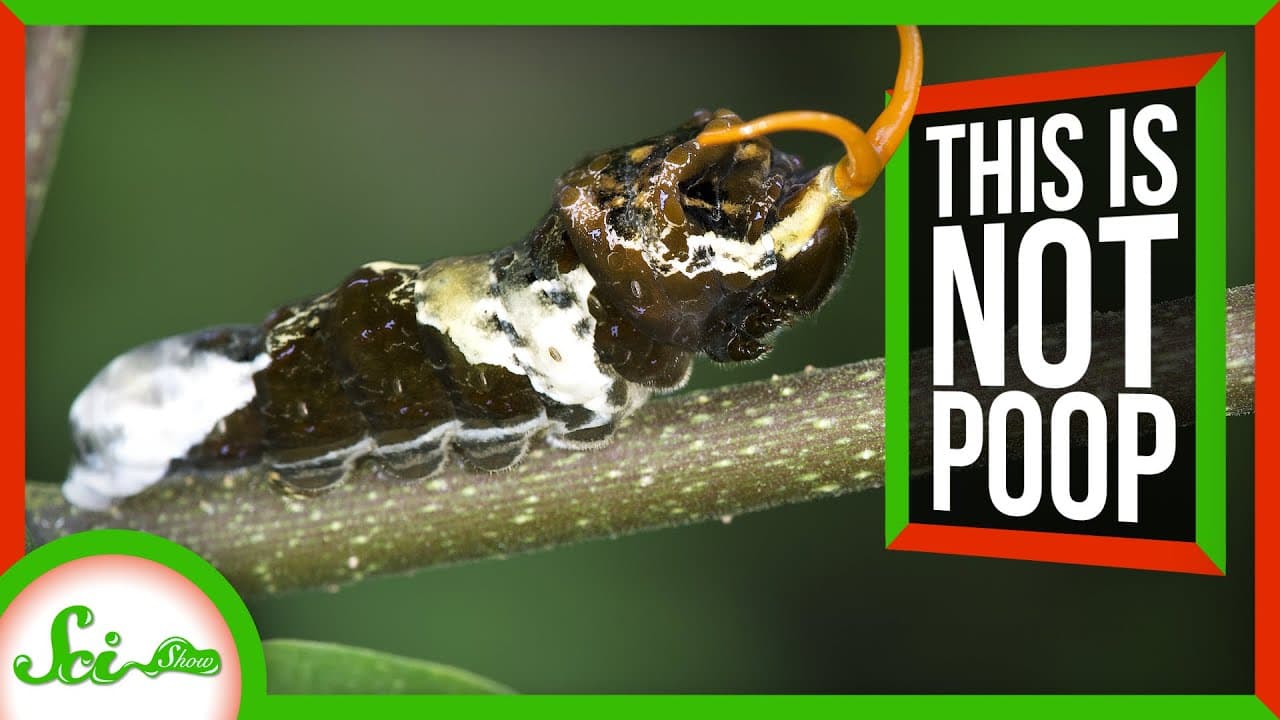
- 💩 Caterpillars displaying posture and color resembling bird poop demonstrate how behavioral adaptations aid in predator evasion.
- 😘 The intricate wing patterns of the moth Macrocilix maia suggest advanced mimicry strategies, possibly including olfactory cues for deception.
- 💩 Limited research on bird poop mimics highlights the need for further studies to understand the evolutionary benefits of such adaptations.
Install to Summarize YouTube Videos and Get Transcripts
Explore YouTube Video Summarizer or Get YouTube Transcript Extractor
Questions & Answers
Q: Why do some small animals mimic bird poop?
Some creatures, like potter wasps and orb-weaver spiders, mimic bird droppings to avoid predators by blending into their surroundings effectively for protection.
Q: How do orb-weaver spiders utilize their web decorations for defense?
Orb-weaver spiders like Cyclosa ginnaga create web decorations resembling bird poop to deter predators like wasps, with studies showing these adaptations confuse and protect the spiders.
Q: What advantage do caterpillars gain from looking like bird poop?
Caterpillars, such as those in Japan, adopt the appearance of bird droppings to lower predation rates by birds, as observed through experiments utilizing models with color and posture variations.
Q: How do bird-dung crab spiders enhance their disguise as feces?
Bird-dung crab spiders produce foul-smelling chemicals, enhancing their visual mimicry of bird poop with a scent that may deter predators and even attract prey, contributing to their survival strategy.
Summary & Key Takeaways
-
Small creatures mimic bird poop as a defense mechanism by appearing like feces, utilizing visual, olfactory, and behavioral adaptations.
-
Potter wasps, orb-weaver spiders, caterpillars, crab spiders, and moths demonstrate unique ways of masquerading as bird poop.
-
Studies suggest that these adaptations aid in predator avoidance, with some species even using smell to repel threats.
Read in Other Languages (beta)
Share This Summary 📚
Summarize YouTube Videos and Get Video Transcripts with 1-Click
Try YouTube Summary with ChatGPT & Claude or YouTube Transcript Generator
Explore More Summaries from SciShow 📚


Summarize YouTube Videos and Get Video Transcripts with 1-Click
Try YouTube Summary with ChatGPT & Claude or YouTube Transcript Generator