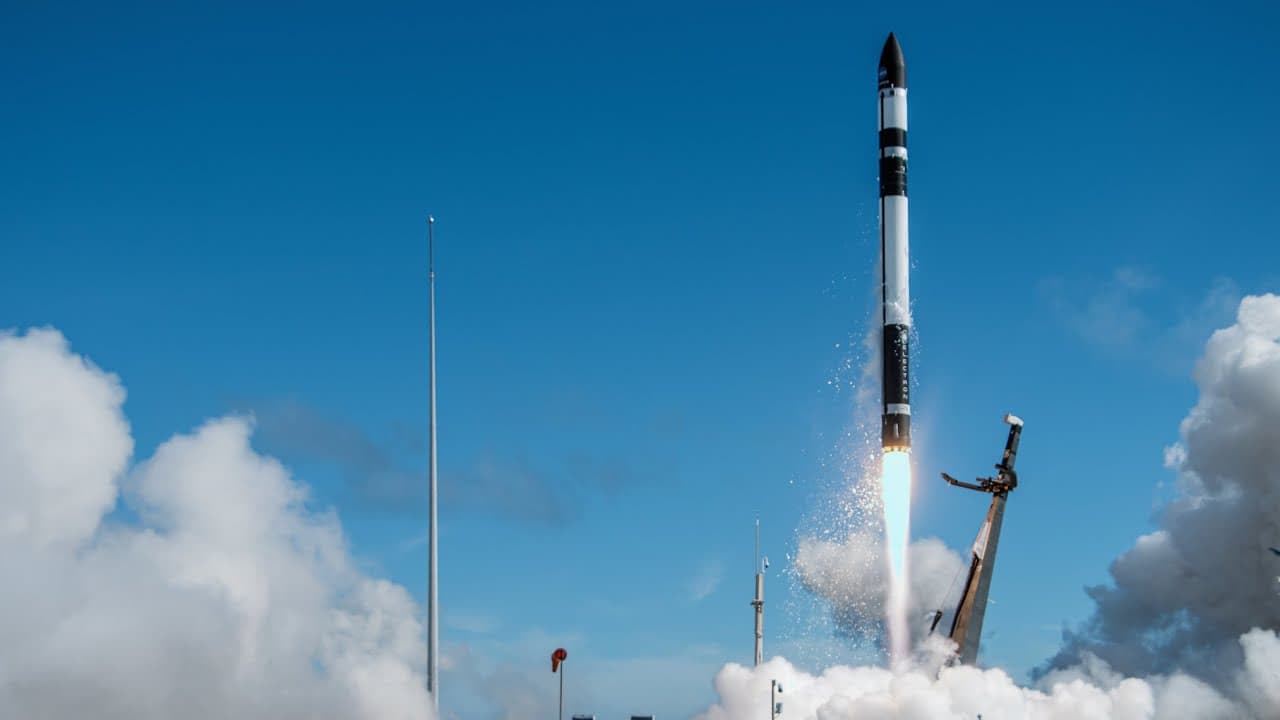
Launch of Cyclone-Tracking TROPICS CubeSats from New Zealand, Pt. II (Official NASA Broadcast)
TL;DR
Rocket Lab successfully launches the Tropics constellation, a group of small satellites, for NASA to monitor and study tropical cyclones, providing real-time observations for improved storm modeling and prediction.
Transcript
foreign foreign foreign foreign foreign foreign foreign foreign foreign foreign foreign foreign foreign foreign foreign foreign foreign foreign foreign foreign foreign foreign fore Read More
Key Insights
- 🦻 The Tropics constellation provides near-hourly observations of tropical cyclones, aiding in more accurate storm modeling and prediction.
- 👻 Real-time monitoring of storms allows for better preparation and response, potentially saving lives.
- 😒 The constellation uses a miniaturized microwave radiometer to measure storm strength through detecting thermal radiation emitted by oxygen and water vapor in the air.
- 🥺 The data gathered by the Tropics constellation will help scientists understand the processes driving storm intensification, leading to improved prediction and preparation for high-impact storms.
- 🚀 Rocket Lab's successful launch of the Tropics constellation demonstrates their commitment to delivering reliable and regular launches for small satellites.
- 🎓 The Tropics constellation is a collaborative effort involving researchers from MIT, NASA, NOAA, and several universities and commercial partners.
Install to Summarize YouTube Videos and Get Transcripts
Explore YouTube Video Summarizer or Get YouTube Transcript Extractor
Questions & Answers
Q: How does the Tropics constellation help improve forecasts for tropical storms and hurricanes?
The Tropics constellation provides near-hourly observations of storm precipitation, temperature, and humidity, aiding scientists in understanding storm intensification and predicting future patterns.
Q: What is the significance of monitoring tropical cyclones in real-time?
Real-time monitoring allows for better predictions and preparation for high-impact storms, potentially saving lives and reducing damage.
Q: How does the Tropics constellation collect data on storm intensity?
The constellation uses a miniaturized microwave radiometer, about the size of a cup of coffee, to detect the thermal radiation emitted by oxygen and water vapor in the air, providing measurements of storm strength.
Q: Why is the Tropics constellation important?
The constellation's data helps scientists better understand the processes that drive storm intensification, leading to improved storm modeling and prediction, ultimately saving lives and reducing the impact of tropical cyclones.
Summary & Key Takeaways
-
Rocket Lab launches the second half of the Tropics constellation, a collection of four cube satellites, for NASA's Tropics mission.
-
The Tropics constellation aims to monitor the formation and evolution of tropical cyclones, providing near-hourly observations of storm intensity, precipitation, temperature, and humidity.
-
The data gathered by Tropics will improve scientists' understanding of storm intensification and aid in more accurate modeling and prediction of high-impact storms.
Read in Other Languages (beta)
Share This Summary 📚
Summarize YouTube Videos and Get Video Transcripts with 1-Click
Try YouTube Summary with ChatGPT & Claude or YouTube Transcript Generator
Explore More Summaries from NASA 📚

Summarize YouTube Videos and Get Video Transcripts with 1-Click
Try YouTube Summary with ChatGPT & Claude or YouTube Transcript Generator