How Do Rocks Transform in the Rock Cycle?
TL;DR
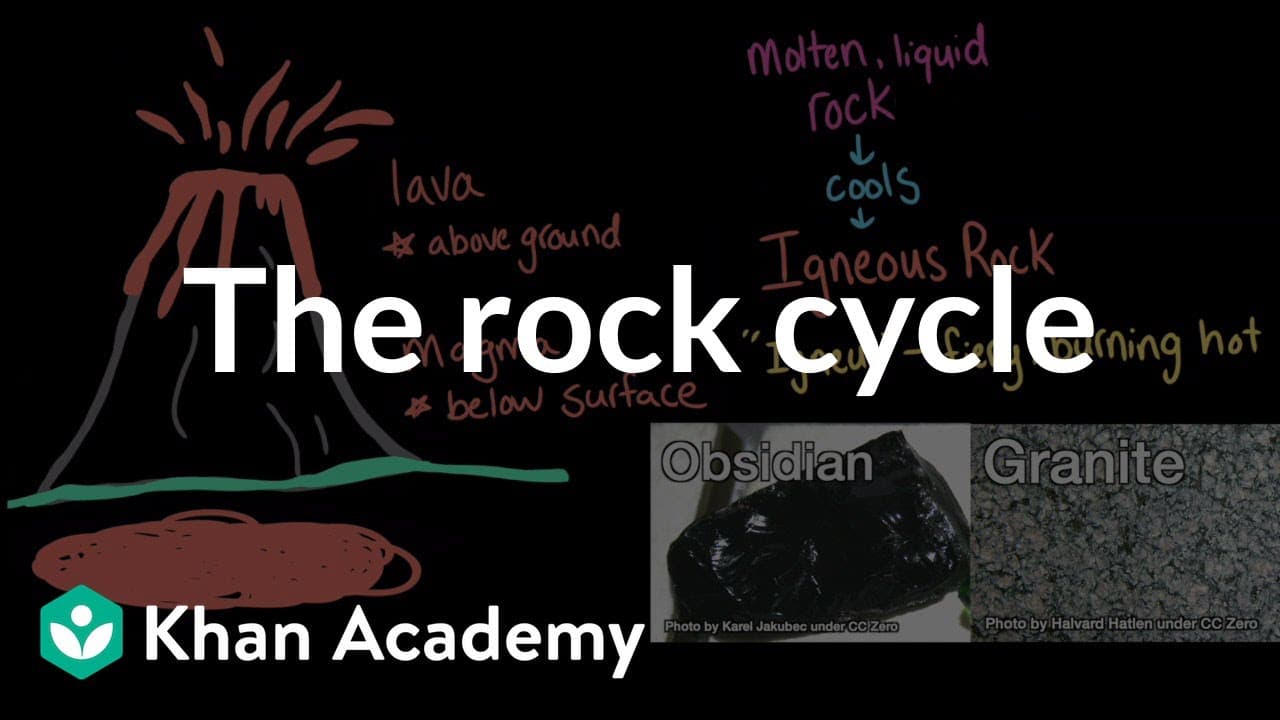
Rocks continually transform through the rock cycle, changing between igneous, sedimentary, and metamorphic forms due to processes like cooling, weathering, and pressure. For example, igneous rocks form from molten rock, while sedimentary rocks arise from compacted sediments, and metamorphic rocks develop under heat and pressure.
Transcript
- [Instructor] Have you ever tried to hold a staring contest with a rock? If you did, you might not have expected that all that time you were staring at one of the sneakiest shape-shifters in the world. No, rocks don't shapeshift into unicorns, but they do change shape and composition. Sometimes they change quickly, like when an interrupting volcan... Read More
Key Insights
- 🥵 Rocks can change shape and composition over time through processes like cooling, weathering, and heat and pressure.
- 👨🎤 Igneous rocks form when molten rock solidifies, with granite and obsidian being common examples.
- 👨🎤 Sedimentary rocks are formed from compacted and cemented sediments, while metamorphic rocks are created through heat and pressure.
- 👨🎤 The rock cycle describes how rocks can transform from one type to another through various geological processes.
- 👨🎤 The composition and appearance of rocks can vary based on their formation conditions and the type of rock they have transformed into.
- 👨🎤 More than 90% of the Earth's crust is made up of igneous rocks.
- 💁 Sedimentary rocks can contain fossils and provide valuable information about Earth's history.
Install to Summarize YouTube Videos and Get Transcripts
Explore YouTube Video Summarizer or Get YouTube Transcript Extractor
Questions & Answers
Q: What are igneous rocks and how are they formed?
Igneous rocks are formed when molten rock (magma or lava) cools and solidifies. Magma solidifies below the Earth's surface, creating rocks like granite with large crystals. Lava, which cools quickly above the surface, forms rocks like obsidian with smaller crystals.
Q: How do sedimentary rocks form?
Sedimentary rocks form through a process called lithification. Sediments, which are small particles eroded from other rocks, settle and become compacted over time. The layers of sediment become squished together and are cemented by dissolved minerals carried by water, forming sedimentary rocks like limestone.
Q: What causes a rock to become a metamorphic rock?
Rocks can become metamorphic due to exposure to high heat and pressure. This can happen when igneous, sedimentary, or even other metamorphic rocks are subjected to these conditions. For example, limestone can undergo metamorphism and become marble.
Q: What is the rock cycle?
The rock cycle describes the continuous process of how rocks can change from one type to another. Igneous and metamorphic rocks can become sedimentary rocks through weathering and lithification. Metamorphic and sedimentary rocks can become igneous rocks through melting and cooling. This cycle can repeat indefinitely.
Summary & Key Takeaways
-
Rocks can change quickly through volcanic activity or slowly over thousands of years through heating and compression in the Earth's crust.
-
When rocks are heated and cooled, they can become molten and solidify, forming igneous rocks like granite and obsidian.
-
Weathering and erosion can break down rocks into sediments, which can then be compacted and cemented together to form sedimentary rocks. These rocks can then undergo metamorphosis under high pressure and heat, becoming metamorphic rocks like marble.
Read in Other Languages (beta)
Share This Summary 📚
Summarize YouTube Videos and Get Video Transcripts with 1-Click
Try YouTube Summary with ChatGPT & Claude or YouTube Transcript Generator
Explore More Summaries from Khan Academy 📚






Summarize YouTube Videos and Get Video Transcripts with 1-Click
Try YouTube Summary with ChatGPT & Claude or YouTube Transcript Generator