What Are Less Common Chord Progressions in Pop Music?
TL;DR
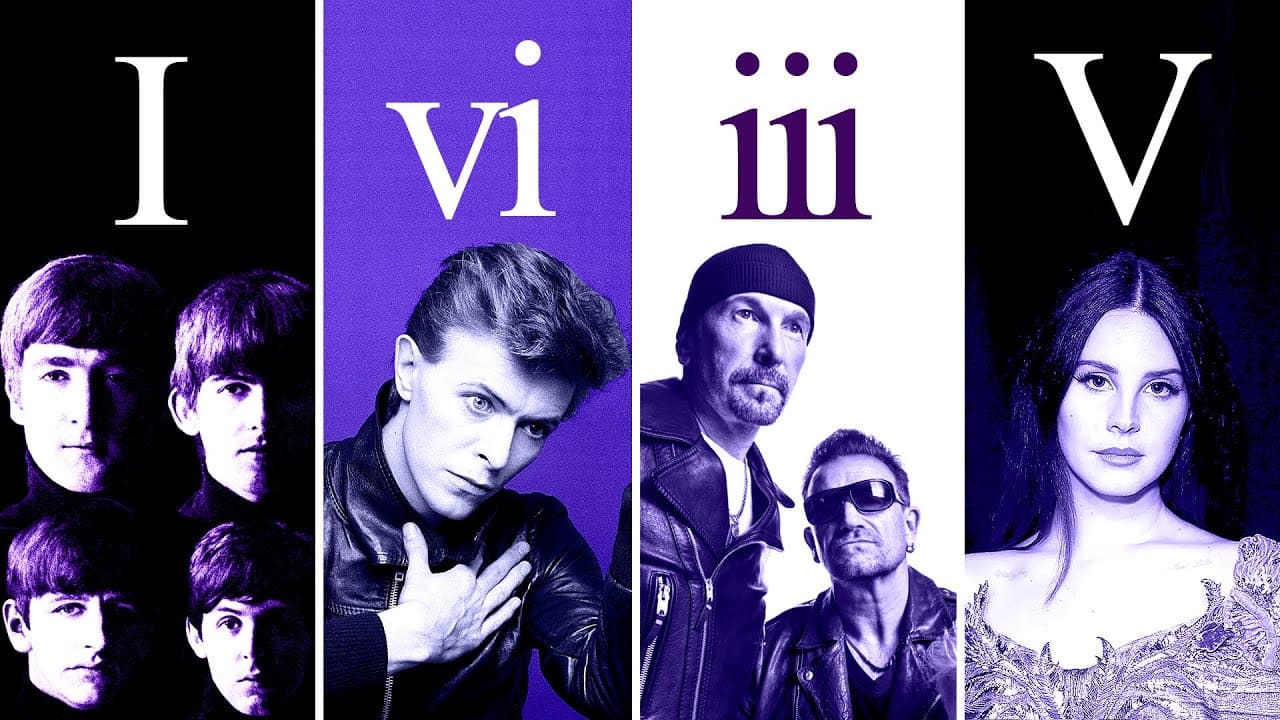
Four less common diatonic chord progressions in pop music include: 1-6-3-5 ('She Loves You'), 1-2-6-4 ('Starlight'), 1-3-7-1 ('Jolene'), and 1-3-7-6 ('Poly'). These progressions, while simple, can add a unique character to songs and are often underutilized compared to more common progressions.
Transcript
this video is sponsored by the glary GDP 104 weighted keyboard I've made loads of videos now looking at really common chord progressions chord progressions that get used time and time again in loads of popular songs but today I want to look at some slightly less common chord progressions not necessarily complex chord progressions the four chord pro... Read More
Key Insights
- 🤩 Diatonic chord progressions offer a wide range of options for songwriting, even within the boundaries of a single key.
- ❓ Less commonly used chord progressions can bring a unique and memorable quality to a song.
- 🖐️ Roman numeral analysis can be employed to understand and play songs regardless of their tonality.
- ❓ It is important to consider the context and tonality of a song when analyzing chord progressions to avoid confusion and ambiguity.
Install to Summarize YouTube Videos and Get Transcripts
Explore YouTube Video Summarizer or Get YouTube Transcript Extractor
Questions & Answers
Q: What is a diatonic chord progression?
A diatonic chord progression consists of chords that are derived from the major or minor scale of a particular key. It means using chords that naturally belong to that key without introducing any chromatic alterations.
Q: Why are these chord progressions considered less common?
These chord progressions are considered less common because they are not frequently used in popular songs. They deviate from some of the more popular and well-known progressions, offering a fresh and distinct sound.
Q: What makes the "She Loves You" chord progression unique?
The "She Loves You" chord progression is unique because it uses the less commonly used iii chord in the major key. This adds a characterful and noticeable quality to the progression.
Q: Can these chord progressions be used in different keys?
Yes, these chord progressions can be transposed to different keys. The key mentioned in the video is just an example, but the progressions can be applied to any key by maintaining the same relationship between the chords.
Key Insights:
- Diatonic chord progressions offer a wide range of options for songwriting, even within the boundaries of a single key.
- Less commonly used chord progressions can bring a unique and memorable quality to a song.
- Roman numeral analysis can be employed to understand and play songs regardless of their tonality.
- It is important to consider the context and tonality of a song when analyzing chord progressions to avoid confusion and ambiguity.
- Popular songs often rely on common chord progressions, but exploring less common ones can help create a distinct and fresh sound.
Summary & Key Takeaways
-
The first chord progression discussed is the "She Loves You" chord progression, used in the verse of The Beatles' song. It consists of the chords I, vi, iii, V in the key of C major.
-
The second chord progression is the "Starlight" chord progression, used in the song by Muse. It is the progression I, ii, vi, IV in the key of C major.
-
The third chord progression is the "Jolene" chord progression, which consists of the chords i, III, VII, i in a minor key.
-
The fourth chord progression is the "Poly" chord progression, similar to the previous one but with a different final chord. It consists of the chords i, III, VII, VI in a minor key.
Read in Other Languages (beta)
Share This Summary 📚
Summarize YouTube Videos and Get Video Transcripts with 1-Click
Try YouTube Summary with ChatGPT & Claude or YouTube Transcript Generator
Explore More Summaries from David Bennett Piano 📚



Summarize YouTube Videos and Get Video Transcripts with 1-Click
Try YouTube Summary with ChatGPT & Claude or YouTube Transcript Generator