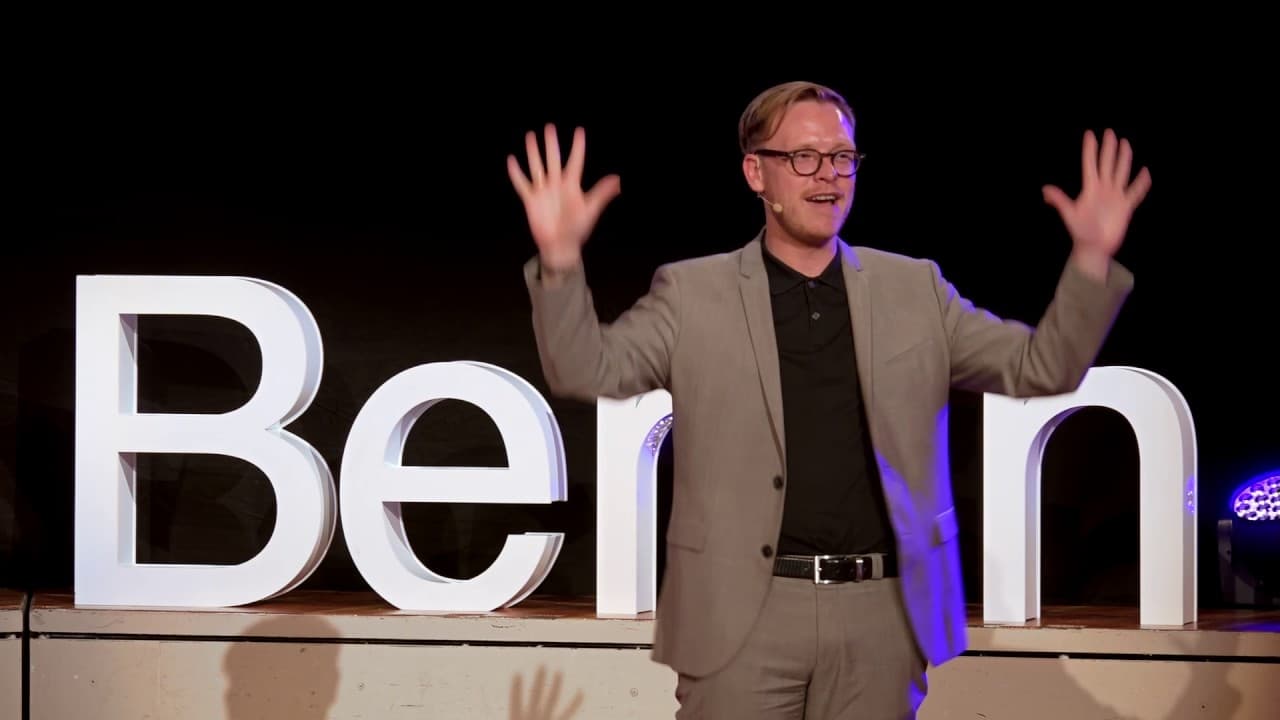
The Nature of Our Values | Markus Gabriel | TEDxBerlinSalon
TL;DR
Democracy is grounded in three pillars: human rights, freedom, and equality. Three villains (pessimism, relativism, nihilism) seek to undermine democracy, but by recognizing the universality of values and the value-laden nature of human experience, we can build an immune system to protect democracy.
Transcript
I'm a very easy guy so my talk has three parts a beginning middle and an end in the beginning I will tell you what democracy is and why democracy as I will use that word it's grounded in a certain set of values there are three of them I will also tell you that three villains in my story they are not Putin a gun and other people Trump they're differ... Read More
Key Insights
- 🗯️ Democracy encompasses not only a system of government but also a value system based on human rights, freedom, and equality.
- ❓ Moral disagreement cannot exist without a wider agreement, and therefore, there are universal values that humans share across cultures.
- 🔄 Relativism and nihilism pose threats to democracy by denying the universality and objectivity of values but can be countered by recognizing the centrality of human experience and the value-laden nature of it.
- 🦹 Building an immune system against villains that seek to undermine democracy involves defending the objectivity of one's experience and rejecting the denial of one's own humanity.
Install to Summarize YouTube Videos and Get Transcripts
Explore YouTube Video Summarizer or Get YouTube Transcript Extractor
Questions & Answers
Q: What is the core value system underlying democracy?
Democracy is grounded in three pillars: human rights, freedom, and equality. These values are intrinsically valuable and form the foundation of democracy as a value system.
Q: How does the pessimist view threaten democracy?
Pessimism claims that widespread moral, social, and political disagreement makes it unlikely for there to be universal values that can support democracy. However, this position is fundamentally flawed as moral disagreement rests on a wider agreement and it is impossible to imagine disagreement without some level of agreement.
Q: How does the relativist challenge the idea of universal human rights?
The relativist argues that there are no universal values and that human rights and concepts of justice, equality, and freedom are merely strategies to maintain Western hegemony or exert power. However, the idea of universal human rights is deeply ingrained across cultures and regions, demonstrating that it is not just a Western construct.
Q: What is the nihilistic view of values?
The nihilist believes that there are no values at all and that morality is simply a product of evolutionary biology and physical reality. However, this view fails to recognize the value-laden nature of human experience and the fundamental role of values in ethical judgments.
Summary & Key Takeaways
-
Democracy is not only a form of government but also a value system based on human rights, freedom, and equality.
-
Three villains threaten democracy: pessimism, which claims that dictatorship is inevitable; relativism, which denies universal human rights; and nihilism, which argues that there are no values at all.
-
We can defend democracy by recognizing the fundamental agreement among humans on basic values, understanding that moral disagreement rests on moral agreement, and acknowledging the value-laden nature of human experience.
Read in Other Languages (beta)
Share This Summary 📚
Summarize YouTube Videos and Get Video Transcripts with 1-Click
Try YouTube Summary with ChatGPT & Claude or YouTube Transcript Generator
Explore More Summaries from TEDx Talks 📚


Summarize YouTube Videos and Get Video Transcripts with 1-Click
Try YouTube Summary with ChatGPT & Claude or YouTube Transcript Generator