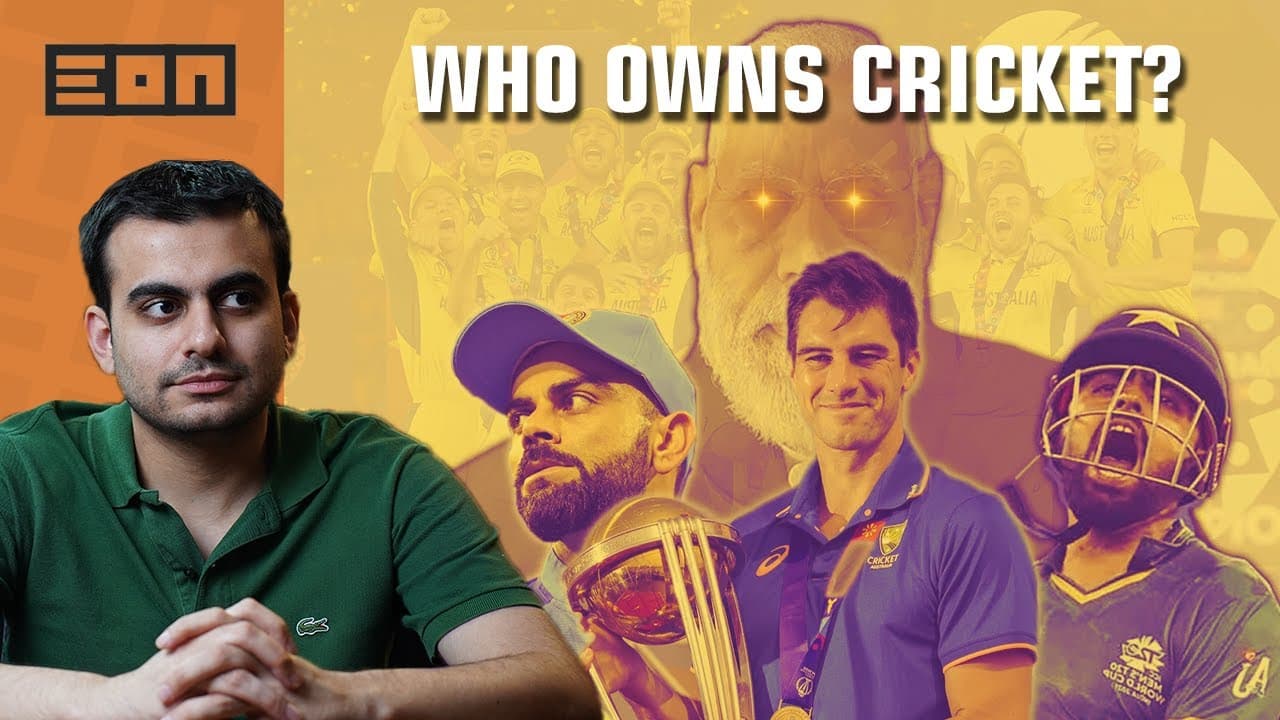
Danyal Rasool from ESPN Cricinfo on The Politics of Cricket | Eon Podcast #67
TL;DR
An analysis of Pakistan cricket's finances, governance, and performance challenges in a changing global sports environment.
Transcript
Dan a cricketing genius no pressure or um works as a journalist Crick Crick journalist might basically journalist anything you can take as God's truth abely paid us good money to say this welcome thank you so much for taking time out to come my pleasure specifically about the game Mega structures because up until very recently I didn't know million... Read More
Key Insights
- 🗯️ The PCB’s financial independence is derived from broadcasting rights and the PSL, enabling it to avoid government dependency.
- 🧑🏭 Political factors deeply infiltrate PCB’s operations, affecting the stability and effectiveness of cricket governance.
- 🦗 The rise of T20 cricket and leagues provides financial opportunities but challenges the significance of traditional cricket formats.
- 🦗 Pakistan's cricketing success is inconsistent despite extensive funding and talent, often hindered by bureaucratic inefficiencies.
- 🌍 Players increasingly prioritize league contracts over national commitments, potentially diluting the strength of the national team.
- 🏏 The transition of cricket from a sport to a geopolitical tool complicates the integrity and purpose of the game.
- 🦗 The long-term sustainability of cricket in Pakistan is at risk if governance issues and political factions continue to disrupt growth.
Install to Summarize YouTube Videos and Get Transcripts
Explore YouTube Video Summarizer or Get YouTube Transcript Extractor
Questions & Answers
Q: How does the PCB sustain itself financially?
The Pakistan Cricket Board (PCB) maintains financial independence through various revenue streams, including broadcasting rights for international matches and the successful Pakistan Super League (PSL). This financial self-sufficiency allows the PCB to operate without government grants or subsidies, which is critical considering Pakistan’s heavy reliance on cricket as a primary sport.
Q: What political factors influence the PCB's governance?
Political influence over PCB governance is significant, often leading to instability in leadership roles and management decisions. For example, appointments and removals of coaching staff and captains are impacted by government relationships and internal factions, which can disrupt long-term strategies and performance consistency for the national team.
Q: What challenges does Pakistan cricket face in the current global cricket landscape?
Pakistan cricket grapples with challenges such as the increasing popularity of T20 leagues, which may overshadow international formats, leading to financial and reputational issues. The PCB faces a dilemma of balancing league commitments with traditional cricket, risking a decline in international match viewership and player participation.
Q: How does the popularity of T20 leagues affect international cricket?
The burgeoning popularity of T20 leagues, particularly in India with the IPL, poses a significant threat to international cricket's primacy. As players are drawn to lucrative league contracts, this shifts focus away from representing national teams, potentially diminishing the competitive spirit and cultural significance of international cricket events.
Q: Why do players sometimes refuse contracts with the PCB?
Players often refuse contracts with the PCB due to perceived inconsistency in remuneration compared to their contributions to the game's revenue. When contracts are not reflective of their worth and they feel undervalued, they may choose to prioritize international league opportunities over national commitments, which can destabilize the team.
Q: In what ways has the relationship between international cricket and politics changed?
The relationship between international cricket and politics has evolved, with cricket increasingly being viewed as a tool for soft power. National interests often dictate how boards operate, leading to challenges such as governmental interference, which can hinder proper sports governance and the development of cricket infrastructure.
Q: How does Pakistan's cricket success compare to its investments in the sport?
Despite significant investments in cricket, Pakistan's on-field success has been inconsistent, revealing a gap between financial input and performance output. This discrepancy underscores the need for more strategic planning in nurturing talent, improving infrastructure, and developing sustainable competitive practices.
Q: What are the implications of PCB’s bureaucratic structure on team performance?
The PCB’s bureaucratic structure can lead to inefficiencies and delays in decision-making, negatively impacting team performance. Issues such as captaincy appointments and team selections often get mired in political maneuvering, which may compromise the team’s on-field cohesion and overall success.
Summary & Key Takeaways
-
The Pakistan Cricket Board (PCB) operates independently without government funding, relying on revenue from series broadcasting rights and the Pakistan Super League.
-
Governance in PCB is marked by political influence, affecting team management and performance, including captain appointments and player contracts.
-
The rise of T20 leagues, especially the IPL, poses challenges for international cricket's dominance, potentially diverting fans and players from traditional formats.
Read in Other Languages (beta)
Share This Summary 📚
Summarize YouTube Videos and Get Video Transcripts with 1-Click
Try YouTube Summary with ChatGPT & Claude or YouTube Transcript Generator