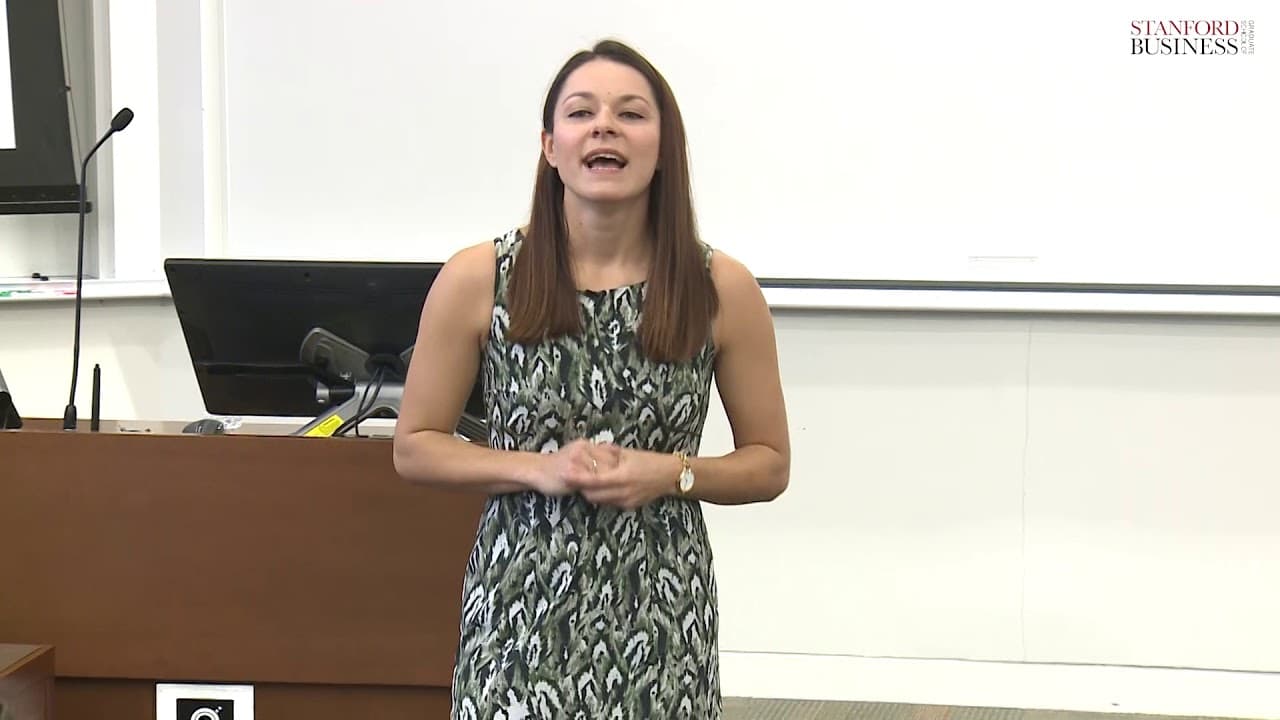
Magdalena Kala: From Self-Criticism to Self-Compassion: The Journey to Better Performance
TL;DR
Learning how to practice self-compassion can help improve performance and overall well-being.
Transcript
[MUSIC] I had just finished the first year of work at an investment firm, and received my first performance review, it was bad. Note, I am humbly telling you it was bad [INAUDIBLE] my reviewer actually admitted, you get to inflate my scores a little bit so it didn't look so horrible, that level of bad. >> [LAUGH]
My immediate reaction, I am too ... Read More
Key Insights
- 💨 The speaker initially believed that punishing herself for failure would make her tougher, but learned that self-compassion is a more effective way to improve performance.
- 🤑 Research shows that athletes are more motivated by positive coaches than hostile ones, highlighting the importance of self-compassion in coaching ourselves.
- 🤗 Engaging in negative self-talk releases stress hormones and diverts energy from the task at hand, hindering performance.
- 🤳 Practicing self-compassion involves naming our feelings, fully embracing them, comforting ourselves, mentally resetting, and taking action.
- 🥶 Self-compassion allows us to free ourselves and be ready sooner for future challenges.
- 🖐️ Coach K, the legendary Duke basketball coach, emphasizes the importance of focusing on the next play and not dwelling on past mistakes.
Install to Summarize YouTube Videos and Get Transcripts
Explore YouTube Video Summarizer or Get YouTube Transcript Extractor
Questions & Answers
Q: Why do we tend to engage in negative self-talk?
We have internalized this negative self-talk as normal and aren't even aware of it. We believe it helps us be better, try harder, and reach higher, but research shows that it is more harmful than helpful.
Q: How does self-compassion impact our body?
When we are hard on ourselves, our body releases stress hormones, which can hinder our performance. Self-compassion can help reduce the release of cortisol and allow us to focus and perform better.
Q: How can we practice self-compassion when we feel down?
The speaker suggests five steps: name the feeling, fully embrace it, comfort yourself as you would a friend, mentally reset and remind yourself it's okay, and take action towards your next steps.
Q: Why is it important to be a good coach to ourselves?
Being a good coach to ourselves means treating ourselves with kindness, compassion, and understanding. This helps us pick ourselves up faster and be ready for whatever challenges life throws at us.
Summary & Key Takeaways
-
The speaker shares a personal story about receiving a bad performance review and feeling the need to punish herself for failure.
-
She highlights the negative self-talk that many people engage in and emphasizes the importance of treating oneself with kindness and compassion.
-
Research shows that self-compassion is more motivating and effective in improving performance than self-criticism.
Read in Other Languages (beta)
Share This Summary 📚
Summarize YouTube Videos and Get Video Transcripts with 1-Click
Try YouTube Summary with ChatGPT & Claude or YouTube Transcript Generator
Explore More Summaries from Stanford Graduate School of Business 📚






Summarize YouTube Videos and Get Video Transcripts with 1-Click
Try YouTube Summary with ChatGPT & Claude or YouTube Transcript Generator