What Is Project Governance and Why Does It Matter?
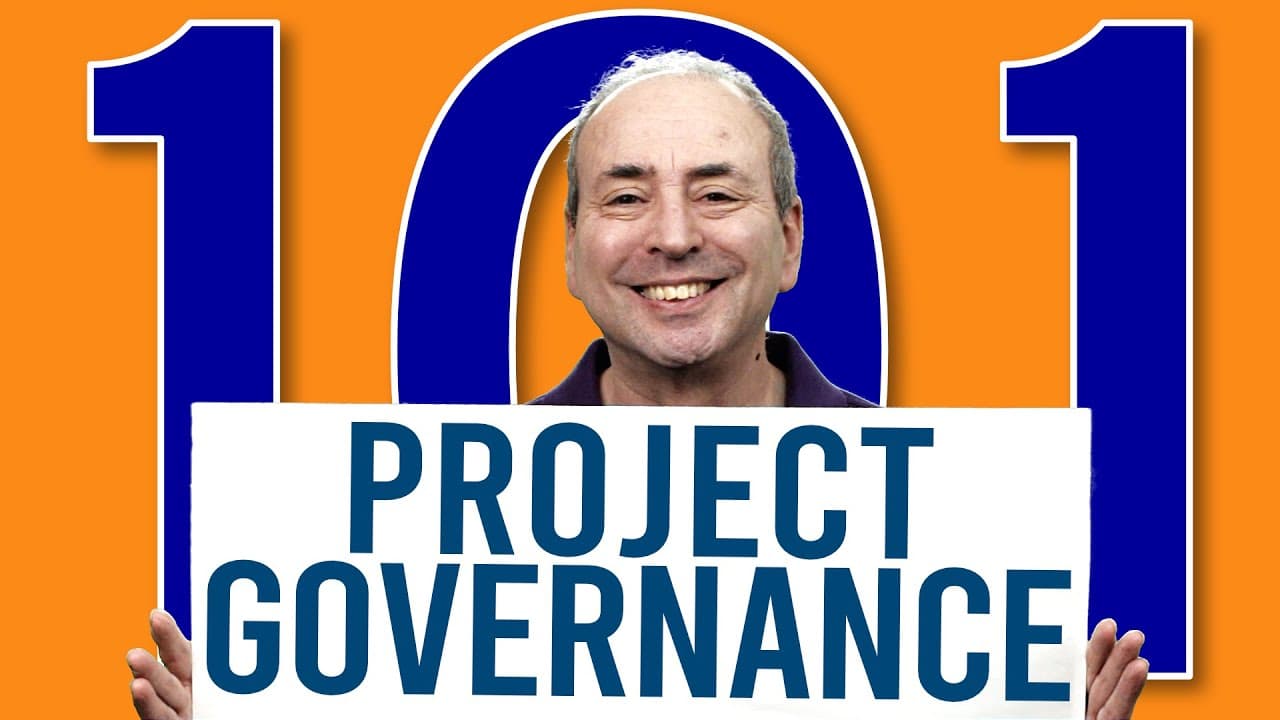
TL;DR
Project governance ensures that projects are managed effectively, aligning with strategic objectives while delivering tangible value. It encompasses essential responsibilities like direction setting, decision-making, and oversight, along with various processes such as approvals, reporting, and change control.
Transcript
projects need to run in a responsible way and it's the job of governance to make sure that they do the project management Institute in its 2016 practice guide the governance of portfolios programs and projects defines project governance as the framework functions and processes that guide project management activities in order to create a unique pro... Read More
Key Insights
- 📽️ Project governance ensures projects align with strategic objectives and deliver value.
- ❓ It involves three main responsibilities: direction setting, decision making, and oversight.
- 📽️ Key governance processes include approvals, project sponsorship, project boards, terms of reference, project reporting, stage gate reviews, change control, document management, PMO oversight, project audit, and assurance processes.
Install to Summarize YouTube Videos and Get Transcripts
Explore YouTube Video Summarizer or Get YouTube Transcript Extractor
Questions & Answers
Q: What is project governance?
Project governance is the framework that guides project management activities to ensure projects are done correctly and deliver the desired outcomes. It involves setting the right direction, making informed decisions, and providing oversight.
Q: Why does project governance matter?
Project governance is important because it involves spending someone else's money, managing risks, and protecting the organization's reputation. It focuses on delivery performance, product quality, transparency, and risk management to ensure project success.
Q: What are some key governance processes?
Key governance processes include approvals for business cases and project plans, project sponsorship for leadership support, project boards for evaluation and decision-making, terms of reference for defining roles and responsibilities, project reporting for monitoring and decision-making, stage gate reviews for project progression, change control for managing project changes, document management for storing and retrieving project documents, PMO oversight for project status monitoring, and project audit and assurance for objective evaluation.
Q: What are the challenges in implementing project governance?
Some challenges of project governance implementation include finding the right balance between rigor and agility, creating strong performance measurement systems, defining clear roles and responsibilities, gaining executive commitment, overcoming silo mentalities, and adapting governance processes to meet changing needs.
Summary & Key Takeaways
-
Project governance is the practice of ensuring projects are executed properly, meet strategic objectives, and deliver value.
-
It involves three fundamental responsibilities: direction setting, decision making, and oversight.
-
Key governance processes include approvals, project sponsorship, project boards, terms of reference, project reporting, stage gate reviews, change control, document management, PMO oversight, project audit, and assurance processes.
Read in Other Languages (beta)
Share This Summary 📚
Summarize YouTube Videos and Get Video Transcripts with 1-Click
Try YouTube Summary with ChatGPT & Claude or YouTube Transcript Generator
Explore More Summaries from Online PM Courses - Mike Clayton 📚


Summarize YouTube Videos and Get Video Transcripts with 1-Click
Try YouTube Summary with ChatGPT & Claude or YouTube Transcript Generator