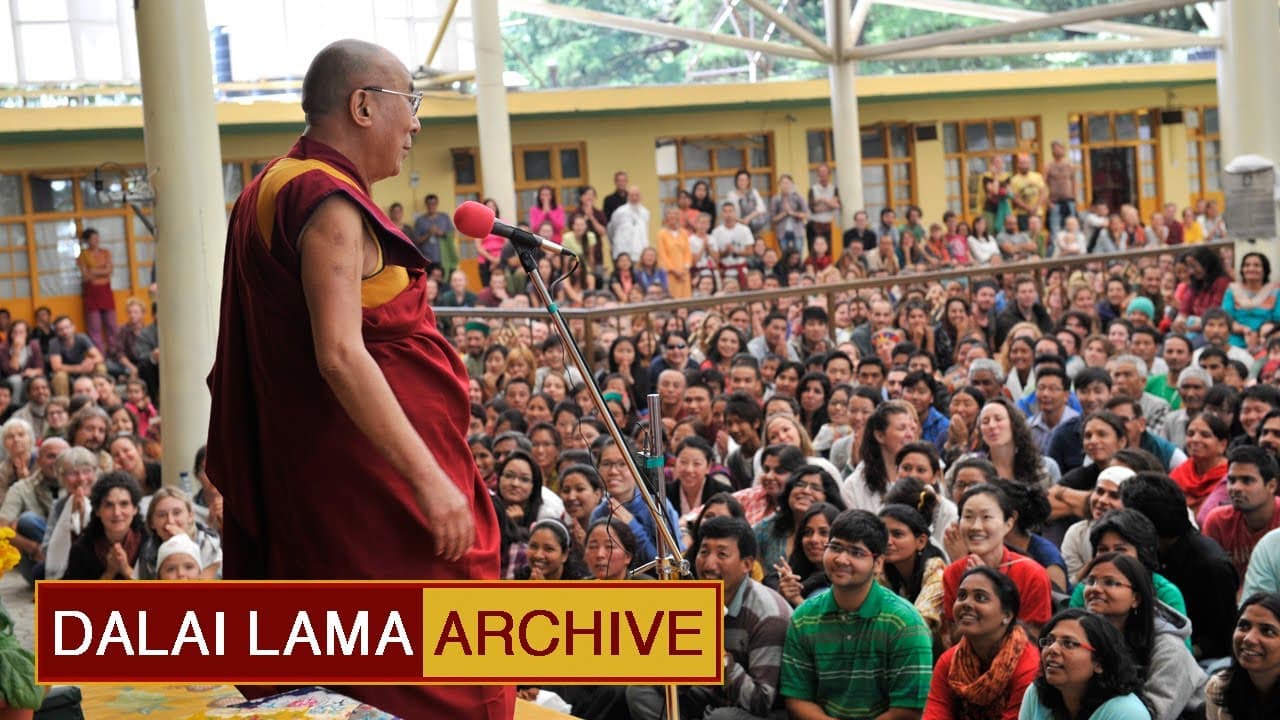
Public Audience for Foreigners in Dharamsala
TL;DR
The Dalai Lama emphasizes global responsibility and religious harmony.
Transcript
hello distantly good morning everybody as you know in many years ago occasionally I meet I met yesterday those tourists many of the foreign tourists then the city years say I didn't have that pencil yesterday program then recently I felt wherever I go I always talking the sense of global responsibility and then religious harmony sense of global res... Read More
Key Insights
- The Dalai Lama stresses the importance of global responsibility, highlighting that all 7 billion humans share the same basic desires for happiness and to avoid suffering.
- He criticizes materialistic pursuits for focusing on temporary sensory pleasures rather than long-lasting mental peace and joy.
- The Dalai Lama encourages secular ethics, which respect all religions and emphasize the oneness of humanity, as a means to foster global harmony.
- He praises India's tradition of religious harmony, noting its success in integrating diverse religious traditions over thousands of years.
- The Dalai Lama identifies altruism combined with wisdom as a path to personal fulfillment and societal benefit, contrasting it with self-centered attitudes that lead to conflict.
- He argues that education should incorporate moral ethics to nurture compassion and warm-heartedness, essential for a peaceful society.
- The Dalai Lama views secular ethics as crucial for addressing the needs of non-believers and believers alike, promoting a unified human approach to ethics.
- He emphasizes the role of individuals in initiating change, advocating for a grassroots approach to spreading peace and understanding.
Install to Summarize YouTube Videos and Get Transcripts
Explore YouTube Video Summarizer or Get YouTube Transcript Extractor
Questions & Answers
Q: What is the Dalai Lama's view on global responsibility?
The Dalai Lama emphasizes that global responsibility involves recognizing the shared desires of all humans for happiness and the avoidance of suffering. He believes that by understanding our common humanity, we can foster a sense of responsibility towards each other, promoting peace and harmony globally.
Q: How does the Dalai Lama view materialistic pursuits?
The Dalai Lama criticizes materialistic pursuits for focusing on temporary sensory pleasures, which he sees as insufficient for achieving lasting joy. He argues that true happiness stems from mental peace and encourages individuals to seek fulfillment through inner development rather than external possessions.
Q: What role does secular ethics play according to the Dalai Lama?
Secular ethics, according to the Dalai Lama, respect all religions and emphasize the oneness of humanity. They provide a framework for fostering global harmony and addressing the needs of both believers and non-believers by promoting shared human values like compassion and understanding.
Q: Why does the Dalai Lama praise India's tradition of religious harmony?
The Dalai Lama praises India's tradition of religious harmony for its success in integrating diverse religious traditions over thousands of years. He sees this as a model for the world, demonstrating how different faiths can coexist peacefully and contribute to a stable and harmonious society.
Q: What is the Dalai Lama's perspective on altruism?
The Dalai Lama views altruism, when combined with wisdom, as a path to personal fulfillment and societal benefit. He contrasts altruism with self-centered attitudes, which he believes lead to conflict and unhappiness. Altruistic actions, he argues, ultimately benefit the individual by promoting inner peace and satisfaction.
Q: How does the Dalai Lama suggest education should change?
The Dalai Lama suggests that education should incorporate moral ethics to nurture compassion and warm-heartedness. He believes that current educational systems focus too much on intellectual development and neglect the cultivation of inner values, which are essential for creating a peaceful and harmonious society.
Q: What is the Dalai Lama's approach to addressing the needs of non-believers?
The Dalai Lama advocates for secular ethics as a means to address the needs of non-believers. By focusing on shared human values rather than religious doctrines, secular ethics provide a universal framework for promoting ethical behavior and understanding among all people, regardless of their beliefs.
Q: What role do individuals play in the Dalai Lama's vision for change?
Individuals play a crucial role in the Dalai Lama's vision for change. He encourages a grassroots approach, where individuals initiate change by spreading peace and understanding within their communities. By fostering compassion and ethical behavior at the individual level, broader societal change can be achieved.
Summary & Key Takeaways
-
The Dalai Lama discusses the shared desires of humanity for happiness and the avoidance of suffering, urging a focus on global responsibility and religious harmony. He emphasizes that true joy comes from mental peace rather than temporary sensory experiences.
-
He advocates for secular ethics, which respect all religions and emphasize human unity, as a means to foster global harmony. The Dalai Lama praises India's tradition of religious harmony and stresses the importance of education in nurturing compassion.
-
The Dalai Lama highlights the significance of altruism combined with wisdom for personal and societal benefit. He encourages individuals to initiate change by spreading peace and understanding, emphasizing the role of secular ethics in addressing the needs of all people.
Read in Other Languages (beta)
Share This Summary 📚
Summarize YouTube Videos and Get Video Transcripts with 1-Click
Try YouTube Summary with ChatGPT & Claude or YouTube Transcript Generator