Adam Smith, Book 5, Ch. 1, pt. 3, article 3, Religious Instruction
TL;DR
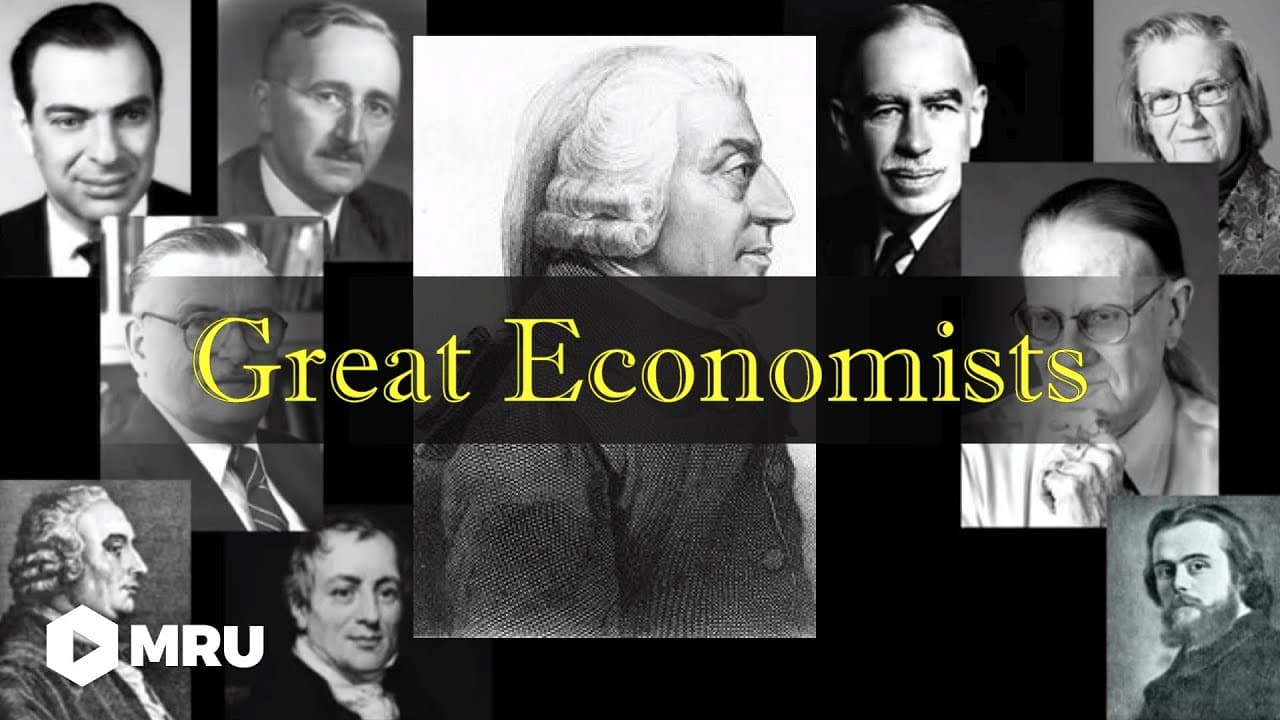
Smith applies economic principles to religion, advocating for competition and against monopolies.
Transcript
within book 5 chapter 1 part 3 we now turn to article 3 which is on religious instruction and the exact title of article 3 is of the expense of the institutions for the instruction of people of all ages and when smith refers to the instruction of people of all ages what he really means there is religion this part of the wealth of nations was neglec... Read More
Key Insights
- Adam Smith was a pioneer in the systematic economics of religion, a field that gained attention only in the 1980s.
- Smith viewed clergy as self-interested, suggesting that competition among denominations constrains churches similarly to other economic sectors.
- He argued that monopolies, including religious ones, lead to sluggishness, drawing parallels with other economic monopolies.
- Smith secularized religion by placing it within an economic framework, treating it similarly to other market sectors.
- He suggested that clergy work harder when dependent on market forces rather than state-provided funds.
- Smith anticipated a peaceful religious equilibrium with numerous small sects, minimizing the influence and power of any single sect.
- He was wary of two or three powerful sects competing, as this could lead to instability due to high stakes in religious matters.
- Smith proposed that governments encourage science, philosophy, and public amusements to counteract overly austere religious doctrines.
Install to Summarize YouTube Videos and Get Transcripts
Explore YouTube Video Summarizer or Get YouTube Transcript Extractor
Questions & Answers
Q: What is Adam Smith's view on clergy and competition?
Adam Smith viewed clergy as fundamentally self-interested, similar to other professionals. He argued that competition among religious denominations and preachers leads to more active and diligent clergy. Smith believed that when clergy rely on voluntary contributions rather than state support, their zeal and industry are likely to increase, benefiting the religious sector.
Q: How does Smith relate religion to economic principles?
Smith applies economic principles to religion by treating it as a market sector subject to competition and monopolies. He secularizes religion, viewing clergy as self-interested and emphasizing the benefits of competition among denominations. Smith argues that monopolies in religion, like in other sectors, lead to sluggishness and inefficiency, advocating for a competitive religious landscape.
Q: What is Smith's stance on religious monopolies?
Smith is critical of religious monopolies, arguing that they, like other economic monopolies, lead to sluggishness and inefficiency. He suggests that competition among religious sects constrains churches and promotes a more active clergy. Smith believes that monopolies protect churches from market forces, reducing their motivation to engage zealously with their congregations.
Q: What does Smith propose for a peaceful religious equilibrium?
Smith envisions a peaceful religious equilibrium characterized by numerous small sects, each with limited influence. He argues that this multiplicity prevents any single sect from gaining excessive power, fostering a balanced and stable religious landscape. Smith believes that such an environment minimizes conflict and promotes peaceful coexistence among diverse religious beliefs.
Q: How does Smith view the role of government in religious matters?
Smith suggests that governments can play a role in moderating overly austere religious doctrines by encouraging science, philosophy, and public amusements. He believes that these interventions can counteract strict religious views, promoting a liberal and loose societal outlook. Smith sees this as a way to maintain a balanced religious landscape without necessarily endorsing laissez-faire outcomes.
Q: What historical context does Smith provide in this section?
Smith provides historical context by discussing various churches, such as Catholic and Presbyterian, analyzing them as similar to private corporations. He highlights the economic dynamics within these religious institutions, illustrating how they can be understood through the lens of market competition and monopoly. Smith's analysis includes references to historical figures like David Hume to support his arguments.
Q: What is the significance of Smith's reference to Pennsylvania?
Smith references Pennsylvania as an example of a region practicing religious laissez-faire, characterized by philosophical good temper and moderation. He uses Pennsylvania to illustrate the potential benefits of a competitive religious environment, where no single sect dominates. This reference supports his argument for a balanced religious landscape with numerous small sects promoting peace and stability.
Q: How does Smith distinguish between strict and liberal doctrines?
Smith identifies a recurring pattern in societies where two competing doctrines exist: one strict or austere, and the other liberal or loose. He suggests that throughout history, these doctrines have competed for dominance. Smith appears to favor the liberal and loose view, advocating for government actions to encourage science and public amusements to counteract the influence of overly strict doctrines.
Summary & Key Takeaways
-
Adam Smith's work on religious instruction in 'Wealth of Nations' presents a groundbreaking economic analysis of religion, emphasizing market forces over monopolies. He argues that competition among religious sects leads to more active clergy and a peaceful religious landscape, minimizing the power of any single sect.
-
Smith's secular approach treats religion like any other economic sector, suggesting that clergy are self-interested and perform better when reliant on voluntary contributions. He highlights the sluggishness that monopolies bring, drawing parallels with other economic sectors, and praises religious competition for fostering a balanced environment.
-
Smith warns against the instability caused by powerful competing sects, advocating for a laissez-faire religious landscape with numerous small sects. He suggests government intervention, through education and public amusements, to moderate overly strict religious doctrines, promoting a liberal and loose societal outlook.
Read in Other Languages (beta)
Share This Summary 📚
Summarize YouTube Videos and Get Video Transcripts with 1-Click
Try YouTube Summary with ChatGPT & Claude or YouTube Transcript Generator
Explore More Summaries from Marginal Revolution University 📚

Summarize YouTube Videos and Get Video Transcripts with 1-Click
Try YouTube Summary with ChatGPT & Claude or YouTube Transcript Generator