How to Soften Your English for Polite Communication
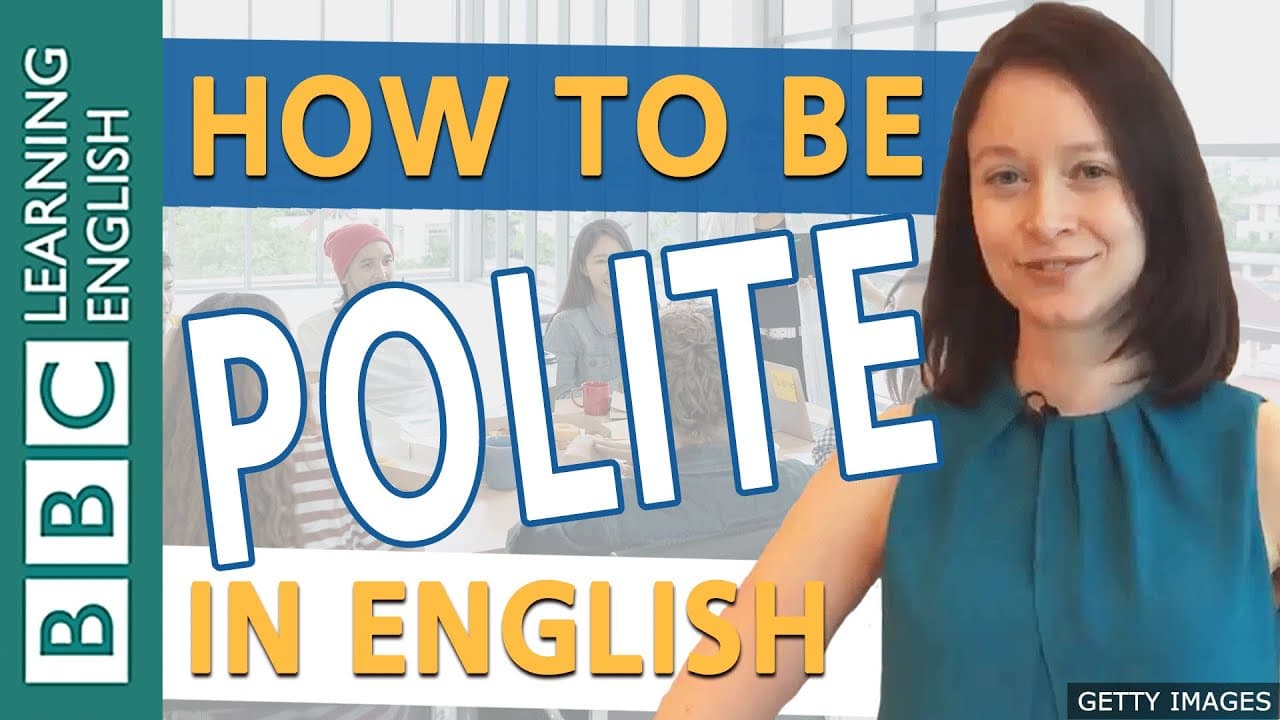
TL;DR
To soften your English and sound more polite, use past or continuous forms in requests, such as 'I was hoping you could...' Negative questions with tags can also help. For opinions, verbs like 'reckon' and vague expressions make statements less direct. Tentative language is key when refusing invitations, helping you communicate effectively without being rude.
Transcript
Hi Sian here for BBC Learning English... in this Masterclass we're going to look at something British people love doing! Being polite. No, I'm not coming to your party this evening. Wow, this food is disgusting! Give me some of your lunch. Now sometimes it's ok to be direct - or even blunt with your friends... but it's important not to sound rude, ... Read More
Key Insights
- Using past and continuous forms in requests can soften the tone, making them sound more polite and less direct.
- Negative questions with tags are effective in making requests sound less imposing and more courteous.
- Softening opinions by using verbs like 'reckon', 'guess', or 'feel', and adding vague expressions, can make them less direct.
- Introducing problems with verbs like 'seem' and 'appear' can make the statement less confrontational.
- Tentative language is useful for politely refusing invitations without sounding abrupt or harsh.
- British culture values politeness highly, especially in professional settings, where directness might be perceived as rudeness.
- Softening language is a skill that can be practiced and improved, enhancing communication effectiveness.
- The use of questions to express opinions or refusals can make the conversation more engaging and less authoritative.
Install to Summarize YouTube Videos and Get Transcripts
Explore YouTube Video Summarizer or Get YouTube Transcript Extractor
Questions & Answers
Q: How can requests be made more polite?
Requests can be made more polite by using past and continuous forms, such as 'I was hoping you could give me a lift'. Additionally, using negative questions with tags, like 'You couldn't give me a lift, could you?', softens the request, making it sound less direct and more courteous.
Q: What are some verbs that can soften opinions?
Verbs like 'reckon', 'guess', and 'feel' can soften opinions. These verbs reduce the directness of a statement, making it sound more like a personal perspective rather than an authoritative declaration. This approach helps in maintaining politeness, especially when discussing sensitive topics.
Q: How can problems be introduced more softly?
Problems can be introduced more softly by using verbs like 'seem' and 'appear'. For example, saying 'You seem to have made a mistake here' is less direct than 'You've made a mistake'. This method helps in reducing confrontation and making the conversation more constructive.
Q: What is a polite way to refuse an invitation?
A polite way to refuse an invitation is to use tentative language, such as 'I'm not sure I'll be able to make it'. This approach softens the refusal, making it less abrupt and more courteous. It conveys the message politely without directly saying 'no'.
Q: Why is politeness important in British culture?
Politeness is important in British culture because it reflects respect and consideration for others. In professional settings, directness might be perceived as rudeness, so using polite language helps in maintaining harmonious relationships and effective communication. It is a cultural norm that is highly valued and practiced.
Q: How can language be softened when expressing opinions?
Language can be softened when expressing opinions by using vague expressions like 'sort of', 'kind of', and 'a little bit'. Additionally, framing opinions as questions, such as 'Aren't you kind of young to be getting married?', makes them less direct and more engaging.
Q: What role do questions play in softening language?
Questions play a significant role in softening language by making statements less authoritative and more open-ended. They invite dialogue and consideration, reducing the risk of sounding confrontational or demanding. This technique is effective in both personal and professional communication.
Q: How can one practice softening language effectively?
One can practice softening language effectively by consciously incorporating the techniques discussed, such as using past and continuous forms, tentative language, and softening verbs. Engaging in role-playing exercises, seeking feedback, and observing native speakers can also help in mastering the art of polite communication.
Summary & Key Takeaways
-
This content teaches how to soften English language to be more polite, especially in professional settings. It highlights four main areas: making requests, giving opinions, discussing problems, and saying no, using examples to illustrate softer, less direct language.
-
Sian from BBC Learning English demonstrates how to soften requests using past and continuous forms, and negative questions with tags. She explains how to express opinions and discuss problems politely using specific verbs and tentative language.
-
The lesson emphasizes the importance of politeness in British culture and provides practical examples of how to soften language to avoid sounding rude or blunt. It encourages viewers to practice these techniques for effective communication.
Read in Other Languages (beta)
Share This Summary 📚
Summarize YouTube Videos and Get Video Transcripts with 1-Click
Try YouTube Summary with ChatGPT & Claude or YouTube Transcript Generator
Explore More Summaries from BBC Learning English 📚

Summarize YouTube Videos and Get Video Transcripts with 1-Click
Try YouTube Summary with ChatGPT & Claude or YouTube Transcript Generator