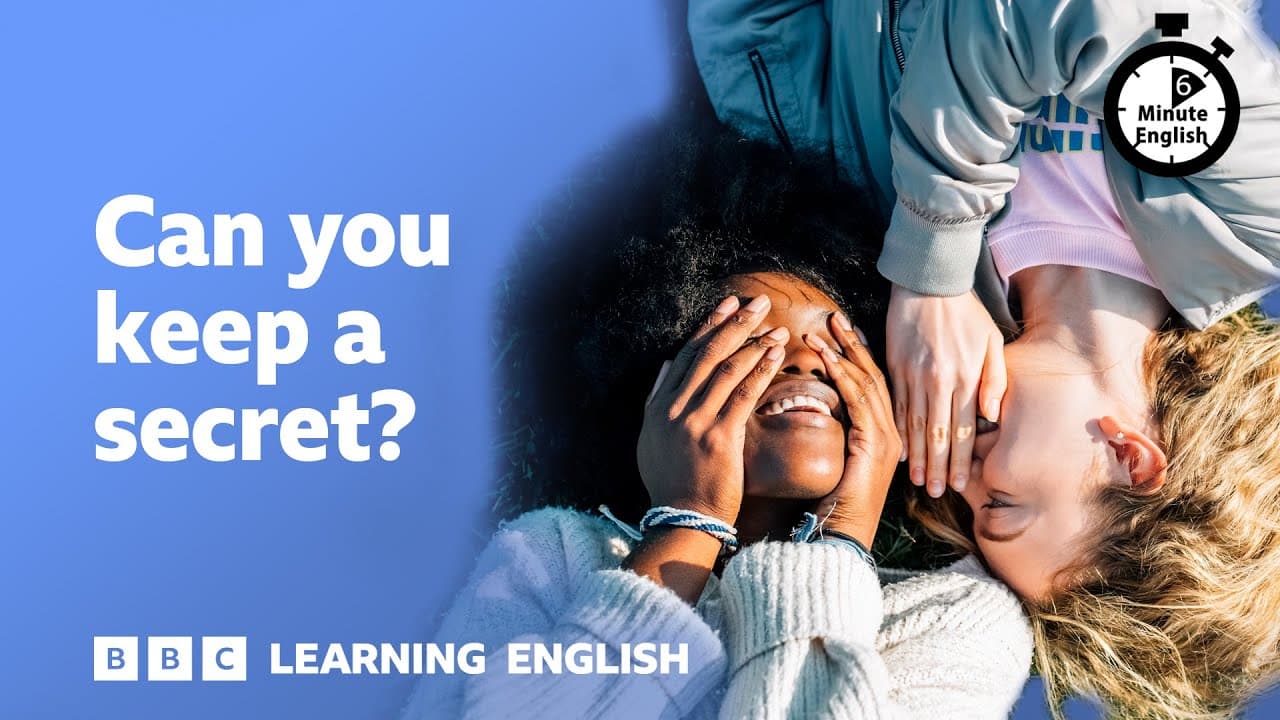
Can you keep a secret? ⏲️ 6 Minute English
TL;DR
Positive secrets can enhance well-being and relationships.
Transcript
Hello. This is 6 Minute English from BBC Learning English. I'm Neil. And I'm Beth. Can you keep a secret, Neil or are you someone who spills the beans? That's an idiom meaning to tell people a secret. I'm pretty good at keeping secrets, Beth, unless it is giving away the ending of a movie. I'm always doing that! Whether you find it hard to keep sec... Read More
Key Insights
- Secrets are often seen negatively, but they can also have positive impacts on our lives, enhancing feelings of vitality.
- Positive secrets, like surprise marriage proposals, are meant to be revealed and can strengthen relationships when shared.
- Negative secrets can harm relationships and often involve guilty pleasures, which are activities that bring both joy and guilt.
- Cultural differences influence how secrets are perceived; in some cultures, sharing good news prematurely can bring bad luck.
- Dr. Michael Slepian's research shows that positive secrets give individuals a sense of control over their emotions.
- The concept of the evil eye in some cultures suggests that revealing secrets too soon can lead to negative consequences.
- The study of secrets varies across cultures, indicating that what is considered a positive or negative secret can differ significantly.
- Joanna Lumley discovered that nutmeg is the secret ingredient in Coca Cola while traveling in Indonesia.
Install to Summarize YouTube Videos and Get Transcripts
Explore YouTube Video Summarizer or Get YouTube Transcript Extractor
Questions & Answers
Q: What is the main topic discussed in the 6 Minute English episode?
The episode discusses the concept of secrets, focusing on how they are traditionally seen as negative but can also have positive aspects. It explores how positive secrets can enhance personal well-being and strengthen relationships, offering a new perspective on the role secrets play in our lives.
Q: What are positive secrets according to Dr. Michael Slepian?
According to Dr. Michael Slepian, positive secrets are those that are intended to be shared eventually, such as surprise marriage proposals or pregnancy announcements. These secrets can energize individuals and provide a sense of control over emotions, contrasting with negative secrets that can harm relationships.
Q: How do cultural differences affect perceptions of secrets?
Cultural differences significantly affect how secrets are perceived. In some cultures, sharing good news too early, such as a pregnancy, is avoided due to beliefs in the evil eye, which suggests that premature sharing can lead to bad luck. This indicates that cultural context plays a crucial role in defining what constitutes a positive or negative secret.
Q: What is the 'evil eye' and how does it relate to secrets?
The 'evil eye' is a superstition prevalent in some cultures, where it is believed that revealing good news too soon can bring about bad luck or harm. This belief affects how secrets, particularly positive ones, are handled, with people often choosing to keep them until it is considered safe to share.
Q: What did Joanna Lumley discover about Coca Cola's secret ingredient?
While traveling in Indonesia, Joanna Lumley discovered that nutmeg is a secret ingredient in Coca Cola. She noticed the prevalence of nutmeg being grown in the region and learned that Coca Cola was purchasing it, revealing a previously unknown aspect of the soft drink's recipe.
Q: What is a guilty pleasure and how does it relate to secrets?
A guilty pleasure is an activity that someone enjoys but also feels guilty or ashamed about. It is often kept secret due to the conflicting emotions it generates. In the context of secrets, guilty pleasures represent negative secrets that can harm personal relationships if revealed.
Q: Why are positive secrets considered beneficial?
Positive secrets are considered beneficial because they can enhance an individual's sense of vitality and emotional control. By planning to reveal these secrets at a later time, individuals experience anticipation and excitement, which can contribute to overall well-being and strengthen interpersonal relationships.
Q: How does the concept of 'the whole point' relate to positive secrets?
The phrase 'the whole point' refers to the most important reason or purpose for something. In the context of positive secrets, the whole point is to eventually reveal them, allowing for celebration and connection with others. This distinguishes them from negative secrets, which are often kept hidden due to potential harm.
Summary & Key Takeaways
-
Secrets are traditionally viewed negatively, but recent studies reveal that positive secrets can enhance one's sense of vitality and emotional control. These secrets, like surprise proposals, are meant to be shared, offering opportunities for celebration and connection.
-
Cultural perceptions of secrets vary, with some cultures believing that premature sharing of good news, like pregnancy, can lead to bad luck. This highlights the role of cultural context in determining the nature of secrets.
-
Dr. Michael Slepian's research distinguishes between positive and negative secrets, showing that while negative secrets can harm relationships, positive secrets can foster closer connections and emotional well-being.
Read in Other Languages (beta)
Share This Summary 📚
Summarize YouTube Videos and Get Video Transcripts with 1-Click
Try YouTube Summary with ChatGPT & Claude or YouTube Transcript Generator
Explore More Summaries from BBC Learning English 📚

Summarize YouTube Videos and Get Video Transcripts with 1-Click
Try YouTube Summary with ChatGPT & Claude or YouTube Transcript Generator